Alright, so we’re talking about La lanterna del diavolo. This one, well, it’s not for everyone, for sure. If you’re into really old Italian cinema, the kind that moves at its own pace and isn’t afraid of a bit of dramatic flair, then yeah, give it a shot. You’ll probably appreciate the mood.
But if you’re looking for something fast, something with a super tight plot, or anything that feels modern, you’re going to hate it. Seriously, it’s a bit of a slog if you’re not prepared for it. Think of it as a time capsule, not a blockbuster. 🕰️
The Story, Such As It Is
The core of it is pretty simple, really. We’ve got this smuggler, right? He’s called Donato, played by Carlo Tamberlani, and he’s completely obsessed with a woman, La Baiocchi. Problem is, she’s with another fella. And Donato, he doesn’t take that well. Not at all. 😠
So, what does a jealous man do? He frames the other guy for murder. Yep, it gets *that* dramatic. It’s all about the fallout from this one terrible, rage-filled decision. You know the type of story.
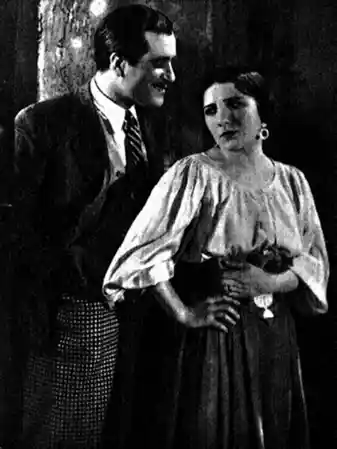
Scene from La lanterna del diavolo
Cinematic perspective: Exploring the visual vocabulary of La lanterna del diavolo (1931) through its definitive frames.
Watching the Drama Unfold
Tamberlani, as Donato, really commits to the whole jealous rage thing. His expressions are often over-the-top, but in a way that feels right for the era. There’s a scene where he’s just lurking, watching La Baiocchi and her lover from a distance, and the camera just *holds* on his face. It goes on for a while. You can practically feel the steam coming off him, the anger just bubbling up. It works, even if it’s a tad much.
La Baiocchi herself. She’s got this very specific kind of old-school glamour. Her reactions, though, sometimes felt a little… rehearsed? Like she was hitting specific marks for 'shock' or 'sadness.' But again, it’s an older film, maybe that was just how it was done. Her despair felt very real in some key moments, others not so much. It's inconsistent.
The "smuggling" part of the smuggler character is almost an afterthought. He’s more of a brooding, possessive type than someone we see doing actual illegal activities. It’s mostly hinted at.
The pacing. Oh boy. It’s not exactly zippy. Some scenes just linger. A conversation that feels like it could be wrapped up in a minute stretches into five. You feel the minutes ticking. ⏳
The court room drama, well, it has its moments. When the truth starts to poke through, you do get a little invested. You wanna see the bad guy get what’s coming to him, or at least for the innocent one to get free.
There’s a character, played by Donatella Neri, who adds a surprising bit of lightness. A small role, but her presence was a welcome break from all the heavy, serious stuff. She felt like a breath of fresh air, even for just a few minutes. It made you wonder about her story, you know?
The title, "The Devil’s Lantern" – I kept trying to figure out if it was a literal object, or just a metaphor for Donato’s dark actions. The film doesn’t exactly spell it out. It’s left a bit ambiguous, which I guess is fine, but also a little frustrating if you like things neatly explained.
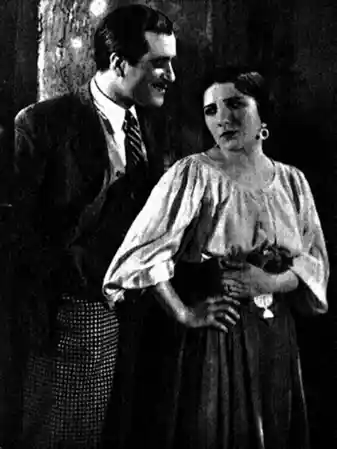
Scene from La lanterna del diavolo
Cinematic perspective: Exploring the visual vocabulary of La lanterna del diavolo (1931) through its definitive frames.
Little Details That Stick
The cinematography, in black and white, actually has some really nice moments. The way shadows fall in a dimly lit room, or how the light catches dust motes in the air. It’s not always perfectly crisp, but there are definite artistic touches there. It gives the whole thing a very atmospheric feel, very much of its time. 🎞️
One odd thing was how easily the frame-up seemed to work. Like, no one really questioned it all that much initially. You just have to accept that for the story to happen, everyone's a bit gullible. It’s one of those plot devices that you just roll with, or you get too annoyed.
The ending. It’s not a big, triumphant Hollywood finish. It’s more… melancholic. It leaves you with a feeling, but not necessarily a happy one. It feels earned, in a way, after all the emotional turmoil. But don't expect a neat bow on top.
So, *La lanterna del diavolo*? It’s a very specific taste. If you’re a film student, or someone who loves digging into cinema history, there’s stuff to chew on here. It’s a document of a certain style and era. But for a casual watch? Probably not. You’d be better off with something more modern, like maybe Rouged Lips if you want something a bit more vibrant from an older era.
It’s an interesting look at raw human emotion, even if the execution sometimes feels a little clunky by today’s standards. It’s honest in its melodrama, at least. That I can respect.