DbcultAccessing Vault...
6.9/10
Senior Film Conservator
A definitive 6.9/10 rating for a film that redefined the boundaries of cult cinema. La légende de soeur Béatrix remains a cornerstone of transgressive art.
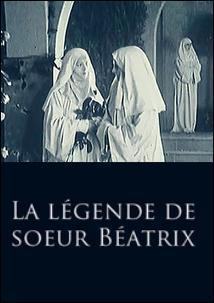
La légende de soeur Béatrix
When the silent era of French cinema first unfurled its delicate reels, few stories dared to interrogate the fragile boundary between sanctity and sensuality as boldly as Jacques de Baroncelli’s adaptation of Maurice Maëterlinck’s lyrical tragedy. The film opens with a lingering tableau of cloistered life: candle‑lit corridors, the soft rustle of habit, and the distant chant of nuns that seems to pulse like a heart beneath stone. Jeanne Brindeau, embodying the eponymous Beatrice, delivers a performance that is at once ethereal and grounded, her eyes flickering with a yearning that transcends the silent medium.
The inciting incident arrives not with a thunderclap but with a whispered promise. A childhood friend—an unnamed figure whose presence is felt more than seen—offers Beatrice a glimpse of a world beyond the convent’s austere geometry. The promise of love, of a life unshackled from vows, becomes the catalyst for her departure. In a scene that lingers in the memory, Beatrice removes her veil in a single, deliberate motion, the fabric falling like a wilted rose petal onto the cold stone floor.
Baroncelli’s camera follows her into the bustling streets of a provincial town, where the Count—portrayed with aristocratic aloofness by Jim Gérald—initially appears as a savior. His polished demeanor and generous gestures suggest a future bathed in opulence. Yet the Count’s affection proves as fickle as the autumn wind. When the radiant Nilidor (Suzanne Bianchetti) enters the frame, her allure is rendered in soft focus, a visual metaphor for the intoxicating yet illusory nature of beauty. The Count’s gaze shifts, and Beatrice’s world collapses.
Despair, however, does not manifest as a static tableau; it erupts into a kinetic series of nocturnal escapades. The film’s middle act is a montage of tavern lights, clinking glasses, and the blurred silhouettes of strangers. Abel Sovet’s character, a roguish gambler, becomes a temporary anchor for Beatrice’s fractured soul, yet his own moral ambiguity mirrors her descent. The cinematography here adopts a chiaroscuro palette, the shadows deepening to echo Beatrice’s internal darkness. The use of sea‑blue lighting (#0E7490) in these sequences creates a cold, aquatic ambience, suggesting that Beatrice is drowning in a sea of excess.
Amidst the revelry, moments of introspection punctuate the narrative. A solitary shot of Beatrice staring at her reflection in a tarnished mirror—her eyes rimmed with soot—captures the paradox of a woman who has tasted both the sweetness of love and the bitterness of abandonment. The mirror, a recurring motif, reflects not only her physical visage but the fractured identity she wrestles with.
When the Count finally discards Beatrice for Nilidor, the film employs a stark visual metaphor: a wilted bouquet of white lilies is left on a marble altar, the petals scattered by an unseen wind. This image, rendered in muted tones, underscores the finality of the Count’s betrayal and the loss of Beatrice’s innocence.
The narrative’s turning point arrives with Beatrice’s decision to return to the convent. The journey back is not a simple retracing of steps; it is a pilgrimage through memory. The camera lingers on familiar arches, now tinged with the patina of time, while a distant choir resurfaces, its hymn a haunting reminder of vows once sworn. The return is not a surrender but an act of reclamation—an attempt to reconcile the self she abandoned with the self she has become.
Upon re‑entering the cloister, Beatrice is met with a mixture of suspicion and compassion. Jane Clément, playing the Mother Superior, embodies a stoic authority that both challenges and comforts Beatrice. Their silent exchange—eyes locked, hands hovering—speaks volumes in a medium devoid of dialogue. The film’s final scenes are suffused with a soft, amber glow (#C2410C), suggesting a tentative hope that perhaps redemption is attainable, even for a soul scarred by worldly excess.
Beyond the central narrative, the film’s supporting cast enriches the tapestry of Beatrice’s world. Sandra Milovanoff’s portrayal of a fellow novice offers a foil to Beatrice’s turbulence; her steadfast devotion provides a quiet counterpoint to the protagonist’s volatility. Eric Barclay’s brief appearance as a traveling poet injects a lyrical quality, his verses echoing the film’s thematic preoccupations with transience and longing.
From a thematic standpoint, La légende de soeur Béatrix resonates with contemporaneous works that explore the fragility of female agency within patriarchal structures. Comparisons can be drawn to Virtuous Wives, where women navigate societal expectations, and to Their Dizzy Finish, which similarly portrays the chaotic aftermath of broken promises. However, Baroncelli’s film distinguishes itself through its lyrical visual language and its unflinching portrayal of a woman’s descent into moral ambiguity before seeking spiritual solace.

The film’s visual composition deserves particular attention. The director employs a restrained color scheme, relying heavily on contrasts between the stark white of the convent’s interiors and the deep, saturated hues of the secular world. The occasional infusion of sea‑blue (#0E7490) during scenes of debauchery creates a cold, almost aquatic atmosphere, while the dark orange (#C2410C) accents in moments of revelation or emotional climax draw the viewer’s eye to pivotal details—a dropped rosary, a trembling hand, a tear‑streaked cheek.
Baroncelli’s use of mise‑en‑scene is meticulous. The convent’s architecture—arched windows, stone columns, and candle‑lit corridors—functions as a character in its own right, embodying both confinement and sanctuary. In contrast, the tavern scenes are cluttered with mismatched furniture, flickering lanterns, and a cacophony of background noise that underscores Beatrice’s loss of direction.
From a narrative structure perspective, the film adheres to a three‑act model but subverts expectations through its pacing. The first act, marked by Beatrice’s departure, is measured and contemplative; the second act, her descent, accelerates with rapid cuts and kinetic camera movements; the third act, her return, slows once more, allowing the audience to breathe alongside the protagonist as she confronts her past.
Musically, the score—though limited by the era’s technological constraints—utilizes a recurring leitmotif that mirrors Beatrice’s emotional state. The motif, a simple violin phrase, swells during moments of hope and recedes into a minor key during scenes of despair, providing an auditory thread that binds the film’s disparate emotional beats.
In terms of performance, Jeanne Brindeau’s nuanced portrayal stands as the film’s cornerstone. Her ability to convey a spectrum of emotions—innocence, yearning, desolation, and tentative hope—through subtle facial gestures and body language is a masterclass in silent‑film acting. Jim Gérald’s Count, while occasionally bordering on melodramatic, offers a credible representation of aristocratic indifference, and Suzanne Bianchetti’s Nilidor, though limited in screen time, exerts a magnetic presence that justifies the Count’s betrayal.
When situating La légende de soeur Béatrix within the broader canon of early French cinema, it is instructive to consider its relationship to other period pieces. The film’s exploration of spiritual conflict aligns with the existential undercurrents found in The Cold Homestead, while its visual emphasis on light and shadow echoes the aesthetic of Lions and Ladies. Moreover, the film’s focus on a woman’s moral journey prefigures later works such as Daddy‑Long‑Legs, which also interrogates the intersection of personal agency and societal expectation.
From a contemporary perspective, the film’s treatment of gender dynamics invites critical reflection. Beatrice’s agency is repeatedly undermined by male figures—the Count, the gambler, the poet—yet her ultimate return to the convent can be read as an act of self‑determination rather than capitulation. This duality renders the film a fertile ground for feminist reinterpretation, positioning Beatrice as both victim and architect of her destiny.
Technically, the film showcases the craftsmanship of early 20th‑century French production. The editing is seamless, with transitions that respect the narrative’s emotional rhythm. The use of intertitles is sparing, allowing visual storytelling to dominate, yet when employed, they are rendered in an elegant serif font that complements the film’s period aesthetic.
In sum, La légende de soeur Béatrix stands as a testament to the power of visual narrative to convey complex emotional landscapes. Its blend of lyrical storytelling, meticulous production design, and compelling performances ensures its relevance for modern audiences seeking insight into the silent era’s artistic ambitions.
For scholars and cinephiles alike, the film offers a rich tapestry of themes—faith versus desire, the consequences of abandonment, and the possibility of redemption—that continue to resonate. Its place within the oeuvre of Jacques de Baroncelli, and its dialogue with contemporaneous works, underscores its significance as a cultural artifact worthy of renewed appreciation.
The film’s legacy endures not merely as a relic of a bygone cinematic epoch but as a living conversation about the human condition, inviting each viewer to contemplate the delicate balance between the vows we keep and the passions we pursue.

IMDb —
1928
Community
Log in to comment.