DbcultAccessing Vault...
6.8/10
Senior Film Conservator
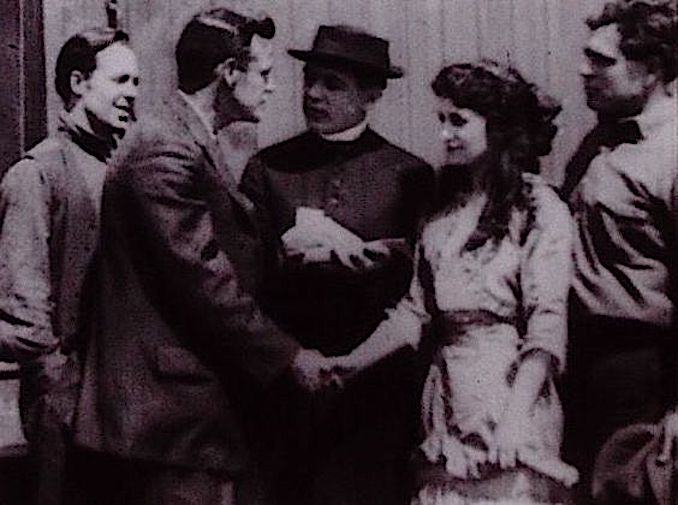
A definitive 6.8/10 rating for a film that redefined the boundaries of cult cinema. The Hazards of Helen remains a cornerstone of transgressive art.
A locomotive sans engineer is not merely a machine run amok; it is Romantic panic solidified—Byron with a boiler. Kalem’s 1914 episodic fever dream The Hazards of Helen understands this at a cellular level. The camera, starved for vocabulary, straps itself to the flank of a speeding 4-4-0 and converts the hiss of steam into a pre-verbal scream. We are 700 feet of nitrate away from carnage, and the only buffer is a woman who refuses to wait for masculine rescue.
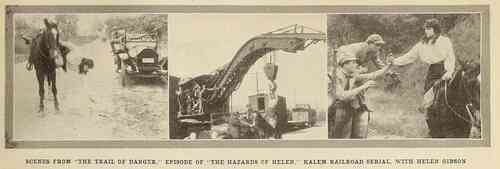
Helen, played with kinetic stoicism first by Helen Holmes and later by Helen Gibson, belongs to the same mythic sorority as Pauline and Kathlyn, yet she is less trussed damsel than vectored force. In episode 13—the chapter most anthologized and dissected—she receives the telegraph slip, eyes narrowing like someone who has spotted a typo in destiny itself. The subsequent motorcycle dash, performed sans stunt double at forty-three miles per hour, prefigures the vehicular iconoclasm of Mad Max by six decades while predating A Motorcycle Adventure’s lighter derring-do by a year.
Compositionally, director J.P. McGowan weaponizes negative space: the horizon line skews diagonal, tilting the world toward chaos; the onrushing engine fills the lower quadrant like a shark’s fin cleaving the frame. The intertitles—laconic, almost Haiku—do not explain; they detonate. “Track clear? No—DEATH AHEAD.” The absence of color becomes spectral advantage: every puff of steam is a ghost exhaled.
Film historians, drunk on auteurist predisposition, often overlook the serial’s communal authorship: Scott Darling, Frank Howard Clark, Denman Thompson et al. stitched cliffhangers on an assembly line, yet the text feels oddly personal, as though each writer deposited a private nightmare into the communal negative. The result is a palimpsest of anxieties—industrial, gendered, technological—projected at 22 frames per second.
Compare this to the static tableaux of From the Manger to the Cross or the pageant stillness of Oliver Twist from the same epoch; Helen is cinema as verb, not noun. Its montage anticipates Soviet kineticism: when the motorcycle skids beneath the coal tender, McGowan intercuts three angles—wheel, face, rails—achieving an Eisensteinian collision before Eisenstein had hammered his first intellectual nail.
Performative credibility hinges on Holmes/Gibson’s refusal of feminine codification. Their Helen does not flutter; she calculates. Watch the micro-adjustment of knees when the bike hits a rail joint: the body becomes suspension, shock absorber, algorithm. This is corporeal literacy, a syntax written in g-forces. The men—Robyn Adair’s smitten dispatcher, Clarence Burton’s sneering saboteur—are mere apostrophes in her sentence.
Yet the serial is not immune to the era’s ideological whiplash. The railroad, emblem of Manifest Destiny, is simultaneously savior and devourer; the film wants to praise mobility while lamenting the carnage of speed. Helen’s heroism is tolerated because it is emergency—once the crisis ebbs, the closing iris re-domesticates her into the telegraph office, tapping out heteronormative Morse beneath a calendar of acceptable femininity.Progressive and regressive impulses wrestle inside the same reel like conjoined twins unsure who owns the heart.
Sonically, modern restorations impose a metronomic score—piano, banjo, occasionally a Wurlitzer wheeze. I recommend muting the track and substituting Colin Stetson’s bass saxophone or the industrial drone of Emptyset; the dissonance marries the image, turning every piston stroke into arrhythmia. The film was never silent; it merely whispered below the threshold of 1914 microphones.
Archivists at MoMA discovered a cyan-tinted print in 1987; the emulsion along the perforations resembled frostbite, yet the action core remained incandescent. Watching that print unfurl on a Steenbeck, one feels the metallic taste of rust in the mouth—history’s corporeal residue. The tint, unintended yet ravishing, baptizes the frame in glacier blood, evoking the national-park sublime found in Glacier National Park but with mortal stakes replacing scenic detachment.

Contemporary critics dismissed the series as “penny-arcade mayhem for the masses,” yet the gendered optics have flipped: what once read as risible now scans as prophetic. Helen’s ride is a template for Fury Road’s Furiosa, for Gravity’s Ryan Stone, for every heroine who refuses the ancillary role. The motorcycle itself becomes a uterus on wheels—life ferried through a birth canal of steel.
Economically, Kalem’s production model was piratical: shoot on the cheap along the Santa Fe right-of-way, recycle stock footage, pay actors in coin and exposure. The result is a documentary patina: the sweat on Helen’s brow is honest labor under California sun. Compare the stately studio artifice of Les Amours de la reine Élisabeth; here, dust is not set dressing but epidermis.
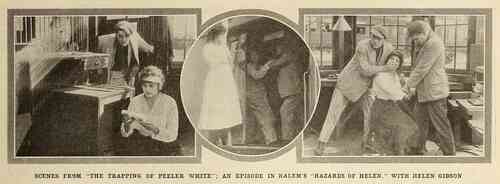
The hazards escalate episode by episode: runaway balloon, burning trestle, bandit ambush, ice gorge, dynamite canoe. Each cliffhanger is a laboratory for corporeal extremity; the aggregate effect is exist vertigo—a realization that the world is held together by rivets apt to pop. When Helen swings from a rope bridge above a gorge, the canyon floor wobbles like a mirage; the audience’s stomach drops into the same abyss. This is not suspense but ontological nausea—cinema discovering the underbelly of Newton.
Restoration ethicists debate how much digital cleanup is too much: should the mildew scars remain? Should the splice bumps that cause the image to hiccup every seven seconds be ironed flat? I side with the scars—they are palimpsest bruises, reminders that the artifact survived its era. To scrub them is to embalm, not revive.
Finally, consider the serial’s title—The Hazards of Helen. The preposition is crucial: not “Adventures,” not “Perils,” but “Hazards,” a word that smells of actuarial ledgers and maritime insurance. It suggests risk as ambient condition, like humidity. Helen is not merely thrust into danger; she inhabits it, the way other heroines inhabit ballrooms. The hazard is her native climate; survival, her dialect.
In the pantheon of early cinema—jostling alongside boxing reels, passion plays, and sword-and-sandal epics—Helen carves a niche as the moment when narrative velocity married gender insurgency. It is not a relic; it is a gauntlet hurled forward, clanging at the feet of every filmmaker who still believes a woman’s close-up should end in a kiss rather than a carburetor.
Watch it at 3 a.m. with the sound off and the windows open. Let the distant wail of freight trains sync with the phantom locomotive onscreen. Feel the room tilt. Remember that cinema was never meant to be safe; it was meant to be a runaway boiler headed straight for your complacency, and Helen—goggled, gauntleted, ungovernable—is still astride its back, forever throttling toward tomorrow.
IMDb 7
1919
Community
Log in to comment.