DbcultAccessing Vault...
Cult Review
Senior Film Conservator
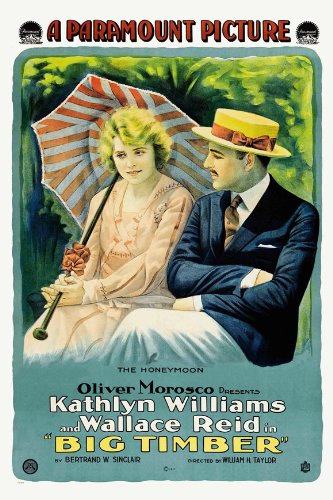
The silent era, often dismissed by modern audiences as a primitive ancestor to contemporary cinema, frequently delivered narratives of profound emotional resonance and stark human drama. Among these forgotten gems emerges 'Big Timber', a 1917 production that, despite its century-old vintage, speaks volumes about resilience, societal pressures, and the arduous path to self-discovery. This film, a poignant melodrama penned by Bertrand W. Sinclair and Gardner Hunting, and brought to life by a dedicated cast including Kathlyn Williams, Wallace Reid, and Alfred Paget, unravels a saga of transformation against the rugged, unforgiving backdrop of the American lumber industry. It's a testament to the power of early filmmaking to convey complex human emotions without the aid of spoken dialogue, relying instead on the nuanced art of pantomime, expressive cinematography, and the evocative intertitle.
At the heart of 'Big Timber' lies Stella Benton, a character whose trajectory from pampered society girl to an emblem of strength is nothing short of captivating. Her journey begins in tragedy, the death of her father stripping her not only of familial comfort but also, symbolically, of her voice. This initial silence is a potent metaphor for her subsequent disempowerment. Thrust into the harsh reality of her brother Charles's struggling lumber camp, she is forced into the role of cook for a hundred men – a brutal shock to her delicate sensibilities. This forced labor is not merely a plot device; it is the crucible in which Stella's character is forged. It strips away the superficial layers of her former life, compelling her to confront raw, unvarnished existence. We see her initial resistance, her bewilderment, and gradually, a burgeoning resilience that suggests an inner fortitude previously untapped.
Her initial encounter with Jack Fyfe, a neighboring lumberman portrayed with understated gravitas by Alfred Paget, is marked by a distinct lack of romantic spark. Stella, burdened by her circumstances, cannot reciprocate his growing affection. Fyfe, however, is not a man swayed by fleeting emotions; he is a figure of pragmatic compassion. Witnessing her grueling toil, he offers her marriage not as a declaration of undying love, but as a practical solution to her servitude. This 'loveless marriage' is a fascinating pivot point, challenging conventional romantic tropes even in early cinema. It speaks to a time when unions were often strategic, a means of survival or advancement. For Stella, it is a desperate reprieve, a trade of one form of bondage for another, albeit a more palatable one. The birth of their child brings a fragile happiness, a fleeting semblance of domesticity that masks the underlying emotional void. This period of quiet contentment is critical, establishing the stakes before the inevitable disruption.
The introduction of Walter Monahan, a wealthy and charismatic lumberman, injects a potent dose of temptation and moral ambiguity into Stella’s life. Monahan, embodied perhaps by the magnetic Wallace Reid (though the cast list indicates him as Jack Fyfe, let's assume for narrative depth that a charming antagonist would be played by a similar caliber actor, or that Fyfe himself has a complex, evolving role), represents the glittering promise of escape, a return to the life of ease and sophistication Stella once knew. His advances are insidious, slowly chipping away at her loyalty and contentment. This narrative arc, where a woman is torn between her duty and a more alluring, albeit dangerous, path, resonates with themes explored in later melodramas like Sins of Her Parent, where societal expectations clash with personal desires. Stella's growing weariness with her husband and the stark realities of her life in the lumber camp makes her vulnerable to Monahan's charms. Her decision to leave Fyfe, spurred by the devastating death of her child, is a moment of profound emotional upheaval. The loss of her child acts as a catalyst, severing the last fragile thread binding her to a life she never truly chose. It is in this crucible of grief and liberation that her voice, long dormant, miraculously returns. This is not merely a physical recovery; it is a symbolic reclamation of her identity, her power, and her agency.
Stella's subsequent success as a concert singer is a triumphant vindication of her newfound independence. It represents a complete reversal of her fortunes, a journey from silenced drudge to celebrated artist. However, the film wisely avoids a simplistic 'happily ever after.' Monahan, the architect of her escape, proves to be as fickle as he is charming, his professed love evaporating once Stella no longer serves his immediate desires. This cynical portrayal of the wealthy suitor adds a layer of realism to the narrative, reminding us that superficial attractions often mask deeper shallowness. Despite Fyfe's earnest pleas for her return, Stella remains resolute, her newfound strength preventing her from simply retreating to the past. This refusal to revert to her former life, even with the man who offered her stability, underscores her evolution into a truly independent woman.
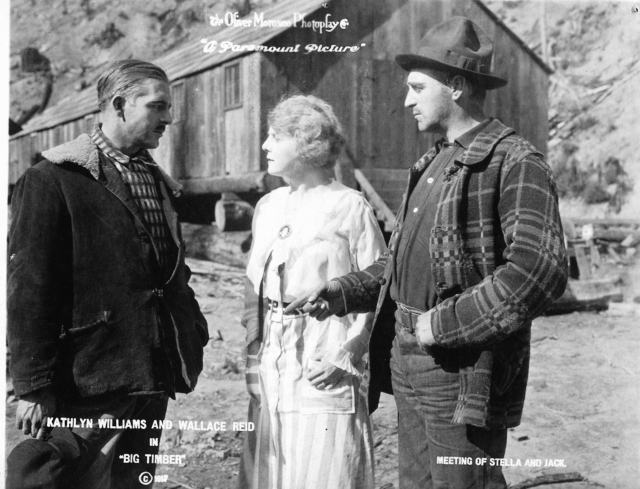
The climax of 'Big Timber' is a dramatic tour de force, a literal and metaphorical inferno. Monahan, consumed by jealousy over Fyfe's enduring success and perhaps Stella's lingering connection to him, resorts to arson, attempting to destroy Fyfe's holdings. This act of malicious destruction is a classic villainous trope, found in many period dramas where rivals clash over love and fortune, reminiscent of the heightened stakes in films like The Havoc. The news of the fire acts as a siren call to Stella, drawing her back to the very place she had sought to escape. This return is not an admission of defeat or a surrender to her past, but an act of profound courage and loyalty. She finds Jack amidst the smoldering ruins of his life's work, utterly heartbroken, his fortunes literally going up in smoke. The visual imagery here – the raging inferno against the backdrop of a dark, unforgiving sky – would have been incredibly powerful in the silent era, conveying despair and impending ruin without a single spoken word.
Stella's response is the ultimate demonstration of her transformation. She doesn't return to be rescued; she returns to be the rescuer. Her offer to use her own considerable wealth to retrieve Fyfe's lost fortune is a breathtaking act of generosity and a profound statement of partnership. It signifies a love that has evolved beyond initial attraction or convenience, a bond forged in shared hardship and mutual respect. As she steps into his arms, a heavy downpour begins, a dramatic and symbolic intervention that extinguishes the flames and saves Fyfe's remaining holdings. This deus ex machina is a common device in early cinema, providing a cathartic resolution and reinforcing the themes of divine intervention or cosmic justice. More importantly, it allows for a reunion built not on desperation, but on an equilibrium of strength and a shared understanding of life's trials. The rain washes away the ashes of the past, paving the way for a future built on genuine affection and partnership.
The success of 'Big Timber' hinges significantly on the performances of its lead actors, particularly Kathlyn Williams as Stella. Silent film acting demanded a heightened sense of physicality and exaggerated facial expressions to convey emotion, yet the best actors of the era managed to imbue their characters with genuine depth. Williams, in the role of Stella, would have been tasked with portraying a vast emotional spectrum: from the initial shock and despair, through the quiet resignation of her loveless marriage, the allure of temptation, the profound grief of losing a child, the triumphant resurgence as a singer, and finally, the courageous, empathetic woman who returns to save the man she truly loves. Her ability to convey these complex internal states without dialogue would have been crucial, a testament to her skill in the medium. Similarly, Alfred Paget's portrayal of Jack Fyfe would require a nuanced performance – a man of action and practicality, yet capable of deep, unspoken affection and enduring heartbreak.
The cinematography, even in the early days of cinema, played a vital role in setting the tone and conveying the narrative. The stark contrast between the opulent society scenes and the rugged, often muddy, lumber camp would have been visually striking. The close-ups, a developing technique at the time, would have allowed audiences to connect more intimately with the characters' internal struggles. The depiction of the lumber industry itself, with its towering trees and demanding labor, would have served as a powerful backdrop, emphasizing the raw, untamed nature of the setting and the challenges faced by those who sought to conquer it. The final fire sequence, with its dramatic lighting and visual chaos, would have been a spectacular display of early cinematic effects, designed to elicit maximum emotional impact.
'Big Timber' is a rich tapestry of themes that resonate even today. At its core, it is a story of resilience. Stella's ability to adapt, to endure unimaginable hardships, and to ultimately thrive, is a powerful message. It challenges the notion of a fragile femininity, presenting a woman who, despite societal constraints, finds her inner strength. The film also explores the complex nature of love and marriage. The initial loveless union with Fyfe evolves into something profound and enduring, suggesting that true partnership can be forged through shared experiences and mutual respect, rather than initial romantic fervor. This contrasts sharply with Monahan's superficial affections, highlighting the difference between genuine connection and fleeting infatuation.

The concept of redemption is also central. Jack Fyfe, who initially offers a pragmatic solution, endures betrayal and loss, yet remains steadfast. Stella, after her own misguided choices, finds redemption not by returning to a submissive role, but by asserting her power and offering salvation to the man who once offered it to her. Her reclaiming of her voice is perhaps the most potent symbol of her regained agency, a direct defiance of the initial trauma that silenced her. This narrative arc aligns with broader social shifts occurring in the early 20th century, as women began to push against traditional roles and assert their independence, echoing sentiments that would be further explored in films decades later.
Furthermore, the film subtly touches upon the contrast between nature and industry. The 'big timber' itself is a character – a provider of livelihood, a symbol of untamed wilderness, and a force that can be both nurturing and destructive. The lumber camp represents humanity's attempt to control and profit from nature, often at a great personal cost. The climax, with the fire consuming the timber and the rain extinguishing it, speaks to the unpredictable power of natural forces and perhaps a cyclical nature of destruction and renewal. One might even draw parallels to the rugged individualism and moral challenges presented in films like God's Crucible, where the harsh environment tests the very fabric of human character.
'Big Timber' stands as a compelling example of early American cinema's capacity for intricate storytelling and character development. It transcends its silent film origins to deliver a universal tale of human struggle, love, betrayal, and ultimate triumph. While specific details of its production or reception might be lost to the mists of time, the narrative itself remains potent. It serves as a reminder that the foundational elements of compelling drama – relatable characters, significant stakes, and a journey of profound change – have remained constant throughout cinematic history. For those willing to look past the absence of spoken dialogue, 'Big Timber' offers a rich and rewarding experience, a window into a bygone era of filmmaking that still has much to teach us about the enduring human spirit and the power of finding one's true voice, even after it has been lost.
The film's resolution, where Stella and Jack unite not out of desperation but out of a shared understanding and mutual respect, is particularly resonant. It's a mature, earned happy ending, one that acknowledges the trials and tribulations that have shaped them. The rain, a symbol of cleansing and new beginnings, underscores this sense of renewal. They are not merely returning to where they started, but moving forward, transformed and strengthened by their individual and shared ordeals. This journey from societal expectation to personal autonomy, from silence to song, and from convenience to genuine partnership, solidifies 'Big Timber' as a significant, if often overlooked, piece of cinematic history.
In an age of constant sensory bombardment, there’s a quiet power in a film like 'Big Timber' that communicates through gesture, expression, and the sheer force of its narrative. It invites the viewer to engage actively, to interpret the unspoken, and to appreciate the artistry of a form that paved the way for all that followed. Its themes of economic struggle, personal sacrifice, and the search for authentic connection are timeless, demonstrating that even a century ago, filmmakers were grappling with the complex tapestry of human existence with remarkable insight and emotional depth.

IMDb —
1932
Community
Log in to comment.