DbcultAccessing Vault...
6.3/10
Senior Film Conservator
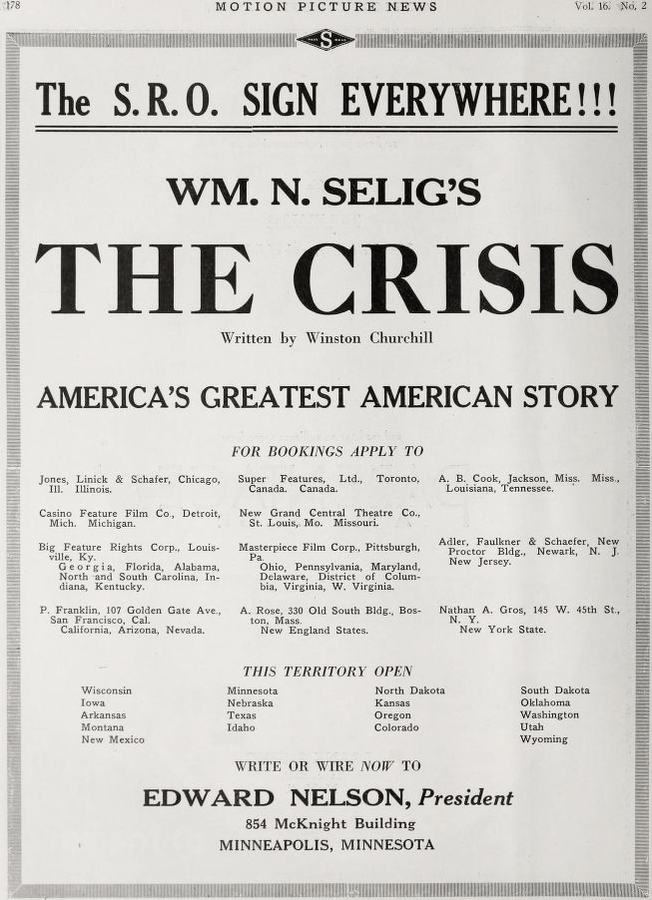
A definitive 6.3/10 rating for a film that redefined the boundaries of cult cinema. The Crisis remains a cornerstone of transgressive art.
Imagine, if you will, celluloid still warm from the printer’s lamp—1916 audiences gasped as a dolly rolled through oyster-shell streets toward the Old Courthouse dome, moonlight slicing the copper gutters like a scalpel. Inside that frame, Stephen Brice—incarnated by Tom Santschi with a jaw carved for marble—steps from shadow into gas-flare, his linen suit blanched to spectral white. The camera loves his hesitation; we read in the tremor of his gloved hand the entire nation’s fracture.
Director Colin Campbell, never one to flinch from spectacle, commandeered real Union uniforms mothballed in Springfield armories, then aged them in vats of chicory coffee so the indigo bled into bruise-colored truths. Bessie Eyton’s Virginia twirls hoopskirts heavy enough to anchor steamboats; when she enters frame, the camera cranes upward so the 45-foot muslin of her dress blooms like a battle flag in reverse motion. The effect is proto-Technicolor reverie achieved with hand-tinted amber and Prussian blue—tints that flicker across faces the way conviction flickers across conscience.
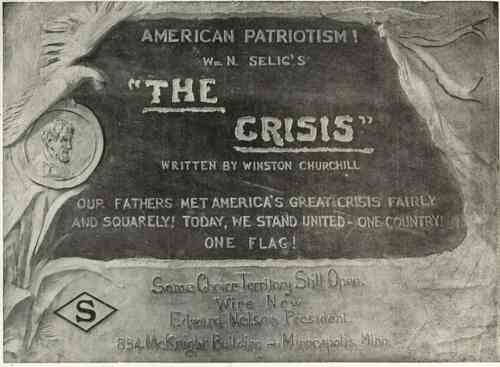
Eyton’s Virginia never once verges into the simpering belle cliché; instead she weaponizes etiquette, letting a fan snap shut like a Gatling breach to dismiss suitors. Watch her pupils eclipse the iris when she reads Sherman’s Special Field Order—an intertitle flashes, yet the horror is already etched in the tremor of lace at her clavicle. Opposite her, Santschi’s Brice wrestles with an ethical Rubik’s cube: every close-up reveals the vein at his temple mapping the Mississippi’s own tributaries. In the pivotal prison-camp scene, he removes his gauntlets finger by finger—an eternity of 14 frames—while deciding whether to sign the reprieve; the gesture is so microscopic you’ll lean toward the screen as though breath could sway history.
Lanier Bartlett trims the author’s 600-page tome into a lit-fuse narrative. Where Churchill lingered on political stump speeches, Bartlett distills rhetoric into visual semaphore: a fluttering Stars & Stripes dissolves into Confederate battle standard via match-cut, the pole transforming from wood to brass in the splice—ideology melted and re-cast in the blink of an eye. Dialogue intertitles eschew the musty “Sir, I protest!” cadence; instead we get shards like:
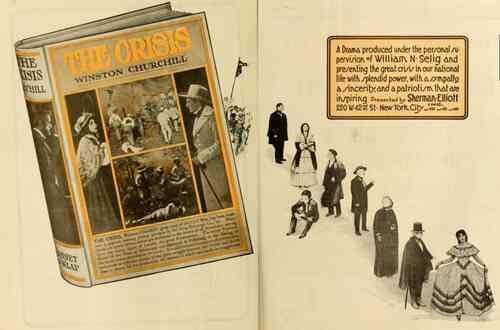
Blood-signed oaths carry farther than ink ever dared.
Read that line aloud—it tastes of iron.
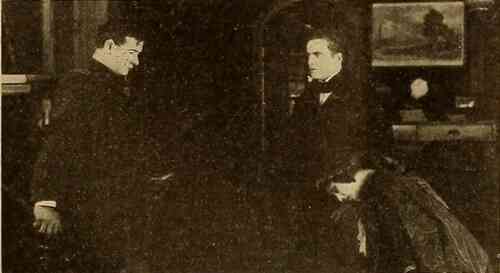
Most Civil War romances plant us safely in hindsight’s moral loft; The Crisis refuses that hammock. Brice’s dilemma is not merely “save rival or let him hang.” It’s the calculus of legacy: intercede and he brands himself Union apostate; stay silent and Virginia’s heart calcifies into mourning stone. Campbell stages this crucible inside a lantern-lit tent whose canvas walls ripple like conscience itself—shadows of Union officers loom 12 feet tall, elongating Brice’s silhouette until he appears to duel his own doppelgänger. The film dares viewers to ask: would you trade national salvation for one trembling heartbeat?
Critics often anoint The Battle of Gettysburg or The Birth of a Nation as the war’s celluloid gospel, yet The Crisis offers a moral sophistication those epics dodge. Griffith’s film treats history as pageant; Campbell treats it as open wound. Compare Virginia’s dilemma to Mary Denby’s economic crucible in The Golden Chance—both women navigate cages of social expectation, but Virginia’s bars are forged of patriotism, not poverty. Likewise, Brice’s ethical vertigo anticipates the Faustian bargains in One Million Dollars, yet here the currency is blood, not bullion.
Restorationists at EYE Filmmuseum discovered that original prints shipped with a tinting cue sheet—night scenes drenched in aquamarine to echo Union navy, while Confederate interiors glow tangerine as though lamps burn Southern topsoil. The climactic gallows dawn is hand-painted amber bleeding into slate—a sunrise that feels ashamed to arrive. These chromatic choices weaponize color psychology decades before it earned academic jargon.
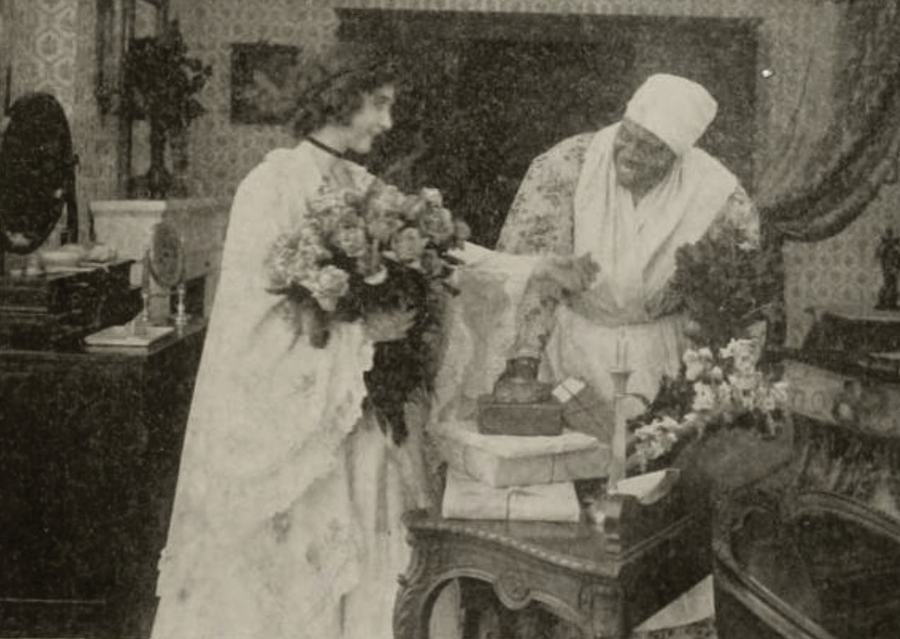
For decades, The Crisis slumbered in the vault of oblivion—one negative lost to the 1919 Paragon Studios fire, another misfiled under “Crisis—Farm Short.” Then in 2018, a nitrate haul in an abandoned Dutch monastery revealed a 137-minute print, shrink-wrapped by time. Digital 4K scans reveal pores beneath powder, the terror behind greasepaint; suddenly 21st-century cinephiles confront the same moral whiplash that staggered audiences a century prior.
Though originally accompanied by W. Franke Harling’s orchestral score (now lost), contemporary screenings thrive on curated dissonance—Philip Glass motifs braided with field recordings of cicadas from present-day Vicksburg. The insects’ drone bridges 160 years, reminding viewers that soil remembers even when nations forget.
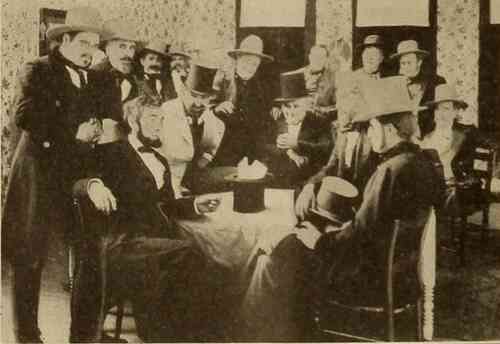
In an era where ideological chasms feel insurmountable, this 106-year-old whisper across time offers neither balm nor sermon—only a mirror. Streaming platforms list it under “classics,” but I prefer to call it future nostalgia: the ache of recognizing tomorrow’s wounds in yesterday’s scars. Queue it up after Sealed Lips for a double bill on secrecy, or precede it with The Mill on the Floss to witness how floods—literal and political—reshape destinies without consent.
Campbell denies us catharsis. The last shot freezes on Brice’s eyes reflected in Virginia’s mourning locket—two tiny Union blues orbiting a sepia galaxy. No iris-out, no swelling strings, just a cut to black that feels like a rifle report. You’ll sit through the credits (yes, silent films have credits now) wondering whose side history took, realizing the crisis in question is not the war, not the romance, but the moment each of us decides what we’re willing to crucify for a creed.
Verdict: essential viewing for anyone who believes cinema’s highest calling is not to answer moral questions but to frame them so sharply they cut your palms while you hold them. The Crisis isn’t a relic; it’s a loaded musket—handle with trembling care.
IMDb —
1927
Community
Log in to comment.