Is La nuit de la revanche worth watching today? Short answer: yes, but with significant caveats. This early French drama, a compelling if somewhat melodramatic exploration of loyalty and forbidden love, offers a fascinating glimpse into a particular era of filmmaking and storytelling. It’s a film that will resonate deeply with cinephiles who appreciate historical cinema and character-driven narratives, especially those unafraid of slower pacing and overt emotionality.
However, it is decidedly not for viewers seeking rapid-fire action, nuanced psychological depth by modern standards, or a story that avoids the tropes common to its time. Those accustomed to contemporary narrative structures might find its resolutions abrupt, even jarring. Yet, for the right audience, it’s a rewarding experience.
Here’s a quick breakdown:
This film works because... it possesses a raw, dramatic core centered on powerful, archetypal conflicts: the law versus the outlaw, and forbidden love versus familial duty. The narrative, while direct, is inherently compelling, drawing the viewer into a world of high stakes and stark choices. It’s a testament to the enduring power of classic storytelling.
This film fails because... its resolutions, particularly the swift transition from profound grief to marital bliss, feel underdeveloped and perhaps even ethically questionable by modern sensibilities. The film’s pacing can also be challenging for contemporary audiences, with moments that feel protracted before pivotal events unfold.
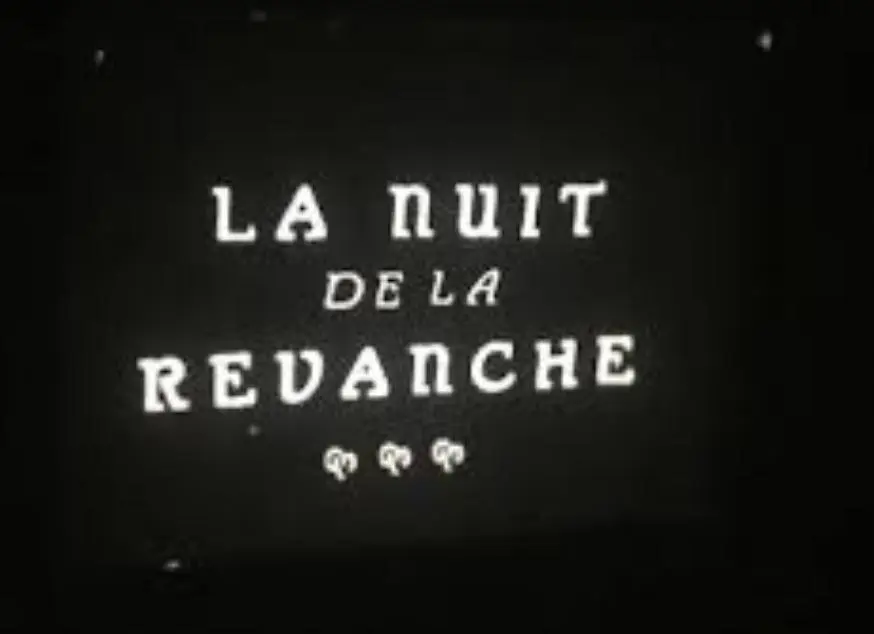
Scene from La nuit de la revanche
Cinematic perspective: Exploring the visual vocabulary of La nuit de la revanche (1925) through its definitive frames.
You should watch it if... you are a student of early cinema, appreciate strong, albeit straightforward, dramatic tension, or enjoy narratives where moral ambiguity is less a feature and more a consequence of a brutal world. It’s also a must-see for fans of Julien Duvivier's early work, offering insight into his developing thematic concerns.
The Heart of the Conflict: A Feud Forged in Fire and Love
La nuit de la revanche unfurls a narrative steeped in classic melodrama and a surprisingly brutal reality. At its core is the relentless struggle between Saluccio, a smuggler kingpin whose reign is built on fear and a twisted sense of loyalty, and Antonio, the resolute gendarme chief. This isn't merely a cat-and-mouse chase; it's a deeply personal vendetta, underscored by Antonio's unwavering vow to capture Saluccio, dead or alive. The stakes are immediately apparent, painting a world where law and crime are two sides of a very sharp coin.
What elevates this beyond a simple crime drama is the character of Marina, Saluccio’s daughter. Her internal conflict is the emotional anchor of the film. She is torn between her filial duty, her mother Teresa's unwavering support for her brutal husband, and a burgeoning, illicit love for Antonio. This isn't a subtle emotional wrestling; it's a profound, almost Shakespearean dilemma that pits blood against heart. The film excels in setting up this impossible choice, even if its ultimate resolution feels somewhat rushed.
The theme of loyalty is paramount. Saluccio commands it through fear, yet the loyalty of his wife, Teresa, seems genuine, a tragic testament to the bonds forged in hardship. Marina’s struggle, however, represents a challenge to this established order, suggesting that personal desire can, and perhaps should, transcend inherited feuds. The narrative’s strength lies in its ability to articulate these themes through the stark choices its characters are forced to make, culminating in a violent, definitive confrontation that leaves no room for compromise.
It’s a story that doesn't shy away from the harsh realities of its world. The 'night of revenge' promised in the title is not merely a metaphor; it’s a literal battle, a visceral clash that defines the narrative’s turning point. The film, in its depiction of this struggle, suggests that such conflicts rarely end cleanly, and often, the aftermath is more complex than the victory itself. The ultimate pairing of Marina and Antonio, while narratively conclusive, leaves a lingering sense of unease, a question mark over the true cost of peace.