DbcultAccessing Vault...
Cult Review
Senior Film Conservator
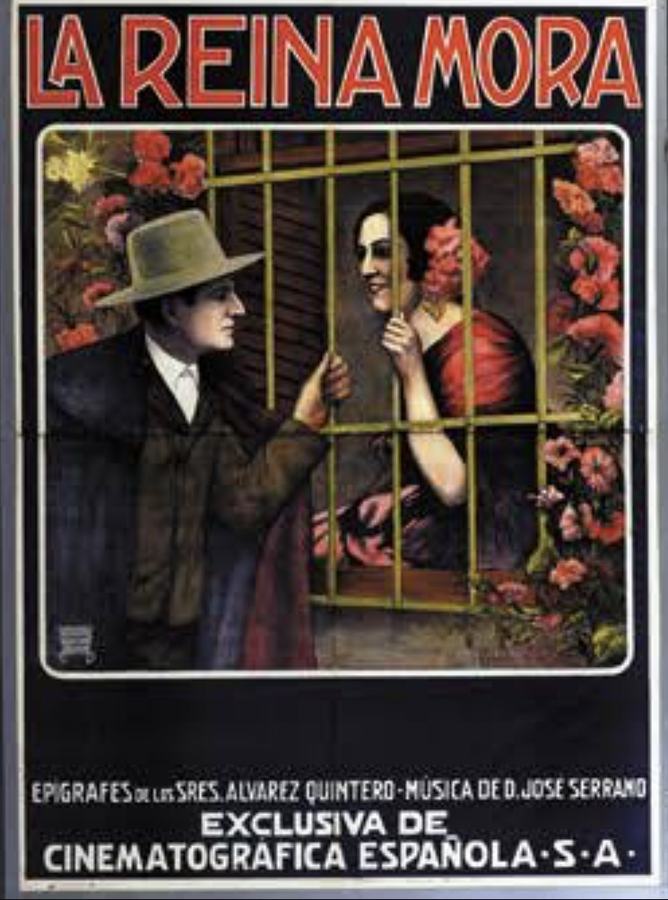
The year 1922 represented a pivotal juncture for European cinema, a period where the primitive experimentalism of the previous decade began to coalesce into a sophisticated visual language. In Spain, this evolution was uniquely tethered to the nation’s rich theatrical and musical heritage. La reina mora, directed by the prolific José Buchs, stands as a luminous artifact of this era, successfully transposing the lyrical essence of the zarzuela into the silent medium. While contemporary audiences might find the lack of auditory accompaniment in a musical adaptation paradoxical, Buchs utilizes a gestural vocabulary that transcends the need for a libretto, creating a rhythmic visual experience that is inherently melodic.
The source material, penned by Serafín and Joaquín Álvarez Quintero, provides a narrative bedrock that is both deeply regional and universally resonant. The brothers were masters of the *costumbrismo* style, capturing the idiosyncratic customs of Andalusia with a blend of humor and pathos. In La reina mora, this manifests as a meticulous attention to the socio-cultural fabric of Seville. Unlike the grand, sweeping historical epics like The Three Musketeers (1921), which relied on kinetic action and international archetypes, Buchs’ work is an intimate exploration of space and character. The film’s pacing is deliberate, allowing the viewer to absorb the atmospheric details of the Andalusian setting—the play of light on whitewashed walls, the intricate ironwork of the balconies, and the expressive stillness of the performers.
The casting of Gloria Aymerich as Coral is nothing short of inspired. Aymerich possesses a face that seems carved from the very marble of the city she inhabits. Her performance is a masterclass in restraint; she conveys the 'Moorish' exoticism and the crushing weight of her seclusion through subtle shifts in posture and gaze. Contrast this with the more histrionic styles prevalent in American imports of the time, such as The Heart of Humanity, and one finds a distinct European sensibility that favors psychological depth over overt melodrama. Aymerich’s Coral is not merely a damsel in distress; she is a woman whose agency has been redirected inward, transforming her solitude into a form of silent protest against the moral rigidities of her environment.
Technically, La reina mora demonstrates a sophisticated understanding of light and shadow, reminiscent of the burgeoning Expressionist movement elsewhere in Europe, though grounded in a more naturalistic palette. The cinematography captures the stark, unforgiving sun of the Spanish south, using it to create sharp contrasts that mirror the moral binaries of the plot. The interior scenes, particularly those within Coral’s home, are steeped in a heavy chiaroscuro that emphasizes her isolation. This visual strategy aligns the film with other avant-garde explorations of the era, such as the evocative lighting found in Otrávené svetlo, though Buchs applies these techniques to a narrative that is fundamentally folk-driven rather than noir-ish.
The supporting cast, featuring stalwarts like José Montenegro and Francisco Cejuela, provides a robust counterpoint to Aymerich’s ethereal presence. Montenegro, in particular, anchors the film with a grounded masculinity that serves as the catalyst for the central conflict. The fight sequence, which leads to Esteban’s imprisonment, is staged with a raw, unvarnished energy that avoids the polished choreography of later cinema. It feels visceral and impulsive, a momentary lapse in judgment that precipitates a lifetime of regret. This thematic focus on the irreversible consequences of a single act of violence links the film to the gritty realism explored in Bare Fists, yet Buchs couches this grit within a framework of romantic tragedy.
The title itself, La reina mora, invokes a complex layering of Spanish history and identity. By labeling the protagonist a 'Moorish Queen,' the narrative taps into the deep-seated cultural memory of the Reconquista and the subsequent centuries of North African influence in Andalusia. This isn't the romanticized Orientalism found in Hollywood’s The Arab; rather, it is a localized metaphor for 'the other'—the woman who exists on the periphery of the community’s social norms. Coral’s seclusion is interpreted by the townsfolk as something mystical or exotic, when in reality, it is a deeply human response to trauma and loyalty. Buchs masterfully deconstructs this myth-making process, showing how the community’s gaze both elevates and imprisons the individual.
When compared to films like The Ornament of the Lovestruck Heart, which deals with similar themes of devotion and aestheticized longing, La reina mora feels more firmly rooted in the dust and heat of the real world. There is a tangible texture to the film—the viewer can almost feel the grit of the Sevillian streets and the coolness of the shaded patios. This tactile quality is a testament to Buchs’ directorial vision, which prioritized authenticity over studio-bound artifice. Even the costumes, while undoubtedly stylized for the camera, retain a sense of lived-in reality that enhances the film’s immersive power.
The narrative economy of the film is noteworthy. In an era where many features suffered from bloated intertitles and redundant scenes, Buchs keeps the focus tightly on the emotional arc of his characters. The subplot involving Don Juan de Dios serves as a necessary friction, illustrating the predatory nature of social attention that Coral must navigate. It highlights the vulnerability of a woman without a male protector in a patriarchal society, a theme that resonates with the social critiques found in What's Wrong with the Women?, albeit through a more traditionalist lens.
The film’s resolution, while adhering to the conventions of the genre, carries a bittersweet resonance. It does not offer a simplistic 'happily ever after' but rather a restoration of balance that has been hard-won through suffering. The final frames leave the viewer with a sense of the cyclical nature of life in Seville—the festivals will continue, the sun will remain relentless, and the stories of honor and heartbreak will be told and retold. This sense of continuity is a hallmark of great *costumbrista* art, and Buchs captures it with profound sensitivity.
To fully appreciate the achievement of La reina mora, one must look at it alongside the broader cinematic output of 1922. While American cinema was perfecting the slapstick of the everyman or the grandeur of the Western, Spanish cinema was looking inward, exploring the depths of its own folklore. If we look at Putting It Over (1922), we see a focus on modern urbanity and lighthearted social climbing. In contrast, La reina mora is a meditation on the weight of the past. It shares more DNA with the melancholic beauty of Her Greatest Love, where the interior life of the protagonist becomes the primary landscape of the film.
Furthermore, the film’s handling of justice and the legal system, through the lens of Esteban’s incarceration, provides a fascinating glimpse into the era’s judicial anxieties. This is not the procedural drama of The Bromley Case, but a more fatalistic view of the law as an impersonal force that disrupts the natural order of human relationships. The prison is not just a building; it is a void that swallows years of a man’s life, leaving those on the outside to wither in waiting. This thematic depth elevates the film from a mere adaptation of a stage play to a significant work of visual storytelling.
Ultimately, La reina mora is a triumph of atmosphere. It is a film that requires the viewer to slow down and enter its specific temporal flow. The collaboration between José Buchs and the Quintero brothers resulted in a work that is both a preservation of a specific cultural moment and a timeless exploration of the human condition. The performances, particularly by Aymerich, remain startlingly modern in their emotional clarity. In the pantheon of silent cinema, this film deserves a place of honor, not just as a piece of Spanish heritage, but as a compelling example of how cinema can articulate the unspoken complexities of the heart. It stands as a testament to the power of the image to convey the soul of a people, far more effectively than words ever could. For those who seek a cinema that is as much about the spaces between the actions as the actions themselves, La reina mora is an essential, hauntingly beautiful experience.
In the broader context of Buchs' career, this film represents a peak of his ability to synthesize disparate artistic influences. It lacks the overt propaganda of later nationalistic works like Gloria: Apoteosi del soldato ignoto, focusing instead on the personal as the political. It is a film about the sovereignty of the individual in the face of communal pressure. Like the silent protagonists of The Silent Voice or the haunted figures in The Terror (1920), Coral and Esteban are characters defined by what they cannot say, making their eventual resolution all the more powerful. La reina mora remains a vital, breathing piece of cinema, a window into a world of shadow, lace, and unyielding devotion.
IMDb 6.1
1922
Community
Log in to comment.