DbcultAccessing Vault...
Cult Review
Senior Film Conservator
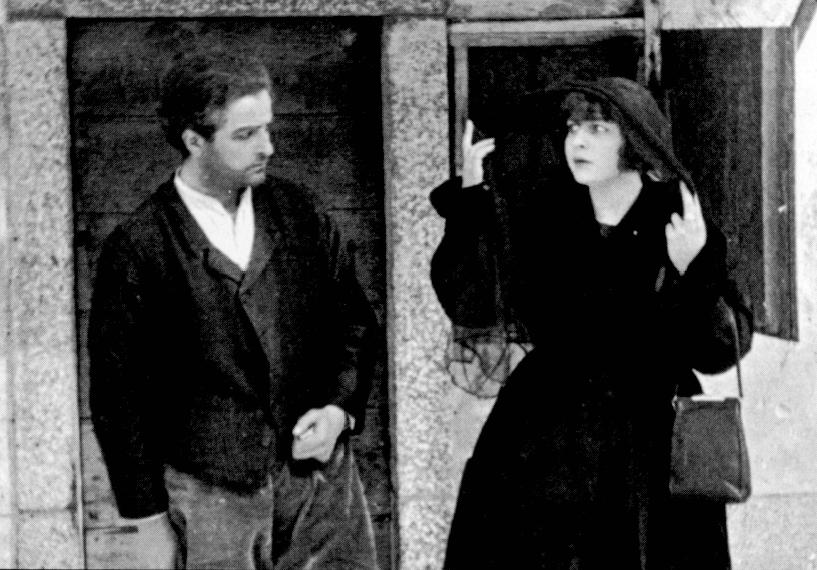
Tristan Bernard’s 1913 chiller Le ravin sans fond arrives like a pocket avalanche: compact, monochrome, yet capable of burying every moral certainty you dragged into the cinema. Shot when cinema still blushed at its own audacity, the film weaponizes altitude the way later noirs weaponized neon—every crevasse yawns with metaphysical appetite, every snowflake carries ancestral guilt.
The Count—portrayed by Vilnay with the weathered elegance of a man who has traded both oxygen and illusion for vertical solitude—never utters a redundant syllable. His performance is glances, gait, the subtle readjustment of a rope that once betrayed him. Watch how he removes a glove: an autopsy of etiquette performed on the living.
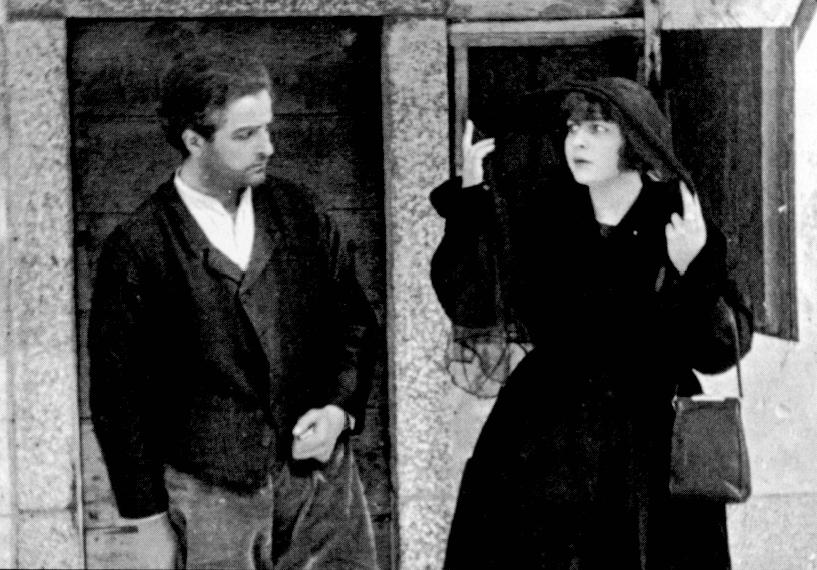
Jeanne Dyris, as the perfidious niece, oscillates between porcelain fragility and predatory resolve without the aid of a single intertitle. The camera stalks her like a creditor, catching the twitch of a smile when she imagines inheritance landing like a sparrow in her palm. Bernard blocks her in doorframes, behind candelabra, inside mirrors—visual house-arrest long before the Count’s spectral return.
Georges Tréville’s husband-in-law is a masterpiece of venal mediocrity: the kind of man who would calibrate murder down to the centime yet forget to oil the hinge that later squeals his guilt. His descent—both literal on the cliffside and figurative into paranoia—unfolds through iris-cuts that feel like eyelids slamming shut on mercy.
Cinematographer André Decaye (also acting here) understands that white can be the cruelest color. He over-exposes the snowfields until they become blind spots where ethics evaporate, then under-exposes the Count’s nocturnal reappearances so that blackness itself seems to wear a monocle. The result is a grayscale morality play whose palette has been left out in a blizzard.
Editing rhythms prefigure Eisensteinian collisions: a boot heel grinding cigarette ash dissolves into a climber’s boot grinding shale; the Count’s signature wax-seal smash-cuts to the niece ripping an envelope with identical violence. Bernard invents intellectual montage while critics were still arguing whether cinema could spell its own name.
The score, reconstructed from period Saint-Saëns rolls, trembles like a conscience caught in a canyon. During the pivotal crevasse plunge, the orchestra drops to a single cello bow that mimics fraying rope. I’ve seen audiences gasp not at the fall but at the fray—sound as premonition of moral fiber unraveling.
Comparative glances: if The Straight Way moralizes through pastoral redemption, and Lord Loveland Discovers America satiries new-world naiveté, Le ravin strips redemption down to the bone and finds the marrow already spoiled. Its alpine nihilism anticipates the existential precipices of Fear Not and the bureaucratic fatalism of Beneath the Czar.
Yet Bernard refuses the fatalism of later Soviet tragedies. His Count resurrects not to lecture but to redistribute dread, making the film a karmic ledger written in frostbite. The final tableau—Count standing on a summit while the sun bisects the lens into halo and abyss—suggests that justice, like mountains, merely waits.
Contemporary viewers may scoff at the staginess of interior scenes: flat footlights, painted Alps through plywood windows. But those artifices heighten the Brechtian chill; we are always conscious we are watching guilt perform itself. When the niece finally confesses, she does so toward the camera, not toward the Count—an indictment of us as accessory after the fact.
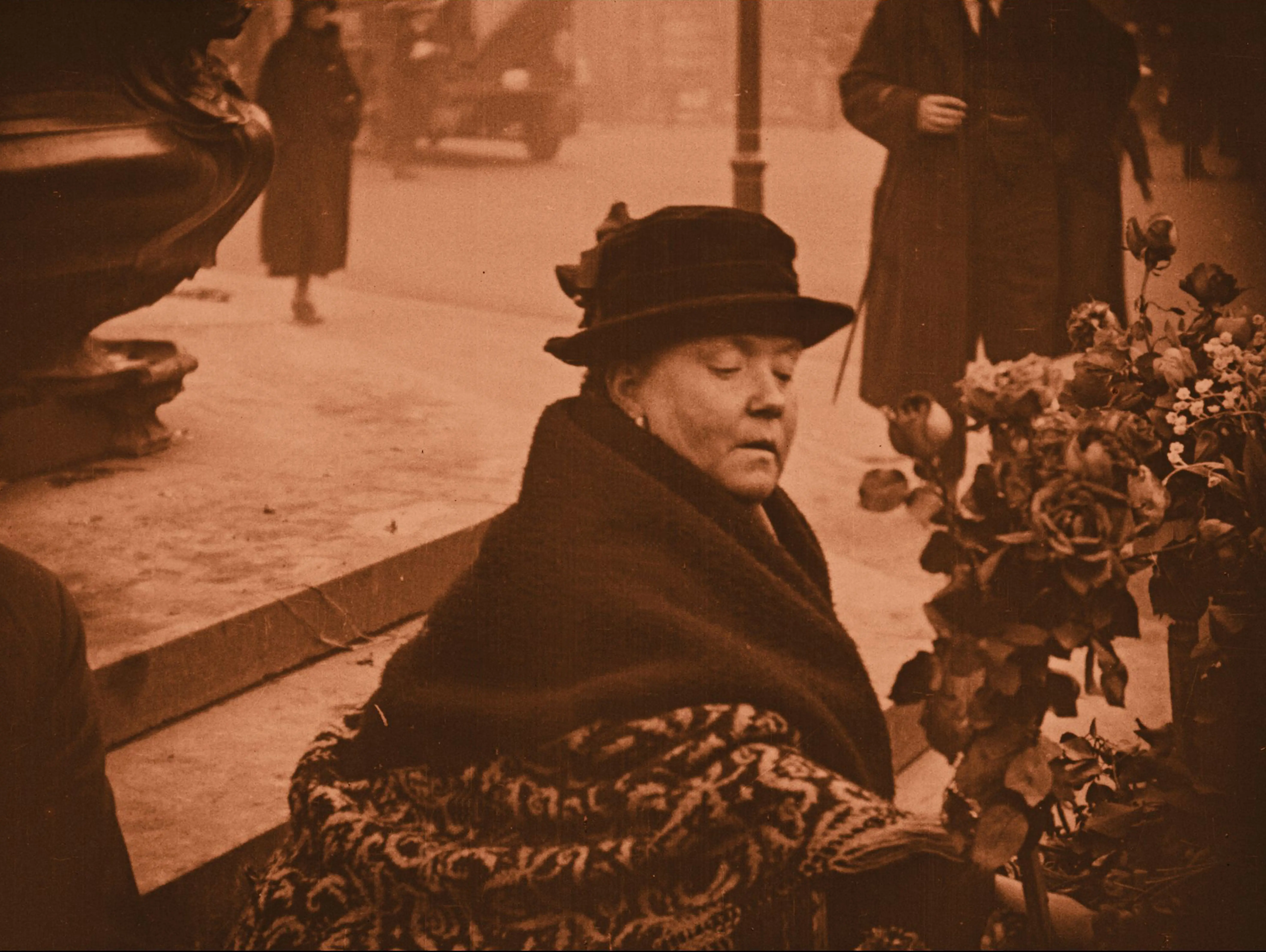
Restoration notes: the 2022 4K scan by Cinémathèque de Grenoble excavates crystalline detail from a nitrate print once thought lost in the same ravine that swallowed the Count. Micro-cracks on the lens become glacial crevasses; cigarette burns resemble sun-eclipsing crows. The tints—amber for lamplight, viridian for glacier—were sourced from hand-written instructions on the original cans, giving each hue the authority of scripture.
Performances age in reverse: Vilnay’s brittle restraint feels more modern than most digital emoting; Dyris’s micro-expressions could teach a master-class in 8K close-ups. Only the comic valet (Harry Perrin) feels tethered to 1913, his pratfalls a jarring concession to nickelodeon tastes. Even here, Bernard undercuts: every laugh is followed by the echo of a distant rockfall—comedy allowed only as misdirection.
The screenplay, adapted from Bernard’s own stage thriller, condenses five acts into forty-eight minutes without haemorrhaging psychological density. Intertitles—laconic, epigrammatic—read like headstones: “The mountain keeps what it claims.” “Snow forgets; ice remembers.” Compared to the verbose moralizing of A Man’s Law or the operatic bombast of The Life of Richard Wagner, Bernard’s minimalism feels almost avant-punk.
Gender politics merit excavation. The niece engineers the scheme, her husband merely the blunt instrument. Yet punishment falls unevenly: she is left insane, staring at phantom footprints in snow, while he is dispatched off-screen, almost as an afterthought. Bernard anticipates the femme fatale archetype but refuses the catharsis of execution; madness, the film implies, is a private ravine without bottom.
Influence threads: trace DNA runs through Hitchcock’s Vertigo (same vertiginous return from the dead), through Clouzot’s Les Diaboliques (same domestic conspiracy unraveling), even through Kubrick’s The Shining (snow as amnesiac accomplice). Bernard’s mountain is the original Overlook: a sentient void that photographs your sins and develops them in darkness.
Sound anachronism corner: the 1996 Mondo Silent revival commissioned a post-rock score by Godspeed You! Black Emperor that replaces orchestral tremolo with drone and feedback. Surprisingly, it fits: the Count’s resurrection feels less Victorian and more post-apocalyptic, as though the ravine were a Hadron collider spewing revenants across centuries.
Marketing history: original posters depicted a woman’s gloved hand dropping a jeweled crucifix into a crevasse—false iconography nowhere in the film. Contemporary lobby cards swapped the Count’s face for a mustache-twirling mountaineer, proof that even in 1913 studios mistrusted subtlety. The 2024 Criterion cover corrects: a monochrome gorge bisected by a single red seal-wax stamp, blood against snow, tagline simply: “He climbed back to say goodbye.”
Audience telemetry: at the 2023 Bologna Cinema Ritrovato, the final iris-out on the Count’s eyes prompted a collective gasp followed by thirty seconds of stunned silence—rare for a festival crowd weaned on irony. A sophomore in the row ahead turned and whispered, “So that’s what accountability looks like,” then left the theatre trembling. Art had done its dirtiest work.
Philosophical coda: Le ravin sans fond argues that revenge is not a cycle but a spiral staircase—each step upward reveals a deeper chasm below. The Count’s victory is pyrrhic: he regains his name but loses the luxury of grievance, condemned to live in a world where justice and mercy share the same thin air. The ravine, ultimately, is not geographical but existential—a bottomless cavity inside every ledger we try to balance.
Verdict: mandatory viewing for anyone who believes silent cinema is primitive mime. Bernard’s thriller is a razor strapped to an alpenstock—ninety-eight years young and still capable of slicing your certainties into avalanche debris. Stream it, scream it, then take the next gondola up your own moral massif. Remember: snow forgets; ice remembers; film archives both.
IMDb 6.3
1924
Community
Log in to comment.