DbcultAccessing Vault...
Cult Review
Senior Film Conservator
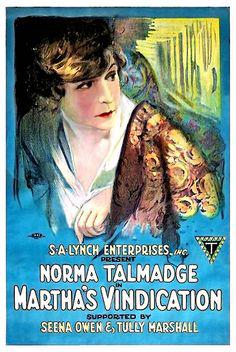
Martha’s Vindication is less a film than a frostbitten psalm—each frame an icicle dangling over the throat of its characters, each intertitle a crack in the frozen river we call conscience.
Director Tom Ricketts shot the picture in late 1914 on the frost-slick backlots of Santa Barbara, yet the resulting one-reeler feels exhumed from some 17th-century graveyard where the headstones are carved with verses from Leviticus. The narrative, penned by Ella Carter Woods, distills the Puritan terror of visible sainthood: one blemish and your soul is branded tinder for hell. Woods’ scenario is a corset laced so tight that every breath sounds like a moral transgression; the film’s 18-minute running time wheezes with the metallic taste of iron-clad dogma.
Cinematographer Charles Stumar limns the interiors in cavernous chiaroscuro—faces hover like half-formed ghosts inside whale-oil auras, while windowpanes become cataracts of white fire. When Martha (Josephine Crowell) tiptoes through the snow to the wet-nurse’s hovel, the birch trunks flare like pale apostrophes punctuating the sentence of her exile. The camera lingers on her back as if reluctant to intrude upon so private a damnation; the crunch of her bootprints is rendered only by the orchestral rustle of a live-house piano, yet you swear you hear the snow scream.
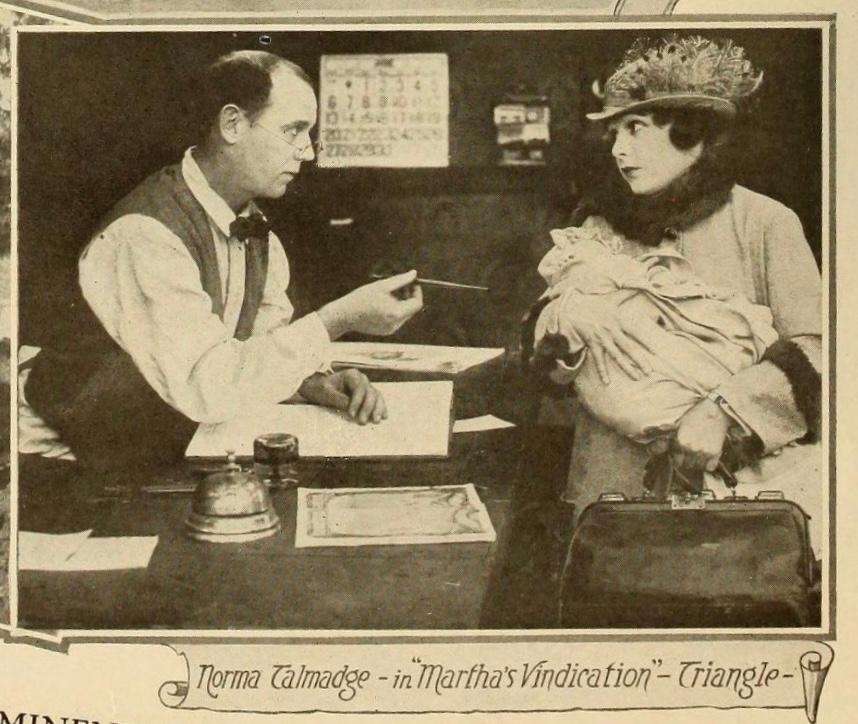
Compare this to the sun-dappled pastorals of Fanchon, the Cricket where nature cavorts with adolescent whimsy; here, nature is a prosecuting attorney, every twig a potential witness.
Josephine Crowell’s Martha is a masterclass in suffocated dignity. Her eyelids behave like theater curtains—when they lift, daylight floods the crime scene of her reputation; when they fall, you hear the thud of a coffin lid. Watch the moment Hawkins hurls his accusation: her shoulders square into a Pietà without child, the steeple-shadow slicing her face into guilty-and-innocent halves. She never overplays the martyr; instead she petrifies into a living monument of chosen disgrace.
Norma Talmadge, still a year away from electrifying prestige melodramas, essays Dorothea with porcelain panic. Her crisis is internal—cheeks waxen, breath shallow, the terror of exposure percolating behind a lace fan. In the climactic church scene, the actress lets the mask slip by degrees: first a blink too rapid, then a gasp that snags on her own corset bones, finally a sprint that shreds the membrane between maternal instinct and social suicide. The performance is silent yet sonically deafening.
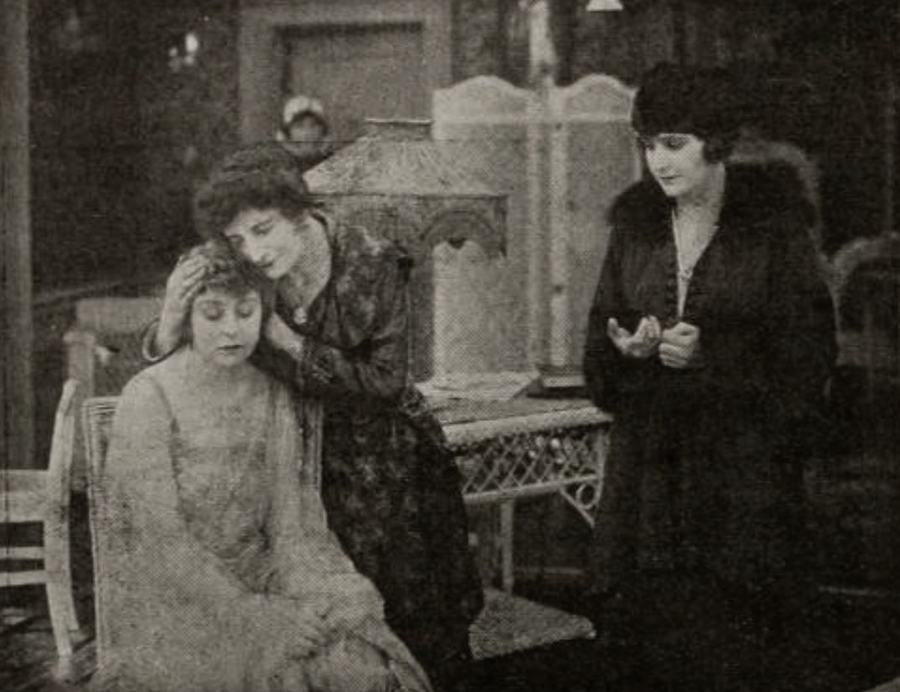
The injured infant functions as both McGuffin and Eucharist—carried into the sanctuary like a wafer of living flesh. Ricketts cross-cuts between three planes of worship: the elders’ pharisaic glare, Martha’s cruciform stillness, Dorothea’s tremulous Ave Maria. Editing here predates Griffith’s syntactic refinements by mere months, yet the montage is already conversant in gospel grammar. When Dorothea’s hand brushes the baby’s fevered brow, the gesture is shot in insert—an intimate communion that detonates her deceit. The congregation recoils as though the wafer has transubstantiated into a screaming demon of adulterous truth.
Woods’ screenplay inverts the Madonna/whore binary by forcing both women to inhabit each pole simultaneously. Martha, the presumed harlot, radiates ethical auroras; Dorothea, the sanctified matron, conceals a serpentine duplicity. The film thus anticipates the dialectics of Carmen wherein sexual autonomy is punished, yet it complicates the scaffold by making the true mother complicit in her friend’s public stoning.
This thematic audacity places Martha’s Vindication closer to Scandinavian moral chiaroscuros like Lika mot lika than to domestic temperance tracts of the era.
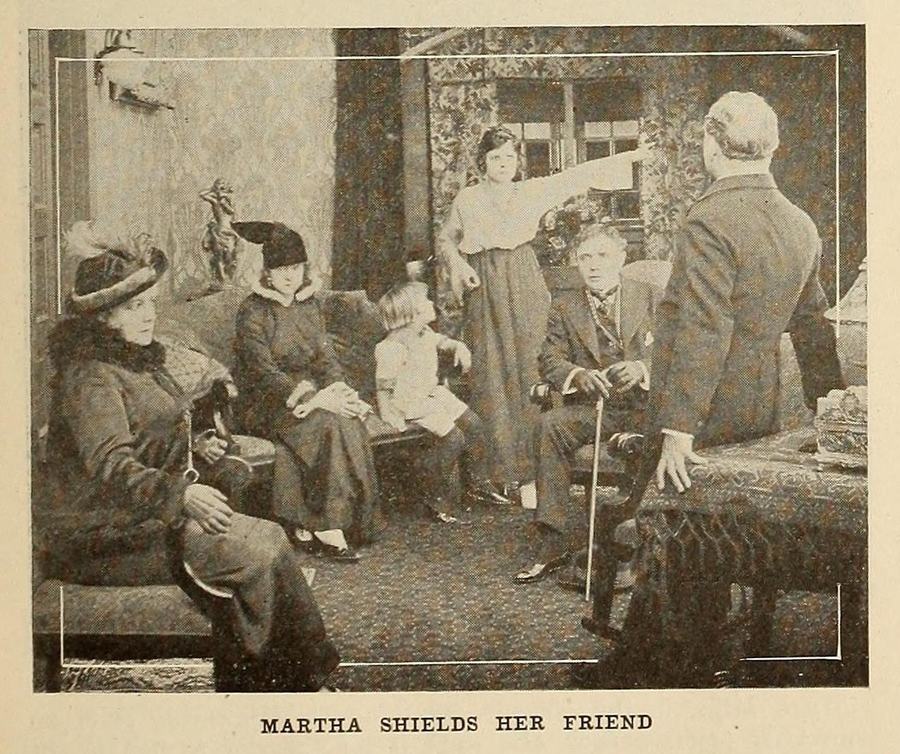
Surviving cue sheets suggest a palette of minor-key hymns and tremolo strings. Exhibition reports from the Princess Theatre, Chicago, describe an organist who interpolated “Rock of Ages” during Martha’s perp-walk, transmuting the hymn into a dirge of ironic grandeur. Modern restorations often commission new scores; the 2018 Pordenone premiere paired the film with a string quartet whose pizzicato evoked falling icicles, culminating in a dissonant crescendo as Dorothea’s lie metastasizes into communal knowledge.
Contemporary trade rags dismissed the film as “another preacher-worthy lesson on scarlet sins” (Moving Picture World, Jan 30 1915). Yet by the 1970s, feminist archivists resurrected the print as proto-#MeToo scripture—a celluloid tract on the economies of reputational labor. The film’s brevity became its hermeneutic strength: in under twenty minutes it stages the entire pipeline of patriarchal judgment, sisterly sacrifice, and the semiotic slippage of motherhood.
A 35mm nitrate positive was salvaged from the Dawson Film Find in 1978, albeit with act-length condensation. The Library of Congress holds a dupe riddled with emulsion scabs; digital 4K scanning is rumored for 2025, funded by a consortium of silent-film Patreon benefactors. Should the project surface, expect a Kino Lorber or Criterion boutique release paired with an essay on the theological semiotics of out-of-wedlock birth in Progressive Era cinema.
Unlike the picaresque masculinity of Chimmie Fadden Out West or the revolutionary hagiography of The Life of General Villa, Martha’s Vindication trains its lens on the claustrophobic domestic sphere. It shares DNA with The Murdoch Trial in its courtroom-adjacent suspense, yet surpasses that title by locating the tribunal inside the human heart. Meanwhile, The Buzzard’s Shadow externalizes guilt through landscape noir; here, guilt is a blood-borne pathogen, invisible until it blooms into public spectacle.
Because we still live in towns where reputations combust on social-media pyres. Because women’s bodies remain battlegrounds for theological debate. Because the flicker of a hundred-year-old image can refract your own cowardice back into your pupils. Martha’s Vindication is not a quaint artifact; it is a hand-cranked mirror. Crank it fast enough and you might see your own face where Martha’s stoic agony glows. The vindication belongs not to Martha alone, but to every spectator willing to peel back the starched collar of moral complicity and breathe the sulfurous air of another human’s shame.
If you emerge from those 18 minutes unshaken, consult your pulse—you may already be frozen into the same marble sanctimony that once encased Dorothea’s heart.
IMDb —
1924
Community
Log in to comment.