DbcultAccessing Vault...
5.6/10
Senior Film Conservator
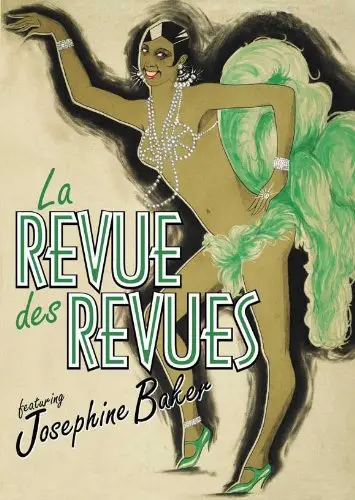
A definitive 5.6/10 rating for a film that redefined the boundaries of cult cinema. La revue des revues remains a cornerstone of transgressive art.
Is La Revue des Revues worth watching today? Short answer: absolutely, but with a crucial understanding of its historical context and primary appeal. This film is an essential watch for cinephiles, dance historians, and anyone fascinated by the roaring twenties and the birth of celebrity, particularly those eager to witness Josephine Baker's groundbreaking magnetism. It is decidedly not for viewers seeking a robust narrative, complex character development, or modern pacing.
For those who approach cinema as a window into the past, as a living archive of cultural moments, La Revue des Revues offers an invaluable, if uneven, experience. It’s less a film in the conventional sense and more a meticulously preserved, albeit flickering, record of a bygone era’s extravagant entertainment.
This film works because of its unparalleled historical document status, capturing a pivotal moment in Parisian entertainment and immortalizing Josephine Baker's raw, revolutionary talent.
This film fails because its nominal plot is flimsy, serving merely as a threadbare excuse for a succession of variety acts, which can feel disjointed and repetitive to a contemporary audience.
You should watch it if you appreciate silent-era spectacles, have an interest in early 20th-century dance, or want to experience the sheer, unadulterated star power of Josephine Baker at her absolute peak.
Released in 1927, La Revue des Revues is a vibrant time capsule, transporting viewers directly into the heart of Paris’s hedonistic cabaret scene. It’s a period piece that feels less like a narrative film and more like a curated exhibition of the era’s most daring and celebrated performers. The film’s very existence is a testament to the allure of the music hall, an institution that captivated audiences with its blend of music, dance, and spectacle.
Director Joe Francis, alongside writer Clément Vautel, understood that the true draw wasn't a complex storyline, but the sheer, unadulterated energy of the stage. This understanding shapes every frame, making the film a fascinating study of what audiences valued in entertainment almost a century ago. It's a snapshot of a world teetering on the edge of profound social and cultural change, where the boundaries of performance were being joyously pushed.
The nominal plot of La Revue des Revues revolves around Gabrielle, played by Hélène Hallier, an innocent aspiring chorine who, through a stroke of luck and a publicity stunt, becomes a star. It’s a classic Cinderella story, light and frothy as champagne bubbles, designed to provide a minimal framework. André Luguet also features, but his role, like Hallier’s, serves primarily as connective tissue between the grander set pieces.
One could argue that this narrative is so transparently thin that it almost becomes an unconventional observation in itself. It’s not just a weak plot; it’s a plot that seems deliberately underdeveloped, a winking acknowledgment that the audience isn't here for character arcs or dramatic tension. They are here for the show. This approach, while jarring for modern sensibilities accustomed to intricate storytelling, forces a re-evaluation of what a 'film' could be in its nascent stages.
Indeed, the story of Gabrielle’s rise is less a journey and more a series of brief pauses between explosions of performance. Her wide-eyed wonder often mirrors the audience’s own, positioning her as an avatar for the viewer rather than a fully fleshed-out character. The dramatic stakes are practically non-existent, and any emotional investment in her plight quickly dissipates once the next dazzling act takes the stage.
Where La Revue des Revues truly shines is in its relentless, unapologetic celebration of variety performance. The film is a white-hot, non-stop procession of outrageously and scantily attired exotic dancers, showgirls, and acrobats. The camera, rather than focusing on narrative, becomes a voyeur, lingering on the spectacle with an almost documentary-like intensity.
We are treated to the precise, synchronized movements of the Tiller’s Follies Girls, their formations a marvel of geometric elegance. Ruth Zackey and the Hoffmann Girls bring an exotic flair, their performances pushing the boundaries of what was considered acceptable on screen, hinting at the burgeoning sensuality that would define the era. Danseuse russe Lila Nikolska offers a more classical, yet equally captivating, artistry, providing a counterpoint to the more overtly modern acts.
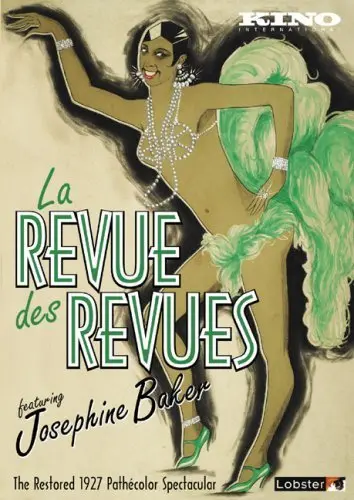
The cinematography, while basic by today's standards, effectively captures the energy and scale of these stage productions. The use of wide shots allows the grandeur of the sets and the multitude of performers to register, while occasional closer shots emphasize the intricate costumes and expressive faces. The black and white palette, far from being a limitation, lends a timeless, almost dreamlike quality to the proceedings, enhancing the theatricality.
But it is Josephine Baker who truly elevates La Revue des Revues from a mere curiosity to an indispensable piece of cinematic history. Her appearance is nothing short of electrifying. The moment she enters the frame, the film shifts. Her energy is raw, untamed, and utterly captivating. Her 'clownish backfield-in-motion Charleston shimmy' is not just a dance; it’s a force of nature, a joyful, defiant explosion of movement that feels revolutionary even today.
Baker's performance is a masterclass in stage presence. She commands attention with every twitch, every grin, every seemingly spontaneous burst of exuberance. She doesn't just perform; she embodies an entire cultural shift, a breaking free from rigid conventions. The camera struggles, almost delightfully, to contain her, yet it also revels in her unbridled charisma. Her segments are the film’s undeniable high points, proving that some stars simply transcend the limitations of their medium.
Her numbers are a stark contrast to the more polished, traditional acts. She brings an improvisational, almost anarchic spirit that is both disarming and utterly magnetic. It’s my contention that without Baker, La Revue des Revues would be a fascinating historical document; with her, it becomes an essential cultural touchstone.
Joe Francis’s direction is largely functional, prioritizing the clear presentation of the stage acts over narrative sophistication. The pacing is dictated by the revue format: one act flows into the next with minimal interruption. This creates a relentless, almost dizzying rhythm that can feel both exhilarating and, at times, exhausting. There’s little room for quiet reflection or character development, as the film is constantly pushing forward to the next spectacle.
The tone is consistently celebratory and extravagant. There’s an infectious joy that permeates the film, a sense of unbridled optimism characteristic of the Jazz Age. This exuberance is reflected in the elaborate sets, the lavish costumes, and the sheer number of performers. However, the lack of dramatic ebb and flow means that the film can occasionally feel monotonous to viewers accustomed to modern narrative structures. It is a spectacle. But it’s not a story.
Comparing it to a more narrative-driven silent film like From the Manger to the Cross, the contrast in directorial intent is stark. While the latter aimed for emotional resonance and epic scope, La Revue des Revues is content to simply dazzle. This isn't a flaw, but a deliberate choice that defines its unique appeal.
Yes, La Revue des Revues is absolutely worth watching today, especially for specific audiences. It offers an unparalleled window into 1920s Parisian cabaret culture. Its historical value as a document of early 20th-century performance is immense. Josephine Baker's electrifying performances alone make it essential viewing. However, be prepared for a minimal plot and a relentless succession of variety acts.
This film serves as a crucial artifact for understanding the evolution of popular entertainment. It demonstrates how early cinema captured and disseminated live performance, influencing future generations of filmmakers and performers. It's a testament to the enduring power of spectacle and the magnetic appeal of true star power.
La Revue des Revues is not a film to be judged by conventional narrative standards. It is, first and foremost, a document. A vibrant, audacious, and utterly essential document of a specific moment in time when Parisian nightlife was the envy of the world and Josephine Baker was its undisputed queen. If you approach it with this understanding, it transforms from a potentially disjointed collection of acts into a mesmerizing historical experience.
Its strengths lie entirely in its spectacle and its unparalleled capture of Baker's raw talent. Its weaknesses, primarily the negligible plot, fade into insignificance when faced with the sheer force of its performances. It’s a film that demands a specific kind of appreciation – one that values cultural archaeology and the sheer, unadulterated joy of live performance translated to the silver screen.
Ultimately, La Revue des Revues is a must-see for anyone interested in the history of entertainment, the silent era, or the indelible legacy of Josephine Baker. Don't go in expecting a cohesive story; go in ready to be transported, to witness a legend in the making, and to marvel at the dazzling, defiant spirit of the 1920s. It works. But it’s flawed. And in its flaws, it offers a fascinating glimpse into a past that shaped our present.

IMDb —
1928
Community
Log in to comment.