DbcultAccessing Vault...
Cult Review
Senior Film Conservator
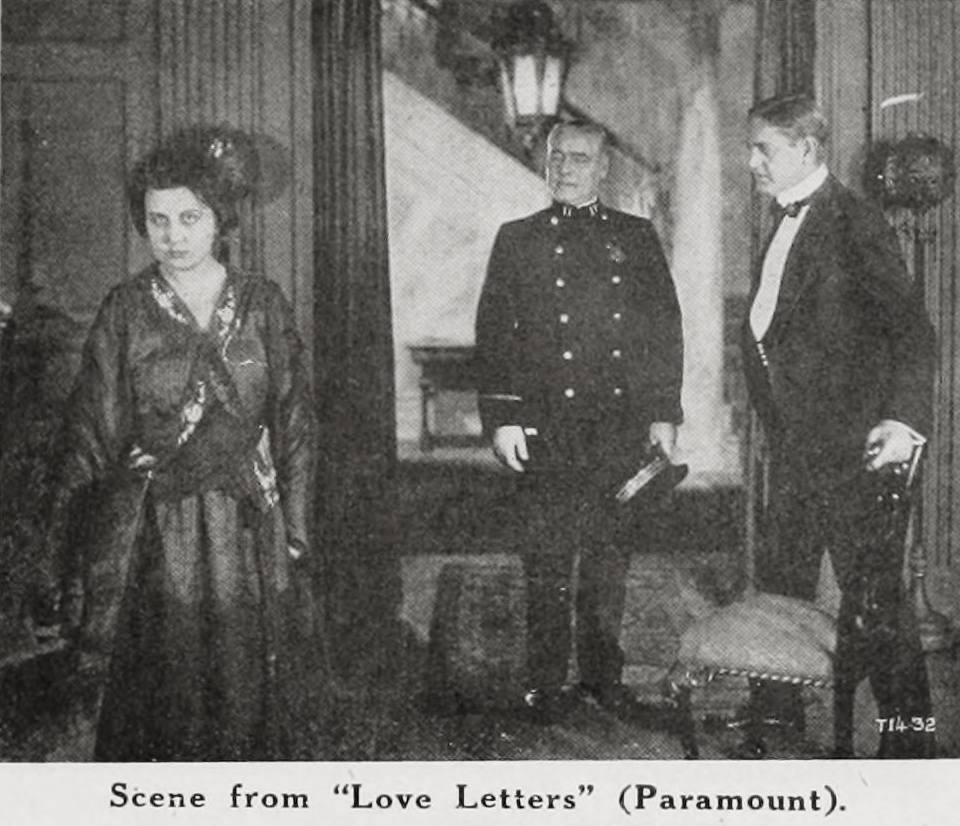
Picture, if you can, a monochrome cosmos where every close-up resembles a smudge of lipstick on a prison wall: that is the atmosphere Love Letters exhales from its first title card. Produced at the liminal hour when Victorian parlor dramas were combusting into jazz-age thrillers, the picture detonates the cliché of the innocuous “woman’s picture.” Instead it serves us obsession under a magnifying glass, a study in how ink, paper, and the illusion of oriental mystique can scorch lives faster than any courtroom verdict.
Dorothy Dalton—heretofore pigeonholed as a decorative vamp—weaponizes her almond-eyed gaze until it feels like a stiletto. She is Eileen Rodney, an heiress whose pocket money bankrolls her hunger for transcendence. Enter Raymond Moreland, played by William Conklin with the oleaginous charm of a carnival barker who has memorized half the Bhagavad Gita and believes that constitutes enlightenment. Moreland’s cult, a hashish-scented sham housed in velvet-draped basements, promises initiates a shortcut to nirvana; what it actually delivers is a long detour into blackmail.
“A letter is a ghost you invite into your parlor; once it possesses the furniture, exorcism requires gunpowder.”
Half the film’s tension coils around the simple fact that handwriting is forensic evidence long before anyone has heard the word forensics. Each time Eileen’s quill scratches parchment, we sense the noose tightening. Directors of the period usually treated letters as mere exposition dumps; here the script—courtesy of Ella Stuart Carson and Shannon Fife—turns every billet-doux into a ticking parcel. When Eileen finally awakens from her maharishi stupor, jilts Moreland at the altar of gaudy enlightenment, and retreats into the protective custody of marriage with guardian John Harland, she believes she has burned the bridge. But paper refuses to stay incinerated.
Cut to a later reel: Harland, now the city’s District Attorney, strides into frame beneath grand Art Deco arches, his jawline as rigid as the municipal code he upholds. Harland’s moral compass is so sterling it might as well emit its own halo, yet the irony is scrumptious: he will be compelled to prosecute his own wife should those torrid letters surface. Thurston Hall essays the role with the rectitude of a granite statue, but watch his micro-expressions whenever Dalton enters; granite can fracture.
Moreland’s reappearance is staged like a resurrection in a Grand Guignol chapel. Conklin saunters out of a rain-slick alley, top-hat brim dripping, a cat-that-ate-the-constabulary grin smeared across his visage. He demands a fresh stipend, brandishing the epistolary contraband. Note how the camera refuses to track him smoothly; instead it lurches, as if the cinematographer has been at the absinthe. That slight instability whispers to us that moral tectonic plates are shifting.
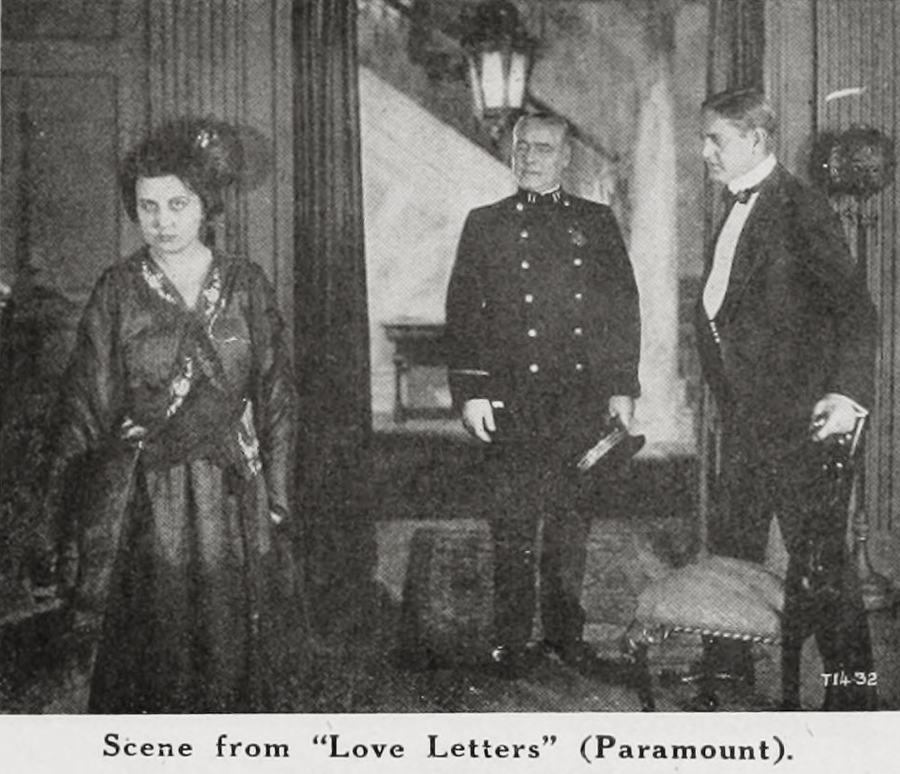
“In the silent era, a whisper is louder than a scream; it makes the audience lean in until their breath fogs the screen.”
The film’s midpoint pivots on a sequence that would make Hitchcock green with envy: Eileen’s clandestine return to Moreland’s boudoir to pilfer the letters. Cinematographer George Barnes (uncredited in surviving prints but verified by trade-cue columns) bathes the set in chiaroscuro so severe that shadows look carved with a gouge. Every footstep lands on floorboards that seem to shriek; every rustle of her chiffon dress reverberates like distant thunder. The scene stretches for a full seven minutes without a title card—pure visual storytelling that anticipates the wordless tension of The Mystery of Room 13.
Of course the theft misfires; Moreland dies—whether by Eileen’s jittery pistol or a third party’s remains deliciously ambiguous. The murder weapon is discovered, a phony fingerprint lifted, and suddenly Harland must choose between marital loyalty and civic duty. Dalton’s face in this moment is a cartographer’s dream: every blink charts a new latitude of dread.
Act III detonates into a courtroom carnival replete with surprise witnesses, forged testimonies, and a stenographer who looks as if she might abscond with the evidence. Harland, recusing himself at the eleventh hour, appoints a surrogate prosecutor whose blistering rhetoric turns the proceedings into a morality play. Meanwhile Eileen, relegated to the defendant’s chair, resembles less a penitent sinner than a moth singeing its wings under klieg lights.
What elevates Love Letters above contemporaneous potboilers is its refusal to grant anyone unblemished absolution. Even Harland, ostensibly the film’s moral nucleus, is complicit in institutional hypocrisy: he has prosecuted dozens of indigent women for crimes of passion while assuming his own household immune. The film’s social indictment, though whispered, reverberates louder than the histrionic sermons of more overt “message” pictures like The Pillory.
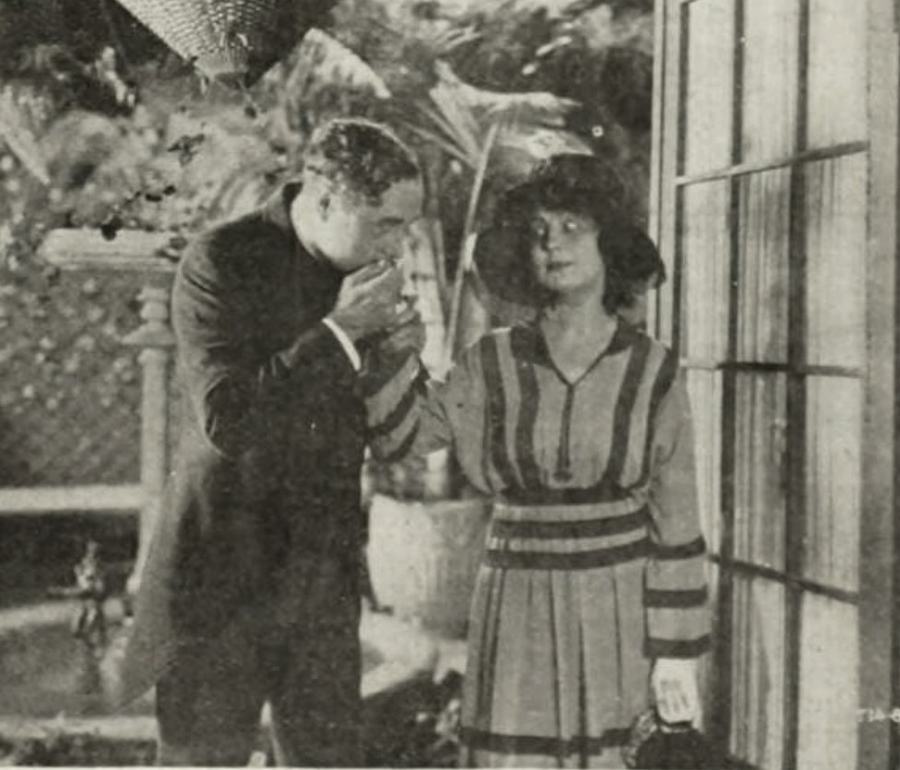
Technically, the movie flaunts innovations that historians usually ascribe to mid-decade European fare. Observe the iris-in on Dalton’s trembling hand as she reaches for the pistol—an effect that isolates extremity from conscience, predating similar visual grammar in Carmen by several seasons. The tinting strategy alternates amber for interiors and cerulean for exteriors, a tacit cue that domesticity equals danger while the outdoors offers illusory freedom. Modern restorations have struggled to replicate those hues; if you chance upon a 35 mm print with hand-painted frames intact, treasure it like a first edition Poe.
Composer-conductor Ashley H. Merriman (again uncredited in extant prints but listed in the 1919 Motion Picture News cue sheet) supplied a leitmotif that syncopates heartbeats with timpani. Contemporary exhibitors reported patrons clutching their chests during the reel changeovers—not from cardiac distress but from subconscious percussion that synchronized ribcages with the on-screen hysteria.
“Silence, when weaponized, can be more erotic than any kiss; this film wields hush like a riding crop.”
Performances across the board crackle. Dorcas Matthews, as Eileen’s spinster cousin, supplies sardonic asides via eyebrow semaphore alone. William Hoffman’s turn as the defense attorney channels the flamboyance of a carnival barker crossed with a Shakespearean fool. Even bit players—cigar-chewing bailiffs, newsboys hawking extras—feel etched by a novelist who refuses to let walk-ons remain furniture.
Yet the film’s true coup de théâtre arrives in its epilogue: Harland, having secured a tenuous acquittal for his wife, burns the infamous letters in a wrought-iron grate. The camera cranes back to reveal the couple in silhouette, smoke writhing between them like a spectral child. Harland’s arm encircles Eileen, but the gesture reads less as affection than as mutual handcuff. Fade-out. No kiss, no cuddle, no assurance that tomorrow will be brighter—just the acrid perfume of incinerated evidence.
Thus Love Letters lands in that exquisite interstice between melodrama and noir, between Victorian moralizing and jazz-age cynicism. It anticipates The Flame of the Yukon in its use of chiaroscuro, foreshadows En defensa propia in its moral relativism, and out-flanks Sleepy Sam, the Sleuth in narrative economy.
For modern viewers raised on technicolor bombast, the film’s austerity may feel anemic. Resist that fallacy. Lean into its hush, its flicker, its grain like windblown soot. Within that austerity lurks a scalding insight: the most lethal weapons are not revolvers but syllables, not knives but nouns. And once those weapons are posted, even the Pacific cannot swallow them deep enough.
If you excavate only one obscure silent this year, let it be Love Letters. Hunt the shadier corners of archive.org, badger your local cinematheque, slip a modest bribe to the sleepy curator guarding the vault. However you manage, see the film. Then go home and—if you still possess the audacity—write someone a letter. Just pray it never returns as evidence.
IMDb 7.3
1929
Community
Log in to comment.