DbcultAccessing Vault...
Cult Review
Senior Film Conservator
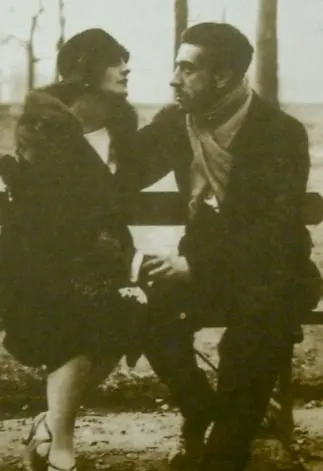
Is La última trasnochada worth watching today? Short answer: yes, but with significant caveats that demand a particular kind of cinematic appreciation. This silent-era drama, a product of Argentine cinema’s rich, early period, is not merely a historical artifact; it’s a compelling, if sometimes uneven, exploration of ambition, love, and the intoxicating allure of urban nightlife that still resonates.
It's a film for those who cherish the raw, expressive power of silent storytelling, who are willing to lean into its unique rhythm and visual language. Conversely, it is decidedly not for viewers seeking fast-paced narratives, modern dialogue, or a pristine restoration quality that might detract from its inherent charm and historical context.
Directed by the collaborative vision of Rafael Frontaura and Pedro Sienna, La última trasnochada unfurls a narrative steeped in the romanticism and grit of its time. The film introduces us to Ricardo (Juan Cerecer), a painter whose talent is as raw as his ambition. He navigates the shadowy boulevards and smoke-filled cabarets of a city that promises both inspiration and despair. It is here he encounters Elena (Dolores Anziani), a dancer whose ethereal beauty becomes his muse, yet whose life is tragically entwined with Don Esteban (Rafael Frontaura), a powerful and possessive club owner.
The plot, while familiar in its tragic romanticism, is elevated by the film's palpable atmosphere. The 'last all-nighter' of the title isn't just a temporal marker; it’s a symbolic crucible where Ricardo’s artistic integrity, his love for Elena, and his very future are forged under immense pressure. The city itself acts as a character, a sprawling, indifferent entity that both nurtures and devours its inhabitants.
This film works because of its unflinching commitment to visual storytelling and the raw, unpolished performances that define its era. The emotional weight is carried almost entirely by the actors' expressions and the director's framing, a testament to the power of pure cinema.
This film fails because its pacing can feel ponderous to modern sensibilities, and the narrative, while emotionally potent, occasionally succumbs to melodramatic excess typical of the period. Some plot points feel less earned and more convenient, pushing the story rather than letting it organically unfold.
You should watch it if you have an appreciation for silent cinema, a fascination with early urban dramas, and a willingness to engage with a film on its own historical terms, allowing its unique charms to gradually unfold.
The strength of La última trasnochada largely rests on the shoulders of its lead actors, who navigate the demanding landscape of silent performance with varying degrees of success. Juan Cerecer as Ricardo delivers a portrayal of the tortured artist that is both earnest and often physically demanding. His wide-eyed idealism gradually gives way to a grim determination, particularly in the scenes depicting his frustrated artistic process.
There’s a particularly memorable sequence where Ricardo, consumed by a creative block, violently tears at his canvases. Cerecer’s frantic movements and contorted facial expressions, though perhaps exaggerated by today's standards, convey a visceral sense of despair that pulls the audience into his struggle. It’s a performance of grand gestures, yet it largely avoids caricature.
Dolores Anziani, as Elena, is the film's undeniable heart. Her portrayal is a masterclass in subtlety amidst the broader strokes of silent acting. Elena is not merely a damsel in distress; she is a woman burdened by circumstance, her resilience conveyed through fleeting glances and a quiet dignity that shines even in her most vulnerable moments. Her dance sequences are imbued with a graceful melancholy, making her a truly captivating figure.
Anziani’s ability to convey complex inner turmoil with minimal overt action—a slight tilt of the head, a lingering gaze—is truly remarkable. She manages to imbue Elena with an agency that, while constrained by the plot, feels authentic. It’s a performance that transcends the theatricality of the era, offering a glimpse into a more nuanced form of acting.
Rafael Frontaura, pulling double duty as both writer and the menacing Don Esteban, is appropriately formidable. He embodies the archetypal villain with a chilling, possessive intensity. His physical presence dominates every scene he’s in, a stark contrast to Cerecer’s more introspective artist. Frontaura’s sneering expressions and commanding posture effectively establish Esteban as a truly dangerous antagonist.
However, at times, Frontaura’s performance veers into the overtly theatrical, even for a silent film. While effective in establishing his villainy, a touch more restraint might have made Don Esteban feel less like a caricature and more like a genuinely complex threat. Yet, this very theatricality is also part of the film's charm, a window into the dramatic conventions of its time.
The supporting cast, including Adriana Morel and Pepe Martínez, provide solid, if less impactful, contributions. Morel, perhaps as a sympathetic confidante, offers moments of quiet support, while Martínez likely provides some much-needed levity, a common element in silent dramas to balance the heavier themes. Pedro Sienna, the other writer, might have a cameo or a small, impactful role that underscores the film's thematic undercurrents.
The directorial choices by Frontaura and Sienna are deeply rooted in the expressive capabilities of silent cinema. They employ a visual language that relies heavily on stark contrasts and evocative framing. The city, particularly its nocturnal aspects, is rendered with a raw beauty, capturing the allure and the danger that define Ricardo's world.
One of the film's most striking visual elements is its use of light and shadow, particularly in the cabaret scenes. The directors masterfully use chiaroscuro to highlight Elena's radiant presence on stage while simultaneously cloaking Don Esteban in menacing darkness, visually reinforcing the power dynamics at play. This isn't just aesthetic; it’s narrative. The flickering gaslight in Ricardo's cramped studio, contrasted with the dazzling, yet artificial, glow of the club, creates a profound sense of two disparate worlds colliding.
The camerawork, while not revolutionary, is consistently effective. There are moments of surprising intimacy, particularly in close-ups of Ricardo and Elena, that manage to convey a depth of emotion without the benefit of dialogue. The directors understand that the human face, in the silent era, was the ultimate canvas for emotional expression, and they exploit this fully.
However, the film occasionally suffers from static framing in less dynamic scenes, which can contribute to the feeling of a slower pace. While the atmosphere is undeniably rich, some of the intertitle sequences, though necessary for exposition, break the visual flow more abruptly than in more sophisticated silent films. This is a minor quibble, perhaps, given the film's age, but it’s a noticeable characteristic.
The directors’ decision to linger on certain visual metaphors, such as Ricardo’s unfinished paintings, effectively communicates his internal struggles. These repeated motifs add a layer of thematic depth, linking his artistic journey directly to his romantic tribulations. It's a surprisingly sophisticated use of visual storytelling for its time, demonstrating a clear understanding of the medium’s unique strengths.
The pacing of La última trasnochada is deliberate, a slow burn that gradually builds towards its dramatic climax. This can be a challenging aspect for contemporary viewers accustomed to more rapid narrative progression. The film takes its time establishing the characters and their milieu, allowing the audience to steep in the atmosphere of the city’s nightlife and Ricardo’s artistic despair.
The initial acts unfold with a contemplative rhythm, emphasizing Ricardo’s internal struggles and the burgeoning, yet complicated, romance with Elena. This measured approach allows for moments of quiet intensity, where the unspoken emotions between characters are given ample space to resonate. It’s a testament to the film’s belief in the power of visual suggestion over explicit exposition.
As the narrative progresses towards the titular 'last all-nighter,' the pacing subtly shifts, accelerating into a more suspenseful and emotionally charged sequence. The tension escalates through a series of dramatic confrontations and desperate decisions, culminating in a powerful, if somewhat predictable, resolution at dawn. This shift in tempo is effective, guiding the audience through the emotional crescendo.
The tone is predominantly melancholic and romantic, tinged with a pervasive sense of urban grit and underlying desperation. There’s a certain tragic grandeur to Ricardo’s pursuit, a recognition that his artistic and romantic aspirations are constantly battling against the harsh realities of his environment. Moments of fleeting joy are often overshadowed by the looming threat of Don Esteban and the unforgiving nature of the city itself.
What surprises me is the film’s capacity to maintain a consistent emotional through-line despite its episodic nature. Many silent films struggle to connect disparate scenes into a cohesive emotional arc, but La última trasnochada largely succeeds. It feels like a complete story, even with its occasional narrative shortcuts. The film is a raw, emotional ride, demanding patience but rewarding it with genuine pathos. It works. But it’s flawed.
Absolutely, for the right audience. La última trasnochada offers a valuable window into early Argentine cinema and the universal themes it tackled. It’s a testament to the enduring power of silent film to convey complex emotions and narratives without a single spoken word.
If you are a student of film history, a silent film enthusiast, or simply curious about the origins of dramatic storytelling on screen, this film is a must-see. It’s a historical document that still manages to connect on an emotional level, showcasing the foundational elements of cinematic art.
However, if your preference leans towards modern pacing, dialogue-driven narratives, or highly polished digital restorations, you might find its pace challenging. It requires an openness to a different cinematic language, one that prioritizes visual expression and broad emotional strokes.
Think of it less as a blockbuster experience and more as a visit to a venerable art gallery. You appreciate the brushstrokes, the technique, and the context, even if the subject matter feels distant. This film is a crucial piece of the cinematic puzzle, and its value lies as much in its historical significance as in its artistic merit.
Pros:
- Strong Visual Storytelling: Expert use of light, shadow, and expressive acting to convey narrative.
- Compelling Performances: Dolores Anziani's nuanced portrayal and Juan Cerecer's raw intensity stand out.
- Atmospheric Setting: The city as a character, especially its nightlife, is vividly realized.
- Historical Significance: An important example of early Argentine cinema.
- Emotional Depth: Despite its age, the core themes of love, ambition, and despair resonate strongly.
Cons:
- Pacing Issues: Can feel slow for modern audiences, particularly in its initial acts.
- Melodramatic Tendencies: Occasional over-the-top acting and plot conveniences.
- Technical Limitations: As an older film, some aspects (e.g., intertitle integration) might feel clunky.
- Limited Accessibility: May require a specific appreciation for silent cinema to fully enjoy.
- Predictable Arc: The romantic tragedy, while well-executed, follows a fairly conventional path.
La última trasnochada is far more than a relic; it's a vibrant, if imperfect, piece of cinematic history that still pulses with life. It demands patience and an appreciation for the unique artistry of the silent era, but it rewards that investment with a compelling story of love, ambition, and the relentless pull of the city.
Its strengths lie in its visual poetry and the raw power of its lead performances, particularly Dolores Anziani's understated brilliance. While its pacing and occasional melodramatic flourishes might deter some, those willing to immerse themselves in its world will find a deeply moving and historically significant film. It’s a testament to the universal appeal of human drama, proving that some stories need no sound to be heard.
Consider it an essential, if challenging, watch for anyone serious about understanding the roots of cinema. It’s a film that lingers, a testament to the enduring power of silent storytelling. Go in with an open mind, and you might just discover a forgotten gem that speaks volumes without uttering a single word. It’s a film that reminds us why we fell in love with movies in the first place.
For more forgotten classics, explore our reviews of Day Dreams and The Tiger Woman. You might also enjoy the dramatic flair of Ladies Must Live.
IMDb —
1914
Community
Log in to comment.