DbcultAccessing Vault...
5.9/10
Senior Film Conservator
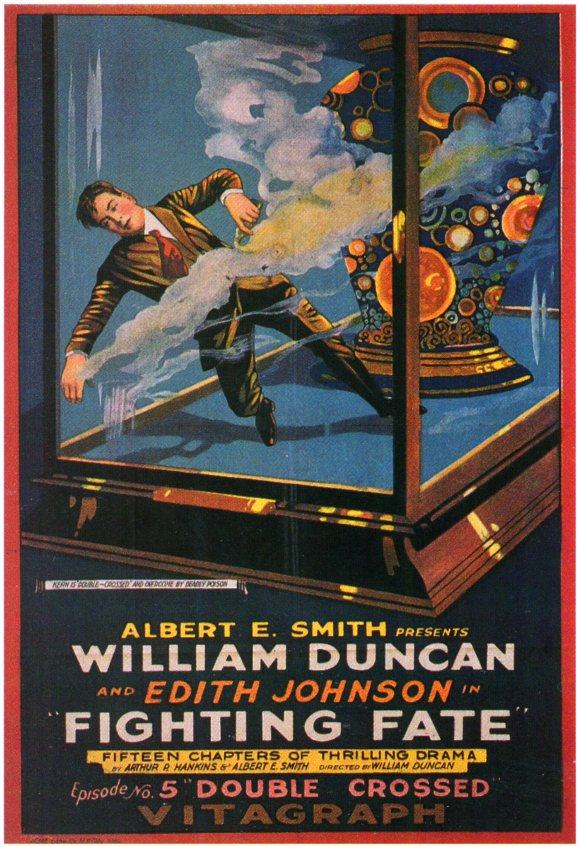
A definitive 5.9/10 rating for a film that redefined the boundaries of cult cinema. Fighting Fate remains a cornerstone of transgressive art.
Fighting Fate is not merely a film—it is a symphony of existential dread and triumph, a cinematic incantation that dares to interrogate the very notion of destiny. Directed by Albert E. Smith, with a screenplay that crackles with the intellectual heft of its collaborators, the film immerses viewers in a world where every choice is a rebellion against the script written for us by forces unseen.
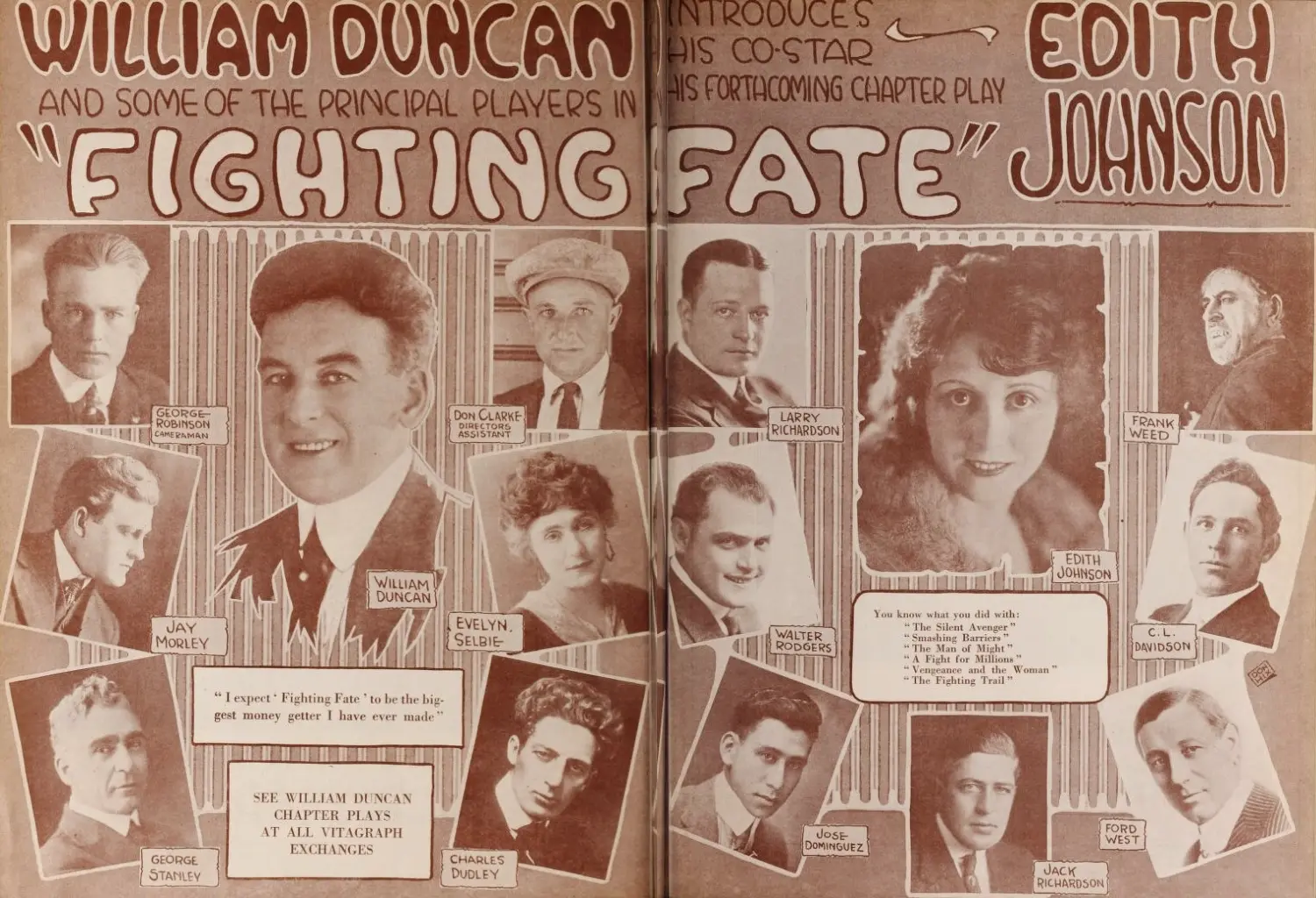
At its core, Larry Rich’s portrayal of the tormented protagonist is a tour de force of emotional nuance. His character, a man grappling with the weight of inherited curses and personal failures, is rendered with such visceral honesty that the audience cannot help but feel the tremors of his inner turmoil. Walter Rodgers, as the enigmatic antagonist, delivers a performance that oscillates between menace and pathos, his every glance a reminder that fate is both a force of nature and a mirror for our deepest fears.
The film’s narrative structure is a labyrinth of interwoven subplots, each thread a testament to the writers’ audacity. C. Graham Baker and Arthur Preston Hankins craft a story that refuses to offer easy resolutions, instead presenting a mosaic of human experience where redemption is fleeting and hope is a fragile flame. Jeanne Carpenter’s character, a symbol of resilience in a world governed by chaos, anchors the story with a warmth that contrasts sharply with the film’s darker hues.
Visually, Fighting Fate is a feast for the senses. The use of chiaroscuro lighting in key scenes—such as the protagonist’s confrontation with his past—elevates the material to a poetic level. The cinematography, steeped in shadows and stark contrasts, mirrors the characters’ internal battles. William B. Courtney’s direction of the ensemble cast is nothing short of masterful, ensuring that even the most peripheral characters contribute to the film’s thematic richness.
One cannot discuss Fighting Fate without acknowledging its musical score, a haunting blend of dissonant strings and ambient textures that echoes the film’s philosophical underpinnings. The soundtrack, composed with the precision of a surgeon, amplifies the tension in every scene, transforming the narrative into an auditory experience as profound as the visuals.
For those familiar with A Game with Fate, the parallels are striking. Both films grapple with the tension between determinism and free will, yet Fighting Fate distinguishes itself through its unflinching portrayal of moral ambiguity. Unlike the more romanticized approach of Beloved Rogues, this film does not shy away from the grotesque realities of its characters’ struggles. It is a work that demands contemplation, rewarding the viewer with layers of meaning upon each rewatch.
The supporting cast, including Charles Dudley and Frank Weed, delivers performances that are both understated and electric. Their characters, though secondary, are imbued with a depth that challenges the notion of minor roles. The chemistry between Larry Rich and Jeanne Carpenter is particularly noteworthy, their scenes together crackling with a quiet intensity that lingers long after the credits roll.
In terms of pacing, Fighting Fate is a deliberate, almost glacial, journey through its narrative landscape. This measured approach allows the philosophical themes to breathe, giving the audience time to absorb the weight of each decision and consequence. While some may find the slow burn disorienting, it is precisely this pacing that elevates the film from a mere story to a meditation on existence.
The film’s exploration of fate is not limited to its human characters. The natural world, rendered in stark, almost surreal beauty, serves as a recurring motif. Shots of desolate landscapes and stormy skies underscore the inevitability of the characters’ fates, while moments of fleeting serenity—like the protagonist’s walk through a sunlit forest—hint at the possibility of transcendence. This duality is one of the film’s greatest strengths, offering a nuanced perspective on the interplay between man and the cosmos.
Technically, Fighting Fate is a marvel. The editing is precise, the sound design immersive, and the set designs evoke a timeless, almost mythic quality. The film’s most memorable sequence—a wordless duel between Larry Rich and Walter Rodgers—requires no dialogue to convey its emotional power. Here, the camera becomes a silent participant, capturing every flicker of emotion and physicality with surgical precision.
For cinephiles seeking a film that challenges as much as it entertains, Fighting Fate is an essential viewing. Its themes resonate in an era obsessed with control and autonomy, offering no easy answers but plenty of questions. It is a film that lingers in the mind, its echoes felt long after the final frame fades to black.
To fully grasp the scope of Fighting Fate’s achievements, one might juxtapose it with The Lipton Cup: Introducing Sir Thomas Lipton. While the latter is a historical biopic, both films share a preoccupation with legacy and the passage of time. However, where Lipton is rooted in the tangible, Fighting Fate drifts into the ethereal, crafting a narrative that is as much about the soul as it is about the story.
In conclusion, Fighting Fate is a triumph of cinematic artistry. It is a film that dares to ask, and perhaps even answer, the most profound questions about our existence. With its stellar performances, visionary direction, and philosophical depth, it cements its place as a modern classic. For those who have ever wrestled with the idea of fate, this film is an invitation to join the struggle—and perhaps, to find a measure of peace in the chaos.
For further exploration of existential themes in cinema, consider these works: A Game with Fate, Beloved Rogues, and The Love Thief. Each offers a unique lens through which to view the interplay of destiny and choice.
IMDb 6
1918
Community
Log in to comment.