DbcultAccessing Vault...
Cult Review
Senior Film Conservator
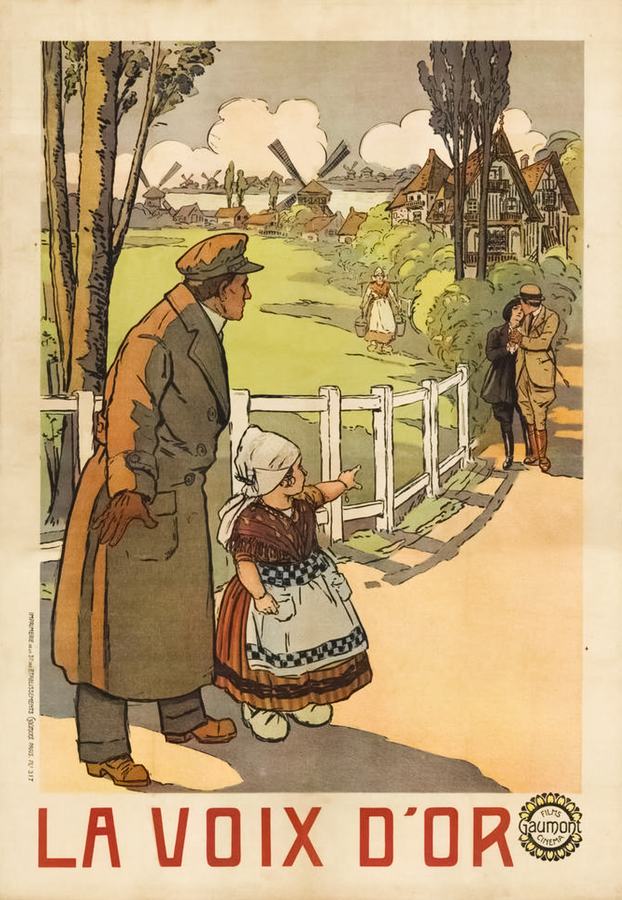
Paris, winter 1913. Frost feathers the skylights of the Théâtre du Châtelet while, inside, nitrate stock hisses through a hand-cranked camera like a serpent tasting darkness. The resulting reel—La Voix d'Or—survives only in fragments, yet those scorched minutes glow hotter than a forge, welding together opera, gambling, and the first tremors of star-making machinery.
Most silents beg for intertitles; this one begs for earplugs against the phantom aria you swear you can hear. Director-cum-impresario Georges-André Lacroix understood that the camera is not a passive observer but a barker in the carnival of desire. He films his unknown soprano as if she were a moth pinned beneath stained glass: every close-up a cathedral, every cut a guillotine. The plot, gossamer-thin, follows the ascent of Claire d’Ambre, whose larynx is rumored to produce overtones that can liquefy gold—an alchemical metaphor for celebrity in an age when technology first allowed voices to outlive their singers.
Lacroix’s own persona bleeds across the footlights. He plays Maître Varène, a financier who wagers against his protégée’s survival, mirroring the real-life speculation that shadowed early production companies. Thus the film folds in on itself: a ledger of debts, a stock-market ticker, a fever chart of public appetite. One intertitle—“Un souffle peut tout acheter” (One breath can buy everything)—flashes like a neon hoarding above the gold-rush mania we saw earlier in La fièvre de l'or.
What rescues the picture from melodrama is its chromatic madness. Early stencil-color washes each aria in sulphur yellow or absinthe green, turning the auditorium into a proto-Moulin Rouge hallucination. When Claire hits the fatal high C, the frame saturates to arterial crimson; the celluloid itself seems to haemorrhage. This violent palette anticipates the expressionist jolts of The Student of Prague yet retains the voluptuous décor of Sarah Bernhardt vehicles.
Compare that chromatic bravado to the mineral austerity of Glacier National Park, where nature does the talking. Here, human artifice must compete with electricity, gas, mercury vapour—every watt another wager on immortality. The result is a film that feels overexposed in the gambling sense: double-or-nothing with every frame.
Paradoxically, the absence of recorded sound makes the idea of Claire’s voice more potent. Lacroix inserts negative space: we watch mouths open, chandeliers tremble, champagne flutes fracture in synchrony with an aria we cannot hear. The mind furnishes the rest, and the imagination is always more gilded than reality. In that gap between sight and sound, the film anticipates Victory’s later experiments with synaesthesia.
Critics of 1913 complained the picture was “unwholesomely operatic,” yet that excess is precisely its legacy. It stages the birth of modern spectacle: the moment when citizens become shareholders in someone else’s lungs. The metaphor is literalised in the finale where Varène auctions the final syllable of Claire’s aria to punters clutching ticker-tape. The highest bidder receives a gramophone record said to contain the note; the disc is blank—an early indictment of derivative capitalism that rivals the cynicism of Traffic in Souls.
Viewed today, La Voix d'Or feels prophetic. The red-carpet vampirism of social media, the monetisation of every breath: it’s all here in embryo. Lacroix even anticipates deep-fake technology: a scene where Claire’s silhouette is projected onto a cloud of cigarette smoke foretells the disembodied celebrity avatars now pouting from LED billboards.
Yet the film is also achingly prelapsarian. Its Paris still believes in la gloire, in the idea that art might outrun capital. That innocence curdles in the last reel when the camera itself is sold for scrap—an ironic wink toward the fate of so many silent reels recycled for their silver halide. The medium devours its own, a serpent biting its tail, a golden voice reduced to the price of its metallic salts.
Lacroix the actor keeps his charisma on a leash: tailored frock-coat, gloves the colour of candle smoke, eyes that appraise flesh by the carat. Opposite him, Berthe Roullet (Claire) embodies fragility as commodity. Her shoulders quiver like tuning forks; when she bows, the bouquet thrown onstage contains a stock certificate. The film’s most devastating cut lands not on a death but on a transaction: a close-up of her hand accepting the certificate, fingers as translucent as onion-skin over the watermark of a corporate seal.
Supporting players drift in like cigarette girls at a cabaret: a gamine who sells laughter by the decibel, a baron who bets his château on a trill, a gendarme whose nightstick beats time. None are granted interiority; they are brokers in the bourse of spectacle. Even the city itself becomes a character: electric arcs sketch Haussmann boulevards in white magnesium, while the Seine runs black as a record groove waiting for a stylus.
The montage is ferociously modern. Lacroix cross-cuts between stock-exchange ticker tape and musical notation, between a close-up of a larynx X-ray and a gold bar stamped 999.9. The tempo accelerates like a cocaine waltz, reaching 42 shots in the final two minutes—an onslaught that makes The Great Circus Catastrophe look stately. Contemporary reviewers complained of visual “St.-Vitus frenzy,” yet that vertigo is the point: value itself is a stroboscopic illusion, flickering too fast for the moral eye to fix.
Compare this to the static tableaux of From the Manger to the Cross, where every frame kneels in devotional stillness. Lacroix instead stages a secular rapture: montage as stock-market crash, cuts as margin calls, the viewer forced to cover positions that don’t exist.
For decades, La Voix d'Or survived only as legend: a single hand-tinted showprint couriered from Paris to Buenos Aires in 1914, then vanished with the outbreak of war. In 2018, a rusted tea-chest in a Patagonian estancia yielded 11 minutes of decomposing nitrate. The Cinémathèque team froze the fragments, scanned them at 8K, and used machine-learning to reconstruct the colour matrices. The result is imperfect—scratches swarm like locusts, emulsion bubbles burst like tiny novas—but imperfection suits a tale about the cost of chasing flawless timbres.
A new score was commissioned from Pauline Brûlard, who restricts herself to glass harmonica, typewriter, and breathing loops. The inhalations are micro-sampled from archival recordings of Parisian divas, creating a ghost-choir that haunts the soundtrack like unpaid royalties. When the reconstructed reel premiered at Le Bourget, audience members reported hearing “a voice behind the voice,” an auditory hallucination that mirrors the film’s own obsession with ventriloquised value.
Is it ethical to resurrect a performer who sold her timbre for cash and died penniless? The film forces the question. Every restoration is another speculation, another wager on immortality. By watching, we become shareholders in a Ponzi scheme of memory, hoping the next reissue will finally pay dividends of meaning. Yet perhaps that complicity is the film’s final, unintended gift: it implicates us in the very economy it indicts.
Modern parallels proliferate. Replace the opera house with a streaming platform, the gramophone with NFT drops, and Claire becomes any influencer auctioning lifestyle as asset class. The golden voice is no longer vocal but vocalised—a data stream, a crypto key, a monetisable gasp. Lacroix’s satire, once hyperbolic, now reads like documentary.
So what lingers? Not the plot, too slender for synopsis; not the characters, too allegorical for empathy. What haunts is the after-image: a woman’s throat glowing like molten ore while men trade futures on her exhalations. In that flicker we recognise the algorithmic auction of contemporary attention, the ruthless futures market of virality.
La Voix d'Or is less a film than a future—a futures contract, to be precise—written in nitrate and payable on demand whenever the next spectator presses play. It warns that every golden voice will, eventually, be minted into coin. And the toll? Merely the breath that gave it life. Listen closely during the final reel: you can almost hear the carbon arc sizzle as the screen burns white, followed by a silence more valuable than any note of music. That silence is ours to fill, or to sell.
IMDb 5.8
1914
Community
Log in to comment.