DbcultAccessing Vault...
Cult Review
Senior Film Conservator
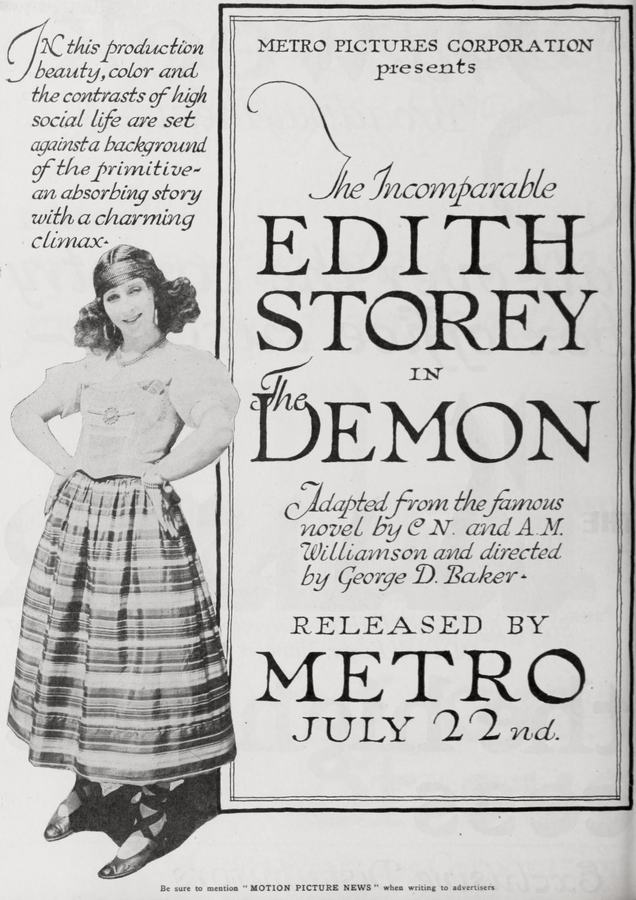
Stepping back into the cinematic landscape of 1918, one encounters a fascinating artifact in 'The Demon'. This isn't merely a film; it's a grand, sprawling narrative, a testament to the storytelling ambition of the silent era. Penned by the collaborative talents of A.M. Williamson, George D. Baker, and C.N. Williamson, the picture embarks on an audacious journey across continents, weaving a complex tapestry of inheritance, identity, and the unpredictable whims of fate. Its title itself, 'The Demon,' hints at underlying currents of temptation, perhaps even a preternatural force guiding its characters through a series of increasingly improbable, yet utterly captivating, events.
The narrative commences with Jim Lassells, portrayed with a compelling blend of gravitas and burgeoning bewilderment, embarking on a somber quest to Africa. His mission: to confirm the rumors of his cousin Harold Brooks' demise. The exotic, often perilous, allure of the African continent serves as a dramatic backdrop to this initial exposition, immediately immersing the viewer in a world far removed from the mundane. The revelation that Brooks met his end at the hands of an Algerian sultan is not just a plot point; it's a brushstroke of the era's fascination with the 'Oriental,' a trope that, while problematic by contemporary standards, was a pervasive element of popular culture. Fred Malatesta, with his commanding screen presence, embodies the stoic determination of Jim Lassells, conveying the weight of his task without uttering a single word. The film skillfully establishes Jim's initial emotional state, a blend of duty and perhaps a touch of trepidation, as he navigates this foreign landscape.
The subsequent twist, the unexpected inheritance of Brooks' vast fortune, transforms Jim from a dutiful relative into a man suddenly burdened by immense wealth. The assumption of Brooks being childless is the linchpin of this early development, setting in motion a chain of events that will later unravel with dramatic irony. This sudden windfall, rather than simplifying his life, only complicates it, introducing moral dilemmas and unforeseen responsibilities. One might compare this pivotal moment to films like The Spendthrift, where the acquisition or loss of wealth often serves as the primary catalyst for character transformation and narrative propulsion. However, 'The Demon' layers this with a unique exoticism that sets it apart.
It is at a slave market, a scene laden with the stark realities of the period, that Jim Lassells makes a decision that will define the rest of the narrative. He purchases a young girl, Perdita, a name itself meaning 'lost one,' which is pregnant with foreshadowing. This act, viewed through a modern lens, is deeply unsettling, yet within the context of the film's era, it served as a dramatic device to introduce a character of mysterious origins and immense potential. Jim's decision to send her to a convent in Corsica for education speaks volumes about his character – a man not entirely consumed by greed, but one capable of a certain paternalistic benevolence, or perhaps, a subconscious yearning for an heir. The convent in Corsica becomes a crucible for Perdita's transformation, a sheltered environment where she blossoms from a chattel into a cultured young woman. The silent film medium excels here, relying on visual cues and the expressive performances of the young actress (whose identity, if distinct from Laura Winston, remains uncredited in early stages) to convey her growth and burgeoning grace.
Years later, the threads of destiny begin to pull taut. Jim, now traversing Corsica with the Duchess of Westgate and her daughter, Lady Lilah Grey, finds himself in a chance encounter. The Duchess, likely portrayed by Mollie McConnell or Anne Schaefer, embodies a certain aristocratic decay, her 'impecunious' status hinting at the social anxieties and class distinctions prevalent at the time. Lady Lilah Grey, a potential romantic interest or narrative foil, adds another layer of societal expectation to Jim's journey. The meeting with the grown Perdita, now a radiant Laura Winston, is a moment of profound recognition, charged with unspoken history and burgeoning attraction. Winston's portrayal of Perdita is central to the film's emotional core, conveying a delicate balance of innocence, intelligence, and an underlying strength that will soon manifest itself.
The dramatic revelation at the inn serves as the film's central turning point. The discovery that Perdita is not only a Persian princess but, more crucially, the long-lost daughter of Harold Brooks, shatters Jim's world. This twist ingeniously reconfigures the entire narrative, transforming Perdita from a rescued ward into the rightful heir, and Jim from a benevolent benefactor into an unwitting usurper. This moment, executed with the dramatic flair characteristic of silent cinema, would have relied heavily on the actors' facial expressions and gestures to convey the shock, confusion, and dawning realization. Frank Deshon, Alice Knowland, and Edith Storey, among others in the supporting cast, would have contributed to the ensemble's reaction, amplifying the scene's emotional impact.
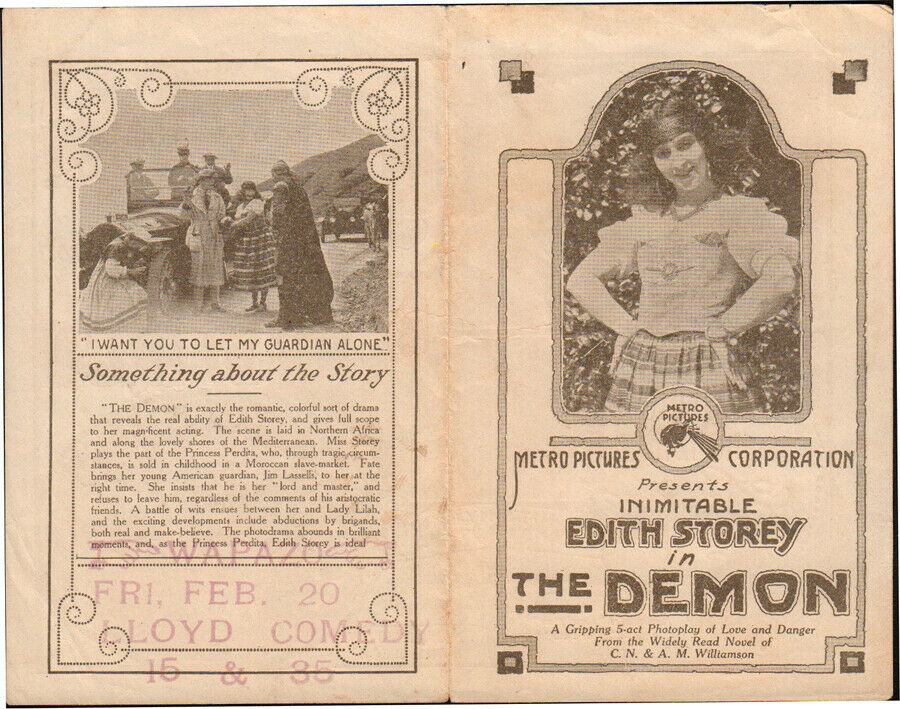
Perdita's subsequent actions are where 'The Demon' truly earns its evocative title. Having fallen deeply in love with Jim, yet keenly aware of her usurped inheritance, she orchestrates a bold and unconventional plan. She engages Count Theodore de Seramo, a character likely portrayed with dashing charm by someone like Lew Cody or Charles K. Gerrard, to abduct the Duchess and Lady Lilah. This act is a fascinating display of Perdita's agency and cunning, revealing a complex character who is willing to manipulate circumstances to achieve her desires, blurring the lines between heroine and a more morally ambiguous figure. This intricate plotting, a hallmark of the Williamson's writing, showcases a narrative sophistication that transcends simple melodrama. The unexpected engagement between the Count and Lady Lilah adds a layer of romantic irony, suggesting that even a scheme born of self-interest can lead to genuine affection, perhaps echoing themes found in films like How Could You, Jean? where deception often paves the way for unexpected alliances.
'The Demon' is a film rich with thematic resonance, exploring the age-old conflict between love and material wealth. Jim's initial inheritance, while seemingly a blessing, becomes a source of moral entanglement. His willingness to relinquish the fortune to Perdita speaks to his inherent nobility, a character arc that sees him rise above base avarice. Fred Malatesta's portrayal of this internal struggle, manifested through subtle shifts in posture and expression, is crucial. Conversely, Perdita's journey is one of self-discovery and empowerment. From a nameless girl bought at a market to a Persian princess reclaiming her birthright, her trajectory is nothing short of epic. Laura Winston brings a captivating intensity to Perdita, allowing the audience to empathize with her complex motivations, even as her actions verge on the manipulative. Her declaration of love for Jim, ultimately prioritizing their connection over the vast fortune, provides a powerful resolution, affirming the enduring power of human affection.
The film also subtly critiques societal structures of its time. The ease with which fortunes are transferred, the casual presence of a slave market, the desperation of an 'impecunious Duchess' – these elements, while part of the dramatic fabric, offer glimpses into the social fabric of the early 20th century. The narrative also plays with the concept of identity, as Perdita transitions from an anonymous child to a recognized princess, her true lineage hidden in plain sight for years. This exploration of hidden identities and sudden revelations is a recurring motif in silent cinema, often used to propel dramatic tension and explore themes of destiny.
In a silent film, the onus of storytelling falls squarely on the visual language – the performances, the cinematography, and the elaborate sets. The cast of 'The Demon' delivers a masterclass in silent film acting. Laura Winston, as Perdita, is a revelation. Her eyes convey volumes, her gestures articulate emotions with precision, allowing the audience to follow her intricate emotional journey from a bewildered child to a determined woman in love. Fred Malatesta, as Jim Lassells, complements her perfectly, his stoic demeanor gradually softening under the influence of love and moral awakening. The supporting cast, including Frank Deshon, Alice Knowland, Edith Storey, Virginia Chester, Charles K. Gerrard, Mollie McConnell, Anne Schaefer, and Lew Cody, each contribute to the rich tapestry of characters, embodying their roles with the exaggerated yet effective expressiveness required of the medium. Their interactions, often communicated through dramatic tableaux and intertitles, build the emotional landscape of the film.
While specific directorial credits are often less emphasized in early cinema discourse, the overall visual presentation of 'The Demon' speaks to a thoughtful cinematic eye. The exotic locales of Africa and Corsica are not just backdrops; they are integral to the film's atmosphere, likely achieved through a combination of location shooting and meticulously crafted studio sets. The slave market scene, for instance, would have been designed to evoke a sense of chaotic realism, while the convent scenes would have emphasized serenity and order. The use of light and shadow, a fundamental tool in silent cinematography, would have been employed to heighten dramatic moments, casting characters in stark relief during revelations and softening tones during romantic interludes. The pacing of the narrative, moving from grand adventure to intimate drama, is skillfully managed, ensuring that the audience remains engaged through its numerous twists and turns. The collaborative effort of the writers, A.M. Williamson, George D. Baker, and C.N. Williamson, is evident in the intricate plotting and character development. Their ability to craft a story with so many moving parts, maintaining coherence and dramatic tension, is commendable and speaks to a sophisticated understanding of narrative structure. This complexity might even be compared to the multi-layered narratives seen in European silent films like Brottmålsdomaren or Mascamor, which also delved into intricate human dramas.
'The Demon' stands as a compelling example of early cinematic storytelling, showcasing the era's adventurous spirit and its fascination with grand romantic narratives. It's a film that demands attention, not just for its historical significance, but for its enduring ability to captivate an audience with its intricate plot, memorable characters, and powerful emotional core. The journey of Jim and Perdita, from accidental benefactor and rescued child to lovers united by choice over fortune, is a testament to the timeless appeal of stories where love ultimately triumphs over material concerns and the machinations of fate. It challenges the characters, and by extension the audience, to consider the true value of wealth versus the immeasurable riches of human connection. The film's title, 'The Demon,' ultimately seems to refer not to an external malevolent force, but perhaps to the internal demons of greed, ambition, and societal expectation that the protagonists must overcome to find true happiness. It's a silent film that speaks volumes, resonating with themes that remain relevant even a century later.
For those who appreciate the artistry and narrative ambition of silent cinema, The Demon offers a rich and rewarding experience, a vivid window into a past era of filmmaking that continues to inspire and entertain. Its blend of exotic adventure, high-stakes inheritance, and passionate romance makes it a truly remarkable piece of cinematic history, deserving of renewed appreciation and study. It reminds us that even in an age without spoken dialogue, stories could be told with immense power and nuance, capable of transporting viewers across continents and into the very hearts of its characters.

IMDb 4.8
1936
Community
Log in to comment.