DbcultAccessing Vault...
Cult Review
Senior Film Conservator
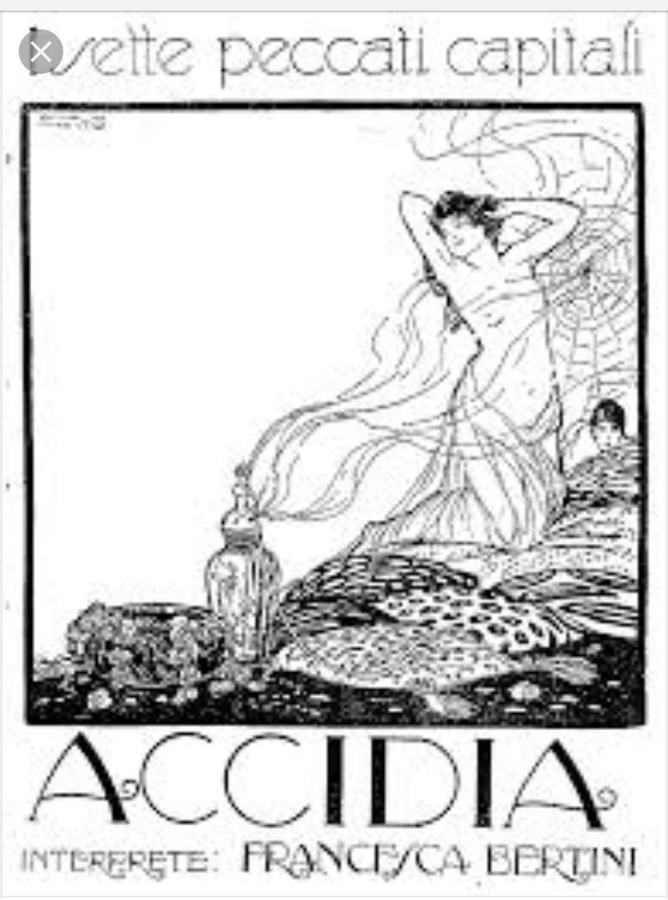
Ah, the intoxicating melancholy of early cinema, particularly when it delves into the human condition with such unsparing candor as L'accidia. This 1919 Italian silent masterpiece, whose very title translates to "sloth" or "acedia" – one of the seven deadly sins – serves as a potent, if somber, mirror reflecting the inertia that can grip both individuals and entire societies. It's a film that doesn't merely tell a story; it unravels a tapestry of missed opportunities, societal stagnation, and the agonizing weight of choices made, or perhaps, choices avoided. From its opening frames, the picture establishes a mood of pervasive lassitude, a spiritual torpor that feels as palpable as the Mediterranean sun beating down on its languid landscapes, a compelling testament to the film's profound atmospheric resonance.
At its heart, L'accidia chronicles the return of Ottavio Fortis, an engineer portrayed with a compelling blend of hope and quiet desperation by Guido Trento. Ottavio, a man of progress and ambition, finds himself drawn back to his ancestral homeland, a place seemingly trapped in an amber of unchanging customs and pervasive indolence. This isn't merely a geographical return; it's a journey into a cultural and emotional stasis that sharply contrasts with his own dynamic profession. The film masterfully uses this juxtaposition to highlight the central conflict: the individual's drive against the collective's inertia. One can almost feel the heavy air, the slow pace of life, the quiet resignation that permeates every interaction in this forgotten corner of the world. It’s a setting that echoes the themes found in works like Idle Wives, where the ennui of domesticity can be as crushing as societal lethargy.
Trento's portrayal of Ottavio is subtle yet profound. He doesn't resort to theatrical histrionics, common in some silent films, but instead conveys a deep sense of internal struggle through his posture, his gaze, and the almost imperceptible shifts in his facial expressions. He is a man who has seen the world beyond his stagnant village, tasted ambition, and now finds himself confronting the very forces that drove him away. His longing for connection, for a shared vision of progress, becomes a poignant counterpoint to the prevailing apathy. This is not a triumphant homecoming; it is an encounter with the ghosts of a past that refuses to stay buried, and a future that seems unwilling to be born. His quiet dignity in the face of such overwhelming societal torpor is one of the film's understated strengths, allowing the audience to connect deeply with his frustration and his enduring, almost quixotic, hope.
The emotional core of L'accidia, however, resides irrevocably in the character of Bianca, brought to breathtaking life by the incomparable Francesca Bertini. Bertini, a titan of early Italian cinema, imbues Bianca with a complexity that transcends the typical silent film heroine. Upon Ottavio's return, he finds Bianca still unmarried, caught in a delicate web of societal expectations and personal desires. She is contemplating a proposal that would elevate her to the status of a duchess, promising a life of unparalleled luxury and social standing. This prospect, however, is not presented as a clear path to happiness, but rather as a gilded cage, a compromise of the heart for the sake of material security.
Bertini's performance is a masterclass in nuanced emotional expression. Her eyes, often shadowed with a profound sadness, convey the weight of her predicament. One can discern the yearning for Ottavio, the echoes of a past love that still stir within her, clashing violently with the pragmatic allure of the ducal title. It's a classic dilemma, yet Bertini makes it feel utterly fresh and agonizingly real. Her internal conflict is not merely externalized through gestures but radiates from her very being, making the audience feel every pang of doubt, every flicker of hope, and every shadow of resignation. She is a woman on the precipice, teetering between two irrevocably different destinies, and her performance elevates the film from a simple melodrama to a profound character study. Her struggles are reminiscent of the moral quandaries faced by protagonists in films like Moral Suicide or Cheating Herself, where personal integrity battles against external pressures. Bertini's ability to convey such depth without dialogue is a testament to her legendary status.
The film’s title, L'accidia, is not merely a label but a thematic anchor. Acedia, historically understood as a spiritual or mental sloth, a listlessness that leads to neglect of one's duties or potential, permeates every corner of this narrative. It's not just Bianca's indecision, though that is its most acute manifestation. It's the very fabric of the society Ottavio returns to: a community seemingly content with its unchanging ways, resistant to progress, and devoid of the vibrant energy that Ottavio embodies. Camillo De Riso, Franco Gennaro, Livio Pavanelli, Alberto Albertini, and Luigi Cigoli, while perhaps not given the same dramatic breadth as Bertini and Trento, each contribute to this pervasive atmosphere. Their characters, often in the background, subtly reinforce the sense of a world moving at a glacial pace, where ambition is viewed with suspicion and change is an unwelcome intrusion.
This collective inertia is depicted not as malicious, but as a deeply ingrained cultural habit, a comfort zone that stifles growth and innovation. The landscape itself, through the lens of the cinematographer, often appears sun-drenched yet still, beautiful yet unyielding, mirroring the emotional landscape of its inhabitants. The film asks profound questions about the price of comfort, the cost of avoiding difficult choices, and the slow, insidious erosion of spirit that accompanies a life lived without passion or purpose. It's a powerful commentary on the dangers of complacency, a theme that remains startlingly relevant even a century later. One might draw parallels to the existential malaise explored in films like The Marathon, where physical exertion is contrasted with spiritual exhaustion. The film's astute observation of this societal malady makes it a timeless piece of social commentary.
Beyond its compelling narrative and stellar performances, L'accidia stands out for its masterful visual storytelling. The cinematography, though characteristic of its era, exhibits a thoughtful composition and a keen understanding of how light and shadow can convey psychological states. Close-ups on Bertini’s face are particularly effective, allowing her expressive features to communicate volumes without a single intertitle. The director, whose vision guides this intricate drama, understands the power of silence in silent film, allowing lingering shots and deliberate pacing to build tension and deepen emotional impact. There's a certain stark beauty to the settings, whether it's the sun-drenched plazas or the shadowed interiors, each contributing to the film's overall melancholic atmosphere. The deliberate pacing, far from feeling slow, instead creates a contemplative space, inviting the viewer to fully immerse themselves in the characters' inner worlds.

The use of mise-en-scène is also noteworthy. The costumes, the ornate interiors of the ducal estate, and the simpler, more rustic surroundings of Ottavio's former home all serve to underscore the stark contrast between Bianca's potential futures. Every detail, from a flickering candle to the way a character holds a letter, is imbued with meaning, guiding the audience through the emotional labyrinth of the plot. This meticulous attention to visual detail ensures that even without spoken dialogue, the narrative remains clear, compelling, and deeply resonant. The film’s aesthetic qualities might find a distant echo in the evocative imagery of Die badende Nymphe, though their thematic concerns diverge significantly. The director's restraint in exposition, relying instead on visual cues, speaks to a sophisticated understanding of cinematic language that was advanced for its time.
The resolution of Bianca's dilemma, if one can call it a resolution, is where L'accidia truly distinguishes itself. The film posits that regardless of her choice between love and wealth, Bianca is destined for regret. This is a remarkably mature and unsentimental perspective for a film of its time, eschewing easy answers or clear-cut moral victories. It suggests that some choices are so fraught with compromise that neither path leads to unalloyed happiness. The regret stems not just from the loss of what could have been, but from the very act of choosing, of sacrificing one profound possibility for another. This sense of inescapable sorrow, a lingering "what if," is the film's most powerful and enduring legacy. It’s a testament to the writers' insightful understanding of human psychology, moving beyond simplistic good-versus-evil narratives to explore the deeper, more insidious forms of human suffering.
The film doesn’t offer a cathartic release but rather a melancholic acceptance of life's complexities. It's a narrative that lingers, prompting introspection long after the final frame fades. This exploration of enduring regret and the consequences of indecision aligns with the existential weight found in films like During the Plague, where characters grapple with profound, life-altering circumstances. The characters in L'accidia are not merely passive victims of fate; they are agents of their own sorrow, their decisions, or lack thereof, charting a course towards an inevitable future tinged with wistfulness. The film becomes a cautionary tale, not against a specific vice, but against the insidious nature of inaction and the avoidance of genuine self-reckoning. It paints a poignant picture of the human cost of avoiding one's true desires.
In an era often dismissed for its melodramatic excesses, L'accidia emerges as a remarkably sophisticated and psychologically astute work. It dissects the human heart with surgical precision, revealing the intricate interplay between individual desires and societal pressures. The film's examination of sloth, not as mere laziness but as a deeper spiritual malaise, gives it an intellectual heft that elevates it beyond typical romantic dramas. It challenges the audience to consider their own moments of indecision, their own concessions to comfort over conviction, and the lingering specter of roads not taken.
The performances of Francesca Bertini and Guido Trento are central to this achievement. Their unspoken chemistry, their ability to convey a universe of emotion through gesture and glance, anchors the film's profound themes. Bertini, in particular, delivers a performance that should be studied by any aspiring actor, silent or otherwise, for its sheer depth and authenticity. Her Bianca is not just a character; she is an archetype of the human struggle against the forces of inertia and the allure of an easier, albeit less fulfilling, path.
L'accidia is more than just a historical curiosity; it is a vital piece of cinematic art that speaks across the decades. Its themes of societal stagnation, personal indecision, and the bitter taste of regret are universal and timeless. It reminds us that sometimes, the greatest tragedy is not a dramatic downfall, but the quiet, slow erosion of potential, the unfulfilled promise of a life lived without passion. This film stands as a testament to the power of early cinema to explore complex psychological landscapes with profound artistry and enduring relevance. It invites us not just to watch a story unfold, but to reflect on the choices that define our own paths, and the shadows of regret that may follow, regardless of the direction we choose. Its artistic integrity and thematic depth are comparable to the gravitas found in Vor, another film that delves into profound human struggles. The impact of L'accidia is not one of fleeting entertainment, but of lasting contemplation, cementing its place as an essential, if often overlooked, gem in the crown of silent cinema.
The film’s portrayal of a society trapped in its own inertia also offers a fascinating glimpse into the cultural anxieties of early 20th-century Italy, a nation grappling with its identity in the wake of rapid industrialization and social change. While Ottavio represents the forward-looking engineer, the embodiment of progress, the community around him clings to the comfort of the familiar, illustrating a tension between tradition and modernity that was undoubtedly keenly felt at the time. This cultural commentary is woven seamlessly into the personal drama, elevating the narrative from a simple love triangle to a broader societal critique. The subtle class distinctions, the expectations placed upon women, and the perceived value of status over genuine affection are all quietly but effectively rendered. It's a rich tapestry of social observation, much like how The Ragged Princess might explore social strata, though with different thematic focuses.
Ultimately, L'accidia is a film that rewards careful viewing and thoughtful contemplation. It doesn't shout its messages but whispers them, allowing the audience to absorb its profound insights at their own pace. The interplay between the vibrant energy of Ottavio and the resigned beauty of Bianca, set against a backdrop of societal stasis, creates a powerful cinematic experience. It reminds us that the greatest dramas are often internal, fought within the confines of the human heart, and that the consequences of these battles, especially those against the insidious pull of apathy, can reverberate through an entire lifetime. It's a film that demands to be rediscovered, a testament to the timeless power of silent cinema to explore the most complex facets of the human condition with unparalleled grace and emotional depth. Its exploration of complex character choices and their long-term repercussions finds a kindred spirit in the narrative intricacies of The Veiled Adventure, where destinies are similarly shaped by pivotal decisions.
IMDb —
1919
Community
Log in to comment.