DbcultAccessing Vault...
7.1/10
Senior Film Conservator
A definitive 7.1/10 rating for a film that redefined the boundaries of cult cinema. Paris-Cinéma remains a cornerstone of transgressive art.
If you have about thirty minutes and want to see how people made movies before computers did everything, this is totally worth it.
Film nerds and people who like stop-motion will probably get a kick out of it. If you hate silent movies or get bored watching hands draw on paper, you should probably skip this one. 🎞️
It feels less like a movie and more like someone’s personal scrapbook about their job. But their job is making movies in 1920s Paris, which is way cooler than mine.
The whole thing starts off pretty simple. We get to see the actual people who were inventing the stuff we take for granted now.
There is this one guy, Wladyslaw Starewicz, who does the puppet stuff. His puppets are genuinely strange to look at.
They have these tiny, spindly legs and move in a way that feels a bit like a dream. Or a nightmare, depending on how you feel about bugs. 🐜
I found myself staring at the background of the studio more than the puppets sometimes. There is just so much clutter and old equipment everywhere.
It reminds me a bit of the chaotic energy in Movie Madness, though this is much more grounded. It’s not trying to be funny, it’s just showing you what’s there.
Then there is Alain Saint-Ogan. He draws these characters called Zig et Puce.
Watching his hand move across the paper is weirdly relaxing. It is like those ASMR videos people watch now, but with more ink and cigarette smoke probably.
The movie doesn't really have a plot. It just kind of wanders from one studio to the next.
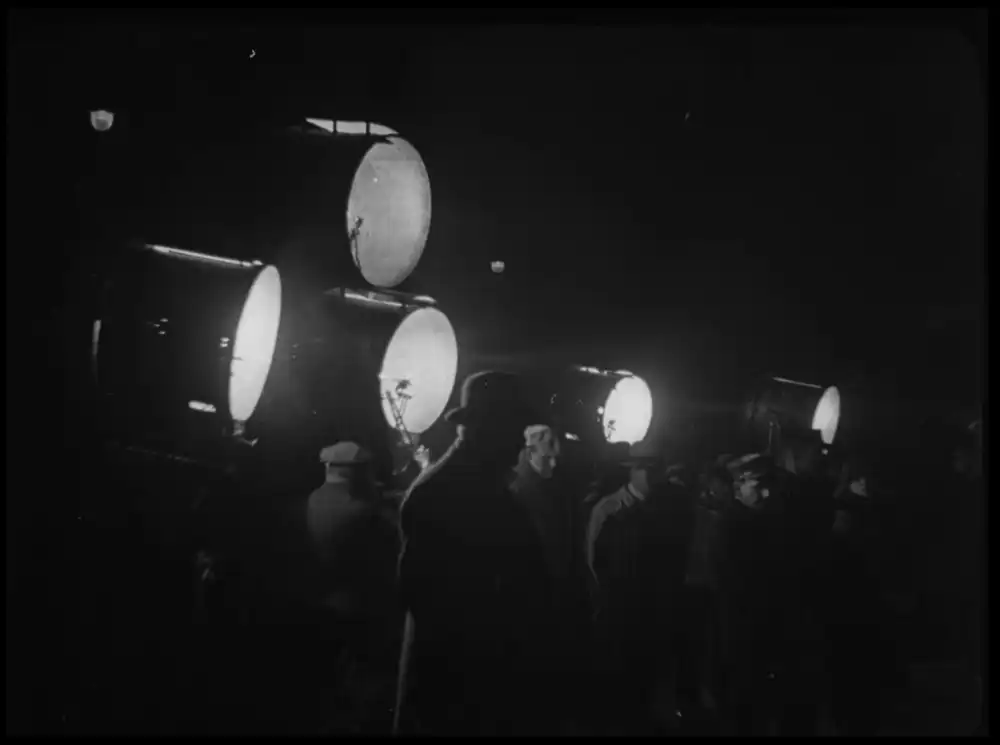
You see how they light the sets and how the cameras are these big, heavy boxes. It makes you realize how much work it was just to get a clear shot of someone’s face.
I kept thinking about The Wheel while watching the technical parts. That movie felt so massive, and here you see the tiny rooms where that kind of scale starts.
There is a segment with Carmen Boni that feels a bit more like a traditional movie. But then it goes right back to the gear and the tech.
The editing is a bit jumpy. One second you are looking at a drawing, and the next you are in a workshop with some guy hammering at a piece of wood.
It’s got that high-speed energy of the 1920s. Everyone seems like they are in a hurry to invent the future.
Sometimes the film quality gets a bit grainy or fuzzy. I actually liked that because it makes it feel more real, like a ghostly broadcast from a hundred years ago.
It’s not as dramatic as something like The Sorrows of Love. It doesn't want to make you cry; it just wants to show you a trick.
I noticed that nobody really looks at the camera directly for too long. They all look a bit shy, like they aren't used to being the ones in front of the lens.
There is this one shot of a film strip being held up to the light. You can see the tiny frames and the sprocket holes, and it’s just beautiful in a simple way.
It made me think about how much we lose when everything is just a digital file on a thumb drive. There was something so physical about it back then.
The music (in the version I saw) was okay, but I think I would have preferred to watch it in silence. The clicking of the projector would be the best soundtrack for this.
It’s not a masterpiece that will change your life. It’s just a cool window into a world that doesn't exist anymore.
If you’ve seen En lyckoriddare and liked the old-school vibe, this is a nice little side dish to that. It’s short, it’s sweet, and it doesn't overstay its welcome.
I did find the section on the 'scientific' side of cinema a bit dry. They talk about stuff that feels very basic now, but I guess it was revolutionary in 1929.
The way the film ends is a bit abrupt. It just kind of stops, like the reel ran out and they didn't bother to film a goodbye.
But that’s okay. I didn't need a big conclusion. I just liked hanging out in those old dusty studios for a while. 📽️
I’ll probably think about those bug puppets next time I watch a modern animation movie. Starewicz was doing things by hand that we struggle to do with computers today.
Anyway, give it a look if you find it. It’s a neat little piece of history that doesn't feel like a boring history lesson.
IMDb —
1918
Community
Log in to comment.