DbcultAccessing Vault...
6.3/10
Senior Film Conservator
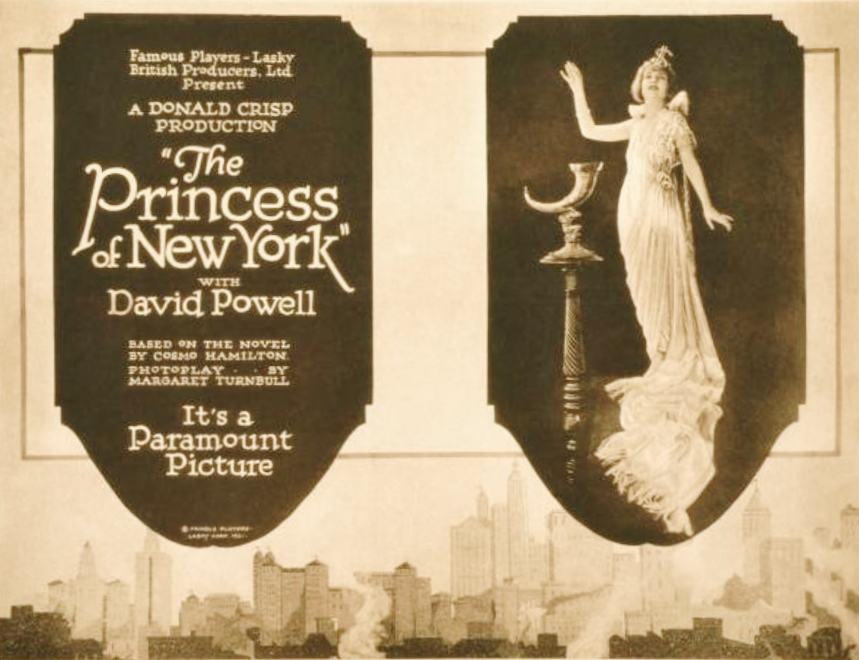
A definitive 6.3/10 rating for a film that redefined the boundaries of cult cinema. The Princess of New York remains a cornerstone of transgressive art.
The Princess of New York, a 1930s melodrama directed by Margaret Turnbull, is a cinematic jewel that glimmers with the sharp edge of social critique. Set against the backdrop of a steel-magnate dynasty, the film explores the corrosive interplay of wealth, ambition, and desire. At its heart is the eponymous princess (Saba Raleigh), a woman whose life is orchestrated by her father’s (William Parry) industrial empire and the jewels he gifts her—both symbols of power and shackles of expectation. Her fate is contested by two men: a university student (Philip Hewland) who represents idealism and a crooked gambler (Lionel Yorke) who embodies the seductive promise of risk. The film’s brilliance lies in its ability to balance high-society decadence with the seedier undercurrents of a world where love is bartered and loyalty is a currency.
Turnbull’s narrative is a masterful dissection of the American Dream’s darker facets. The steel king, played with chilling precision by Parry, is not merely a patriarch but a titan of industry whose influence extends into the moral fabric of his daughter’s world. His bequeathing of precious gems to his daughter is both a gesture of affection and a manipulation of her identity. The jewels, meticulously designed with geometric symmetry and refractive brilliance, serve as recurring motifs—reflecting the fragility of authenticity in a society obsessed with appearances. When the princess donates her gems to a charity auction, it’s less an act of generosity and more a performative gesture to maintain her social standing, a theme echoed in the hollow smiles of the elite at the film’s lavish galas.
The dynamic between the two suitors is a microcosm of the film’s central tension. Philip Hewland’s character, a student of philosophy, is portrayed with a naivety that borders on sanctimony—his speeches about honor and duty feel like a script he’s rehearsed in the library, far removed from the cutthroat reality of New York’s high society. In contrast, Lionel Yorke’s crook is a magnetic antihero, his charm laced with a self-awareness that makes his moral ambiguity almost palatable. Yorke’s performance is a tour de force; his smirk is both a weapon and a shield, his dialogue crackling with the kind of wit that disarms as much as it entrances. The princess’s oscillation between these two men is never fully explained, but it feels less like a choice and more like a surrender to the gravitational pull of their respective worlds.
Visually, The Princess of New York is a feast for the eyes. The cinematography, though constrained by pre-war technology, employs chiaroscuro lighting to create a chiaroscuro of morality—characters are often framed in pools of light or shadow, their faces half-lit in a manner that suggests their duality. The steel king’s estate is a labyrinth of gilded surfaces and mirrored corridors, a visual metaphor for the inescapable reflectivity of wealth. The film’s sound design, particularly in its use of jazz and ambient city noise, grounds the story in its era while allowing it to resonate with contemporary audiences. The princess’s final monologue, delivered in a voiceover as she gazes at the Hudson River, is a haunting meditation on the cost of living a life curated for public consumption.
While The Princess of New York stands on its own, its DNA is unmistakably tied to the golden age of Hollywood melodrama. Like Little Jack, it uses the trope of the innocent child caught in adult machinations, though here the child is replaced by a young woman navigating a world of adult corruption. The film’s preoccupation with materialism and its discontents also recalls The Heart of Lady Alaine, albeit with a sharper edge. Unlike those films, however, The Princess of New York avoids sentimentality, opting instead for a clinical dissection of its characters’ psychologies. Its most direct antecedent is Memoria dell'altro, with both films exploring how memory and legacy shape identity, though Turnbull’s work is rooted in materialism rather than existentialism.
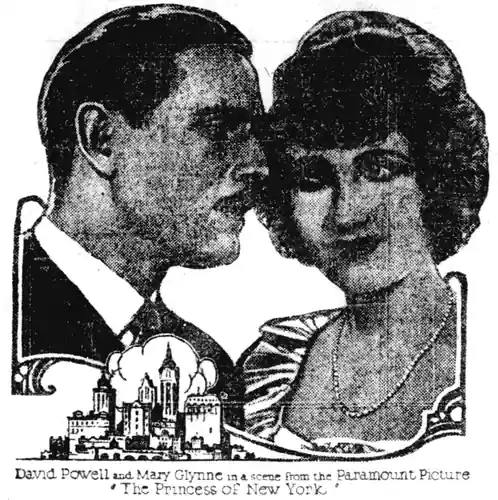
Saba Raleigh’s portrayal of the princess is a revelation. She embodies the character’s duality with a subtlety that transcends mere acting—it’s a performance that feels like a living archive of the era’s expectations for women. Her gestures are precise, her eyes betraying secrets her lips never utter. William Parry, as the steel king, is a masterclass in restrained menace. His dialogue is sparse, but his presence is felt in every scene, his physicality conveying a man who has built an empire on silence. Supporting performances, such as Mary Glynne’s as the princess’s confidante, add layers of nuance, their interactions with the protagonist hinting at a broader network of power and subterfuge.
The collaboration between Turnbull and co-writer Cosmo Hamilton results in a script that thrives on subtext. Dialogue is taut, often elliptical, with meaning lingering in pauses and glances. The film’s most powerful scene is a silent confrontation between the princess and her father, their unspoken words echoing louder than any exchange of lines. This restraint is a stark contrast to the overwrought melodrama of The Red, Red Heart, where emotions are shouted rather than suggested. Here, the script’s power lies in its ability to let the audience fill in the gaps—a risky but ultimately rewarding approach.
The Princess of New York is more than a period piece; it’s a prescient commentary on the commodification of identity in the digital age. The princess’s jewels, now icons of her personality, mirror the curated perfection of social media avatars. Her struggle to reconcile her public image with her private desires is a narrative that resonates with modern audiences navigating the paradoxes of visibility and authenticity. The film’s influence can be seen in later works like Opened Shutters, though Turnbull’s film is far more cynical about the possibility of redemption.
While the film occasionally veers into the didactic, particularly in its treatment of the crook’s moral complexity, its boldness in tackling themes of class warfare and gender roles is commendable. The steel king’s final monologue, delivered in a dimly lit study, is a chilling summation of the film’s thesis: that power is sustained by the illusion of control, not the reality of it. This moment, paired with a haunting score by unknown composers, cements the film as a landmark of 1930s cinema. For viewers seeking a deeper dive into similar narratives, Conflict offers a more overtly violent exploration of industrial capitalism, while Lend Me Your Name delves into the personal costs of fame.
IMDb 5.7
1931
Community
Log in to comment.