DbcultAccessing Vault...
5.1/10
Senior Film Conservator
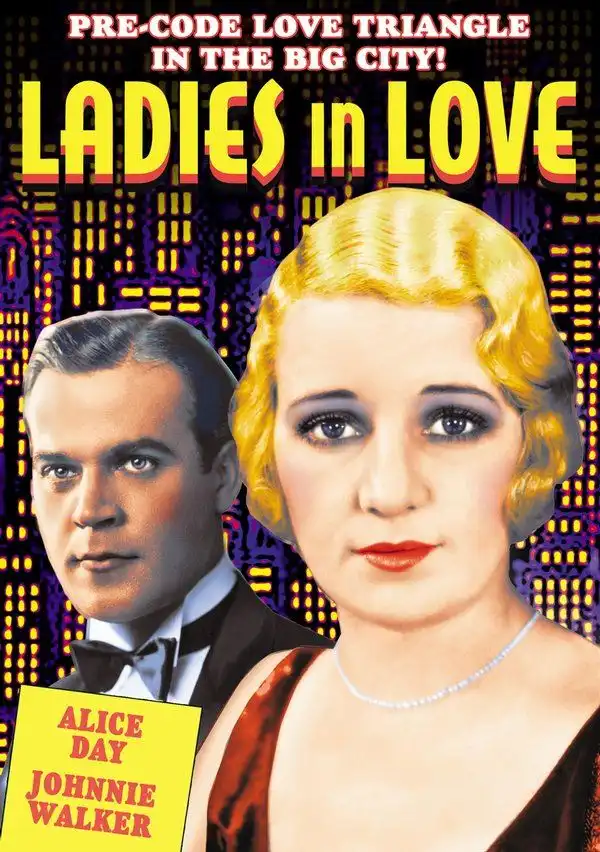
A definitive 5.1/10 rating for a film that redefined the boundaries of cult cinema. Ladies in Love remains a cornerstone of transgressive art.
So, "Ladies in Love." Is this one for your watchlist today? Honestly, it’s a specific taste. If you're someone who loves digging into really old movies, especially those pre-Code era or early talkies, you might find some quiet charm here. Think of it as a little peek into a simpler time. But if you’re hoping for modern pacing or sparkling dialogue, you'll probably find yourself checking your watch. It’s definitely not for the casual viewer looking for something easily digestible.
Our story follows this guy, Johnnie Walker, playing a songwriter from Vermont. He’s got this one song, "Oh, How I Love You," and he’s convinced it’s a hit. He takes it to New York, naturally, hoping a popular radio star, Dorothy Gould’s character, will sing it. It's the classic small-town-guy-in-the-big-city setup, played straight.
What really stuck with me was how earnest everything felt. There's a scene where he first plays his song for someone, and you can almost feel the movie trying to convince you this moment matters. The melody itself is… well, it’s a song. It’s not a showstopper you’ll be humming for days, but it has a certain old-timey sincerity to it.
The pacing is something else. Things move at their own speed. There are these long stretches where people just talk, and you're waiting for the next big thing to happen. But then you remember, this is how films used to be. It makes you appreciate how much film language has changed. 🕰️
Dorothy Gould, as the radio star, she's got that undeniable charisma of the era. You believe she could captivate an audience over the airwaves. Her performance is quite graceful, even when the script doesn't give her a whole lot to work with beyond being the object of our hero's ambition.
There’s a small, almost throwaway moment where our hero gets brushed off by some big-shot producer. The look on his face isn’t over-the-top despair, just a quiet, deflated kind of disappointment. It felt surprisingly real for such an early film. No big dramatic tears, just a subtle slump of the shoulders.
The whole portrayal of New York is interesting. It's not the bustling, gritty city we often see in later films. It feels a bit… sanitized, almost like a stage play set in a city. You don't get much sense of the real hustle and bustle, just the key locations needed for the plot to unfold.
And the dialogue! Oh, the dialogue. It's so formal sometimes, even for a casual chat. People speak in full sentences, with careful diction. It's a reminder of a different speaking style. You can almost hear the actors enunciating for the microphones of the day.
One thing I kept noticing was the use of close-ups. When someone delivers a line with particular weight, the camera zooms in a little awkwardly. It's not smooth like today. It almost feels like a sudden push-in. It gives the film a certain clumsy charm.
The supporting cast, honestly, most of them just fade into the background. There’s a character, maybe a friend or manager type, who gives some advice. I can't even remember his name right now, but he was just there. He felt like a necessary plot device more than a real person.
The resolution, it’s pretty much what you expect. No real surprises. It ties things up neatly, almost too neatly. But then again, these kinds of films often did. They weren't always about shocking twists. Sometimes they were just about a simple journey and a hopeful ending.
Is it a lost classic? Probably not. Is it a fascinating artifact? Absolutely. It’s a glimpse into filmmaking when the rules were still being written. You see the rough edges, the moments where they're figuring things out. It’s endearingly imperfect.
I found myself thinking about how many songs must have been written and never made it big. This film gives you a little taste of that ambition, that hope, even if the execution is a bit quaint by today's standards. It’s like finding an old, slightly dusty photograph. It tells a story, but you have to lean in a little closer to hear it.
Did I love it? Not exactly. Did I appreciate it? Definitely. For film historians or folks just curious about the roots of musical dramas, it’s worth a look. For everyone else, maybe put on some modern tunes instead. 😉
IMDb 5
1926
Community
Log in to comment.