DbcultAccessing Vault...
Cult Review
Senior Film Conservator
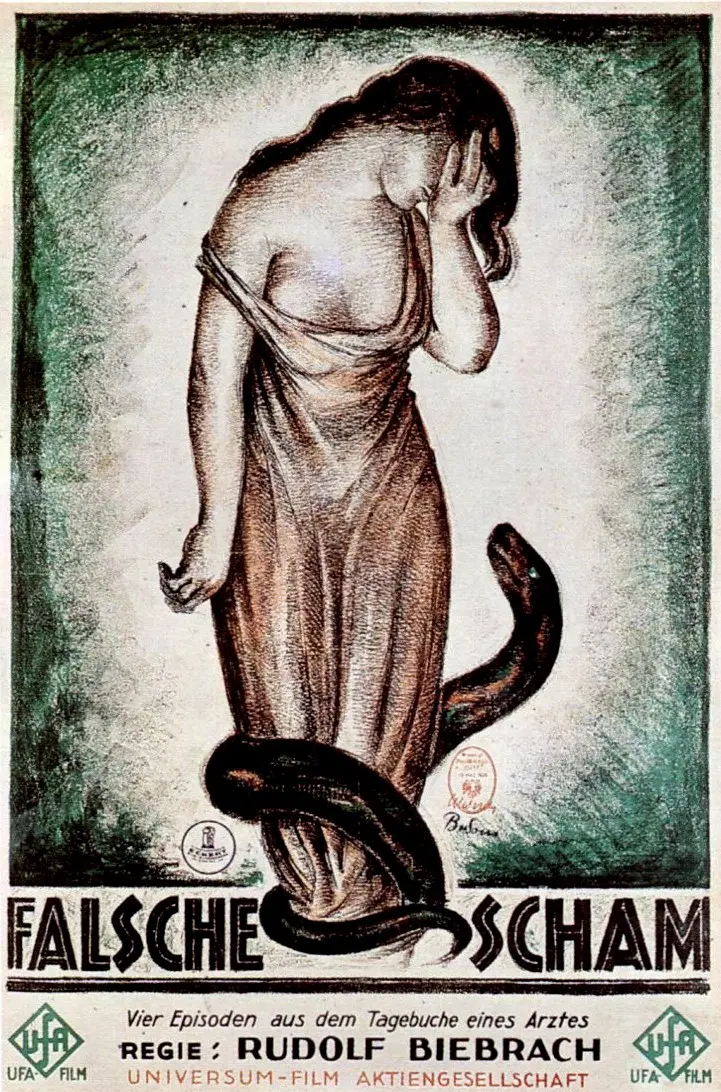
Is this 1926 German medical drama worth your time? Short answer: Only if you are a dedicated archivist or a student of Weimar-era social engineering who appreciates the intersection of cinema and public health. This is not entertainment in the traditional sense; it is a cinematic lecture designed to scare the viewer into hygiene.
This film is for historians of silent cinema and those interested in the 'Aufklärungsfilm' genre. It is absolutely not for anyone seeking a lighthearted evening or a fast-paced narrative experience.
1) This film works because it effectively uses the melodrama of the silent era to humanize what would otherwise be a cold, clinical list of symptoms and warnings.
2) This film fails because its pacing is entirely subservient to its educational agenda, often grinding the narrative to a halt for the sake of medical accuracy.
3) You should watch it if you want to see a fascinating example of how early cinema was weaponized to combat social taboos and public health crises in post-WWI Germany.
Falsche Scham is a 1926 German 'enlightenment film' that uses four dramatic vignettes to educate the public on the dangers and treatments of syphilis and gonorrhea. It blends fictional narrative with clinical instruction to remove the stigma surrounding medical consultations. The film acts as a bridge between the era's dramatic filmmaking and the burgeoning field of educational documentary.
In the mid-1920s, Germany was a hotbed of social experimentation and trauma. The 'Aufklärungsfilm' emerged as a way to bypass strict censorship by claiming an educational purpose. While films like Hypocrites challenged moral structures, Falsche Scham targeted the physical body. It was a time when silence was literally deadly. The film's title, which translates to 'False Shame,' directly addresses the psychological barrier that kept the infected from the doctor's office.
The direction by Nicholas Kaufmann, who was well-versed in cultural and medical films, ensures that the clinical aspects feel grounded. Unlike the more sensationalist The National Rash, this film maintains a certain professional distance that makes its warnings feel more authoritative. It doesn't just want to shock; it wants to cure. This clinical coldness is its greatest strength and its most significant barrier to modern enjoyment.
The film is divided into four distinct chapters, each focusing on a different demographic. We see the naive youth, the bourgeois couple, and the working-class family. This cross-section of society was intentional. It sent a clear message: disease does not care about your social standing. In one particularly striking scene, a young man discovers his infection not through a medical report, but through a stylized shadow sequence that visualizes his internal decay. It is effective. But it is also deeply unsettling.
The acting, led by Ulrich Bettac as the stalwart doctor, is typical for the era—expressive and heavy-handed. Bettac doesn't play a character so much as an archetype of scientific salvation. His office is a sanctuary of truth in a world of lies. When compared to the more character-driven drama in After the Ball, the performances here feel rigid. Every gesture is designed to emphasize a moral or medical point. There is no room for ambiguity.
"The film operates not as a story, but as a secular sermon where the doctor replaces the priest, and the microscope replaces the Bible."
The cinematography in Falsche Scham is surprisingly sophisticated for a 'hygiene film.' There is a stark contrast between the warm, domestic spaces of the characters and the cold, bright, high-contrast lighting of the medical clinic. This visual language reinforces the film’s central thesis: the truth is found in the light of the laboratory. The use of actual microscopic footage of bacteria was revolutionary for the time, providing a 'realism' that fictional narratives like Open Your Eyes often lacked.
However, the pacing is a slog. Because the film is determined to be thorough, it lingers on medical charts and consultation scenes far longer than a modern viewer will find comfortable. It lacks the rhythmic editing of contemporary works like Kino Pravda No. 16. Here, the camera is a witness, not a participant. It watches the characters suffer with a detached, almost judgmental eye.
A surprising observation about Falsche Scham is that it inadvertently functions as one of the earliest examples of body horror. While its intent was purely educational, the way it depicts the 'invisible enemy' within the bloodstream and the physical transformation of the characters is genuinely haunting. It treats the human body as a fragile vessel easily corrupted by a single mistake. This creates a sense of existential dread that transcends the 1920s medical context. The fear is real.
The film’s insistence on showing the 'quack' doctors—unregulated practitioners who sold useless cures—is also a fascinating historical footnote. These scenes are played with a touch of villainy that rivals the antagonists in silent crime thrillers. It highlights a secondary goal of the film: the consolidation of medical authority in the hands of the state-sanctioned elite. It is as much about power as it is about health.
From a purely cinematic standpoint, Falsche Scham is a difficult sit. It is dry. It is repetitive. It is patronizing. However, as a cultural artifact, it is indispensable. It represents a moment in history when the medium of film was being tested for its social utility. If you can stomach the slow pace and the didactic tone, you will find a work that is surprisingly bold in its honesty. It refuses to look away from topics that were considered unspeakable in 1926.
If you are looking for a narrative experience with emotional resonance, you are better off watching something like Wild Primrose. But if you want to see the roots of the modern public service announcement and the birth of the medical drama, Falsche Scham is a mandatory viewing. It is a grim, fascinating window into the past.
Pros:
- Significant historical value regarding 1920s social taboos.
- Bold, clear cinematography that distinguishes between 'shame' and 'science.'
- A fascinating look at early 20th-century medical ethics and practices.
Cons:
- Extremely slow pacing that may alienate modern audiences.
- Characters are flat archetypes rather than fully realized individuals.
- The educational agenda often overrides any sense of dramatic tension.
Falsche Scham is a relic that demands respect but does not necessarily invite affection. It is a stern, well-meaning, and technically competent piece of propaganda that succeeded in its mission to bring medical reality to the masses. While it lacks the artistic flair of the era's great expressionist works, its grit and commitment to its cause make it a standout in the 'Aufklärungsfilm' subgenre. It is a film that was meant to be used, not just watched. In that context, it is a triumph of utility over art.
Community
Log in to comment.