DbcultAccessing Vault...
6.9/10
Senior Film Conservator
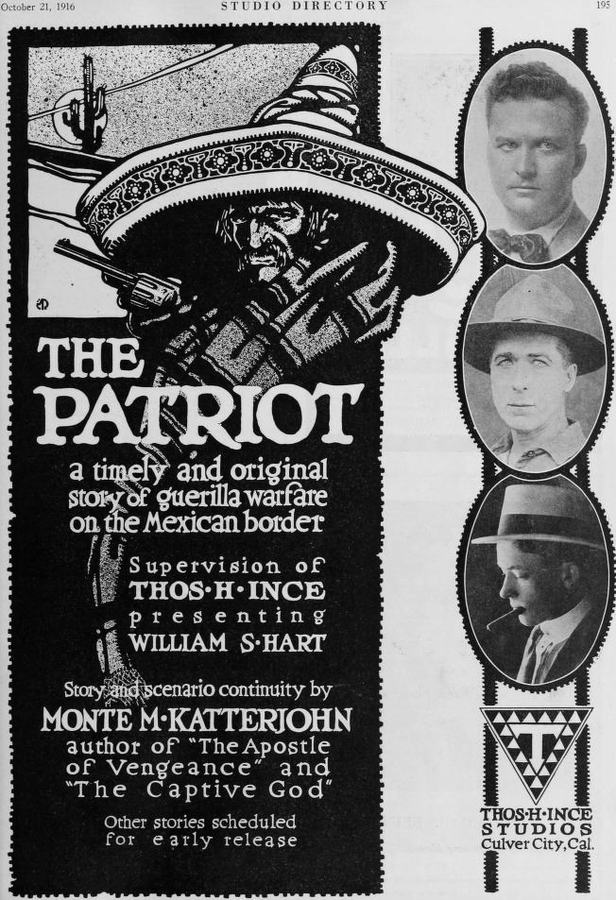
A definitive 6.9/10 rating for a film that redefined the boundaries of cult cinema. The Patriot remains a cornerstone of transgressive art.
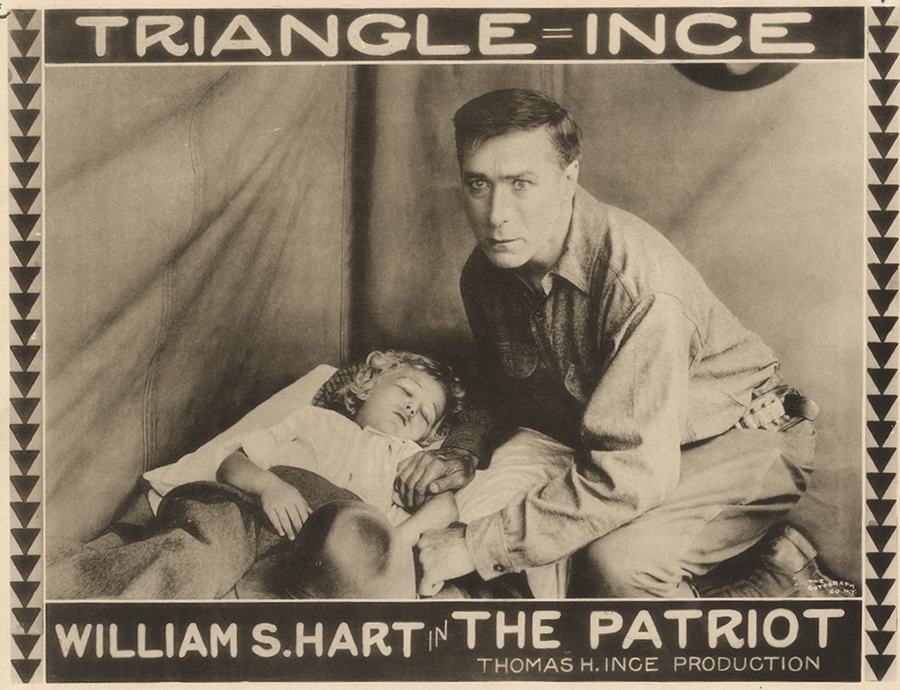
William S. Hart’s angular silhouette—part granite, part ghost—looms larger than the narrative itself in The Patriot, a 1920 revenge-western that detonates its own patriotism before gingerly reassembling the flag it so gleefully tramples. Hart, the movies’ first “good bad man,” had spent the prior decade sanctifying the stoic cowboy; here he weaponizes that persona, exposing how quickly civic devotion mutates into domestic terror when the social contract is shredded by graft.
Set against the raw suede backdrop of post-Spanish-American-War New Mexico, the film opens not with thundering hooves but with the hush of dawn spilling over Bob Wiley’s homestead. Cinematographer Joseph H. August lets the camera linger on a tattered banner snapping in the breeze—an image that will ricochet through the story like a guilty memory. Wiley’s creed is simple: land, son, country, in that order. The discovery of placer gold reframes the hierarchy; suddenly the creekbed glints with Manifest Destiny’s metallic grin. Enter Lawton’s Ridge bureaucrats—oily, derby-hatted caricatures who could slide seamlessly into The Masqueraders’ ballroom corruption. With a forged surveyor’s report and a judge who signs wherever the whiskey flows, they exile Wiley from the very soil he fought overseas to defend.
The Washington interlude—a brisk montage of corridors, cigar smoke, and indifferent clerks—plays like a cynical inversion of The Gentleman from Indiana’s idealistic Capitol sojourn. Hart’s face, framed by a furled umbrella and rain-streaked windows, registers the moment a citizen realizes his government has no recognizable face, only factions. The subsequent return home is pure Victorian melodrama: the cabin torched, the boy’s tiny boots dangling from a saddle horn, a makeshift cross already white-hot under the desert sun. Hart’s grief is feral; he claws the scorched earth, then pivots toward Pancho Zapilla’s camp with the vengeful zeal of Ahab auctioning his soul.
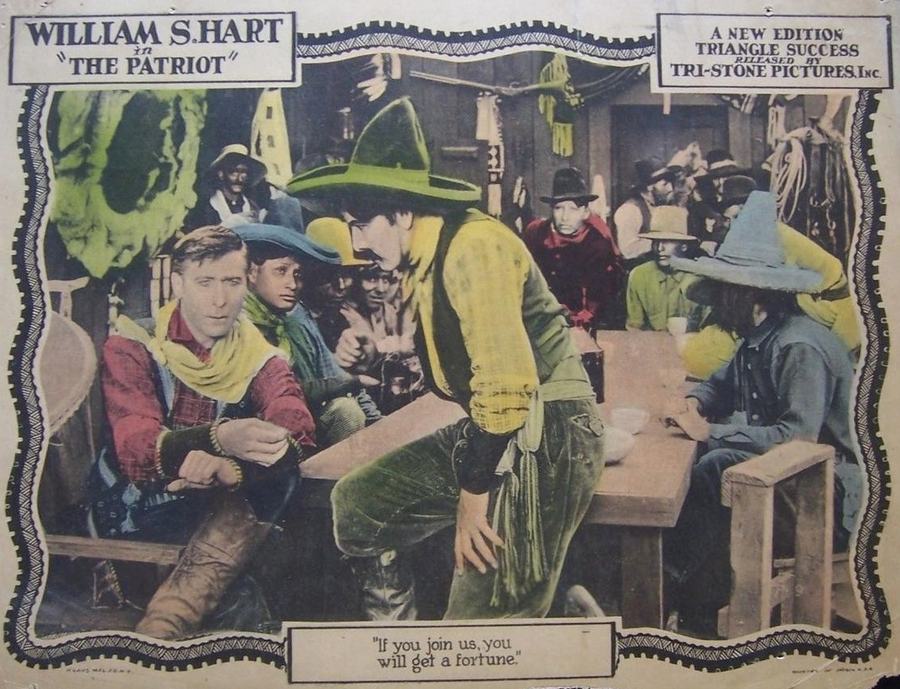
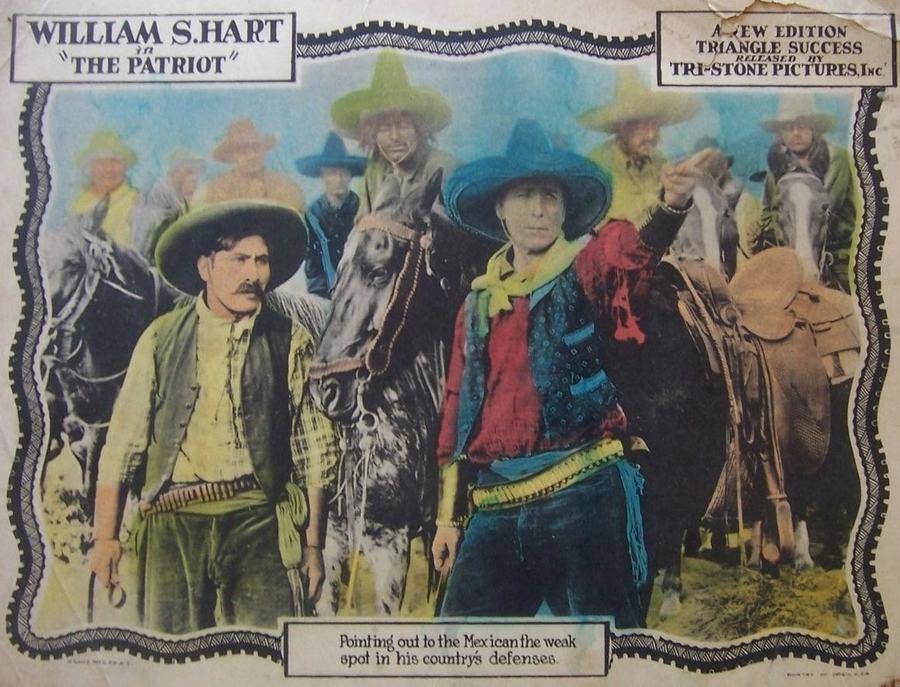
Zapilla—half Pancho Villa, half folk myth—rules over a polyglot army of deserters and dreamers. The film’s middle third indulges in ethnographic spectacle: pulque-soaked fiestas, Catholic iconography fused with rifles, women stitching revolutionary slogans into dusty serapes. Wiley’s assimilation is signaled by a costume change: the khaki scout jacket replaced by a charro vest bristling with ammunition. Yet even here August’s camera undercuts romance; a cutaway to buzzards circling a goat carcass reminds us revolutions feed on carrion. Wiley’s sabotage strategy—to misdirect the U.S. cavalry with false intelligence—carries the queasy frisson of treason made lucid. When he lies to the paternal colonel (Charles K. French, exuding weary decency), the moral axis tilts; we are invited, almost compelled, to root for the desecration of a town populated by innocents.
What saves the picture from plunging into nihilism is its recognition of performance itself. Wiley’s espionage requires him to play the reformed turncoat, and Hart—master of micro-gesture—lets uncertainty leak through clenched jaw muscles, a blink held half a second too long. The viewer intuits the split second when self-loathing eclipses revenge: it occurs in a candle-lit cantina where a battered schoolroom map of the United States, tacked above the bar, catches his eye. The stripes seem to pulse like an exposed artery; Hart’s hand trembles above his revolver. That tremor is the film’s moral fulcrum.
Thus begins the contrition gauntlet. Wiley dashes through arroyos under moon-crackle to intercept Zapilla’s vanguard; he knifes a sentry, then recoils at the wet sound, memory of San Juan Hill bayonets flooding back. The climactic defense of Lawton’s Ridge—half Alamo, half Pentecost—unfolds in a tapestry of silhouettes and kerosene flares. August backlights the charging rebels so their sombrero brims halo like avenging angels, while the townsfolk—previously lampooned as gullible rubes—muster a desperate phalanx with squirrel rifles and mining picks. Wiley, atop the parapet, unfurls a fresh star-spangled banner wrested from the post office, and for once the symbol feels earned, blood-washed, fragile.
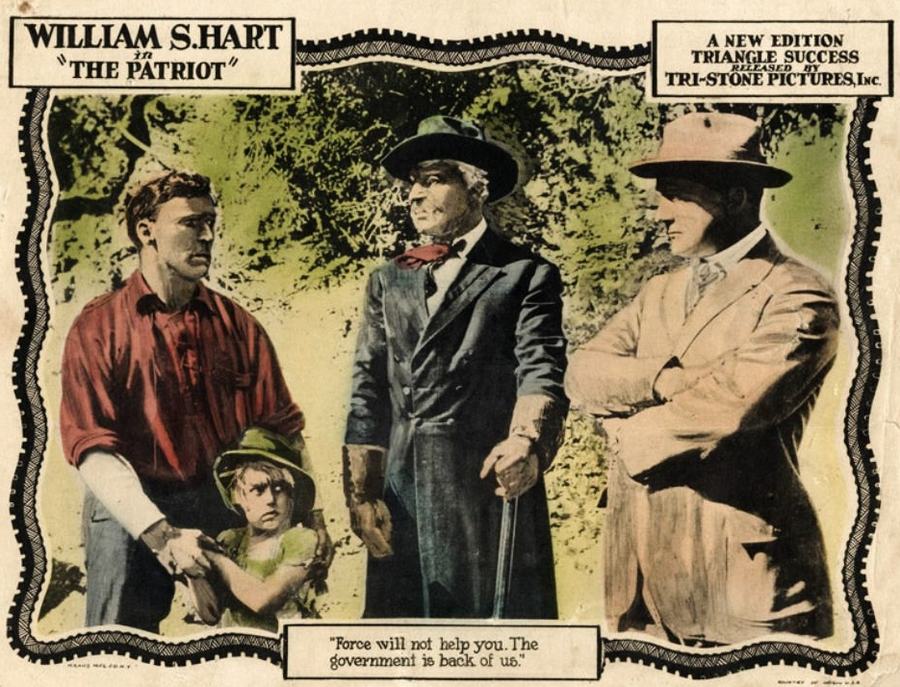
Children of the digital age may smirk at the tidy epilogue: Wiley absolved, the flag restored, his citizenship ceremonially reinstated. Yet the silent era trafficked in parable, not psychotherapy. The final tableau—Wiley planting the banner in the bullet-churned earth while tears stripe his dust-caked cheeks—carries the same ambiguous catharsis as the closing shot of When It Strikes Home, where victory and bereavement share a single trembling frame. Hart, ever the Calvinist, refuses unambiguous jubilation; the damage lingers in the way he fingers the frayed flagpole rope, as though testing whether the knot will hold.
Restoration-wise, the surviving 35 mm print at the Library of Congress remains incomplete—roughly twelve minutes of sub-titled exposition are decomposed. The 2018 electro-acoustic score by the Mont Alto Motion Picture Orchestra—performed on their five-city tour—infuses the celluloid gaps with clacking castanets and ominous tuba, bridging narrative lacunae through leitmotif. Home viewers can stream a 2K transfer via Classflix, though the grayscale occasionally milks out; purists should track down the Blu-ray from Reel Animus which restores amber tinting for night sequences and the ochre glow of daytime exteriors.
Comparative contextualization illuminates the film’s precarious politics. Where For Napoleon and France mythologizes imperial grandeur and Sorvanets fetishizes Slavic fatalism, The Patriot interrogates American exceptionalism from within, predating Ford’s cavalry trilogy by three decades. Its cynicism toward Washington anticipates noir, yet its ultimate reversion to patriotic orthodoxy anchors it squarely in the Wilsonian era—an ideological contortion that makes the film a cultural seismograph of 1920’s anxious nationalism.
Performances orbit Hart’s gravity. Little Georgie Stone, as the ill-fated Bobby, exudes winsome pluck without lapsing into Shirley Temple precocity; his death scene—played in long shot, a tiny body cradled by the Indian companion Joe Good-Boy (Milton Ross)—derives power from withholding close-up. Ross, stoic beneath pancake bronzer, complicates the “faithful sidekick” trope: observe how his eyes narrow when Wiley vows allegiance to Zapilla, the silent accusation of a colonized conscience. The villains—Roy Laidlaw’s reptilian registrar and Francis Carpenter’s oleaginous attorney—snivel with mustache-twirling brio, though their caricature is offset by the script’s insistence that lawful paperwork, not brute force, dispossesses our hero.
Monte M. Katterjohn’s screenplay, adapted from his own Saturday Evening Post serial, betrays the episodic origin via brisk chapter-like transitions. Intertitles oscillate between purple (“The creek ran golden—but blood is thicker than water, and hate is thickest of all.”) and tersely modern exchanges. One card, flashed during the congressional snub, simply reads: “Silence. The most American of replies.” Such compression foreshadows Hemingway’s iceberg theory, though Katterjohn can’t resist a closing moral homily that undercuts the sophistication.
Visually, the film revel in chiaroscuro. Night interiors are lit by a single kerosene lamp positioned low, casting upward shadows that sculpt faces into gargoyles. Exterior daylight scenes favor high-contrast side-lighting; every crevice in Hart’s cratered visibility becomes a topographical map of regret. August occasionally undercranks during shootouts to amplify kinetic frenzy, yet he maintains spatial coherence—no mean feat when staging a cavalry swirl involving 200 extras and a herd of panic-struck mustangs.
Gender politics, predictably retrograde, offer slim material for reclamation. Women function as flag-bearers literally and symbolically: the schoolmarm who patches the banner, the nameless señoritas who bless Zapilla’s rifles with rosaries. The absence of a romantic interest—Wiley’s wife already dead before reel one—keeps the narrative testosterone-focused, aligning it with the Spartan ethos of The Eternal Strife rather than the heterosexual recuperation typical of Hart’s earlier hits.
Yet the film’s most subversive current flows beneath its racial substratum. Joe Good-Boy’s moniker grates today, yet the character wields agency: he alone predicts the politicians’ treachery, and his lament for Bobby—delivered in untranslated Lakota—subverts the compulsory English of intertitles, asserting linguistic sovereignty. When he ultimately rides off, refusing Wiley’s invitation to rebuild, the frame lingers on his departing back, a tacit acknowledgement that indigenous loyalty to nation is conditional at best. In 1920 such nuance was radical.
Box-office receipts placed The Patriot among the top-grossing features of its year, though United Artists’ ledgers were notoriously opaque. Critics praised Hart’s “virility” while Progressive journals decried its “jingoistic hysteria.” The film vanished from repertory after 1927, eclipsed by Paramount’s synchronized sound juggernauts, until a 1950s 8 mm condensation circulated among collectors. Its current renaissance owes less to nostalgia than to historians excavating early critiques of American empire—viewers stunned by Iraq and Afghanistan find eerie echoes in Wiley’s disillusionment.
So, is it a red-blooded endorsement of flag-waving or a veined study in nationalist disillusion? The answer is the film’s enduring triumph: it is both, oscillating like a compass needle near magnetic north. Each generation rewrites its verdict. What remains constant is Hart’s granite visage, cracked yet unbroken, confronting us with the cost of conflating soil with soul. Stream it, but watch at dusk when your own reflection hovers ghost-like above the screen; you may discover the most terrifying enemy is not the invader at the gate, but the betrayed believer within.
IMDb —
1933
Community
Log in to comment.