DbcultAccessing Vault...
Cult Review
Senior Film Conservator
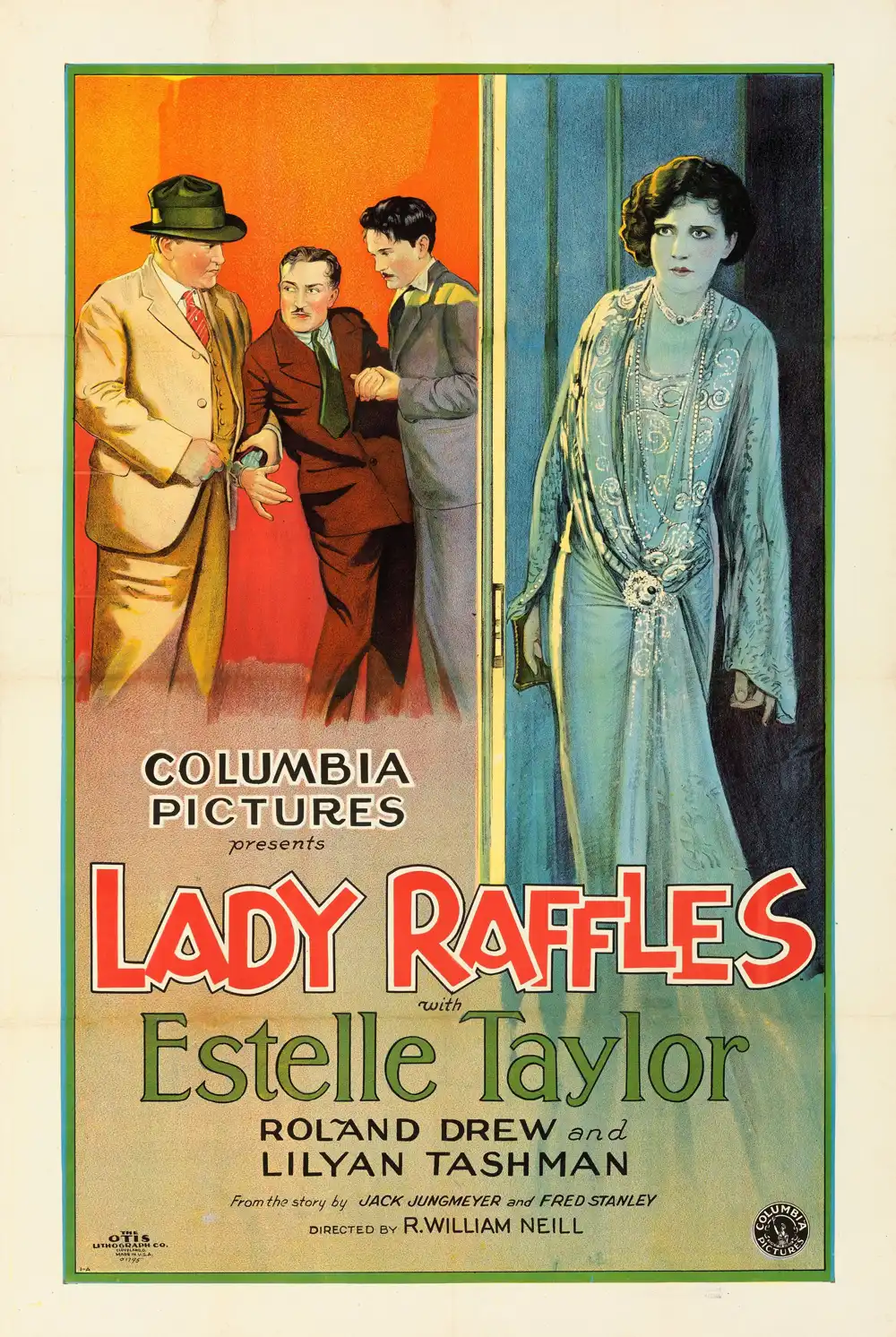
So, Lady Raffles. Is it worth tracking down today? Look, if you’re not already into early cinema, probably not. This is for the folks who appreciate the strange rhythm of late silent films, the ones who get a kick out of seeing how they tried to tell a story without a single spoken word. If you’re looking for a tight plot or anything resembling modern acting nuance, you’ll likely be bouncing off this one pretty hard. But if you’ve got an hour and a bit to spare, and you’re curious about a certain kind of forgotten Hollywood charm, there are definitely some moments here that stick.
Estelle Taylor, as the titular 'Lady Raffles,' has a real presence. She’s not trying for subtle, not even a little bit, and that’s actually what makes her performance work sometimes. There’s a scene early on where she’s casing a jewelry store, and the way she just looks at the display, a slow, almost predatory gaze, it really sells the idea of her character without any intertitles needed. You can almost feel the movie trying to convince you she's dangerous, and for a few frames, it actually succeeds.
But then there are other moments where the melodrama just takes over. Ernest Hilliard, playing her sort of reluctant accomplice/love interest, often looks like he’s trying to remember his lines, even though there aren't any. His expressions swing wildly from intense brooding to bewildered puppy, sometimes within the same scene. There’s a particular shot where he’s supposed to be distressed, and he just keeps running his hand through his hair, over and over, until it stops being dramatic and just becomes a little bit funny.
The pacing is a bit all over the place. Some scenes fly by, almost too quickly to register what just happened, especially when they’re trying to establish some background plot point with quick cuts and too many character introductions. Then you get a sequence, like the one where Taylor is trying to sneak out of a mansion after a heist, that just… stretches. She hides behind a curtain, then peeks out, then hides again, then peeks. It goes on about 20 seconds too long, and the silence starts to feel awkward rather than suspenseful. You start wondering if the director just forgot to yell "cut."
I loved the costumes on Lilyan Tashman's character, the socialite she's often outwitting. There’s this one feathered gown she wears to a party, just absolutely over the top, which feels perfectly period and gives her a real air of flapper excess. It’s a nice contrast to Taylor’s more sleek, practical (for a thief) outfits. Small detail, but it makes the world feel a little more lived in.
There are these weird little background details too. In one of the party scenes, the crowd scenes have this oddly empty feeling, like half the extras wandered off. If you look closely, one of the people in the background is clearly not even pretending to interact with anyone, just kind of staring off into space, maybe at the camera. It’s the kind of thing that pulls you out for a second, a tiny crack in the illusion.
And the intertitles… sometimes they’re genuinely poetic, trying to convey a grand emotion, but then others just state the obvious. "She was a woman of mystery." You know, we just saw her doing something mysterious. It feels a little redundant, like they didn’t quite trust the visuals to carry the weight. But then a few minutes later, there’s an intertitle that’s perfectly concise, setting up a twist without giving everything away, and you think, "Okay, they can do it."
The whole thing has this strange charm, almost like a stage play caught on film, where the actors are still figuring out how to scale their performances for the camera. There's a moment near the end where Taylor and Hilliard have this incredibly stilted, almost formal embrace, and you can practically feel the director saying "Okay, now look romantic!" It’s not exactly chemistry, but it's endearing in its own way. The movie gets noticeably better once it stops taking itself so seriously, leaning into the caper rather than the heavy drama.
Winifred Landis, in a smaller role as a society matron, delivers some wonderfully exaggerated reactions that feel straight out of a vaudeville act. Her gasps are almost physical. It’s a reminder of what audiences expected back then, and it’s actually quite fun to watch her chew the scenery a little. Roland Drew has even less to do, mostly just looking stern, but he manages to do it with a certain conviction. Or maybe it’s just his brow.
One particular shot really stood out: a close-up of a hand reaching for a necklace, bathed in this very dramatic, almost artificial moonlight. It’s a simple shot, but effective, creating a brief flicker of genuine tension. Then it cuts to a wider shot that kind of dissipates the mood, but for that one second, it was really well done.
So, Lady Raffles isn't a masterpiece, not by a long shot. It’s clunky and uneven, sure. But there’s a certain scrappy energy to it, a sense of early filmmakers figuring things out. It’s not for everyone, but if you approach it with a bit of patience and an appreciation for the quirks of its era, you might find yourself surprisingly entertained by its rough edges and occasional flashes of brilliance. It's a piece of history, albeit a slightly wobbly one.
IMDb 5.4
1931
Community
Log in to comment.