DbcultAccessing Vault...
Cult Review
Senior Film Conservator
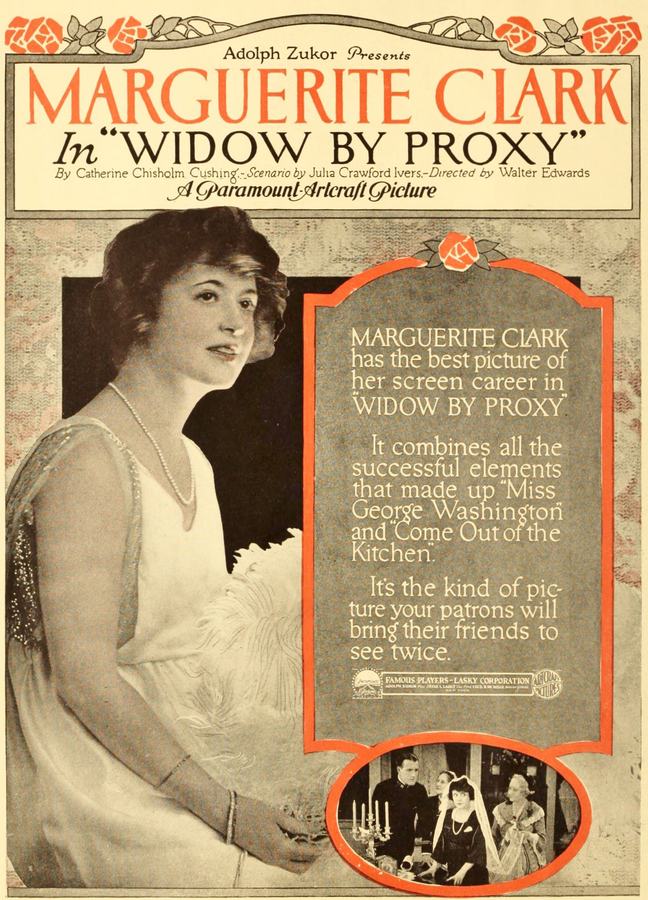
In the annals of early cinema, where flickering shadows often conveyed more profound truths than spoken words, 1919's Widow by Proxy emerges as a delightfully intricate tapestry of mistaken identity, societal critique, and burgeoning romance. Directed with a deft hand and penned by the collaborative genius of Catherine Chisholm Cushing and Julia Crawford Ivers, this silent gem transcends its era, offering a narrative richness that continues to captivate. It's a film that, despite its century-plus vintage, speaks to timeless themes of class prejudice, the allure of deception, and the serendipitous nature of love. A true testament to the inventive storytelling prevalent in the silent age, it manages to be both a rollicking comedy of errors and a poignant examination of human connection under duress.
At its core, Widow by Proxy orchestrates a meticulously crafted deception, born from desperation and fueled by an antiquated social hierarchy. We are introduced to the Pennington sisters, Sophronia and Angelica, Massachusetts spinsters embodying a bygone era's rigid moral code. Their disdain for their nephew Jack's marriage to Dolores, an actress, is palpable, a reflection of the era's pervasive prejudice against women in the performing arts. This societal snobbery sets the stage for the ensuing drama. When news arrives of Jack's untimely demise on the French battlefields – a grim reminder of the Great War's far-reaching tendrils – Dolores finds herself not only grief-stricken but also financially bereft. Her only recourse is to seek refuge with Gloria Grey, a struggling singing teacher whose own monetary woes are spiraling out of control. This shared predicament forms an unlikely alliance, a bond forged in adversity that will soon lead them down a perilous path.
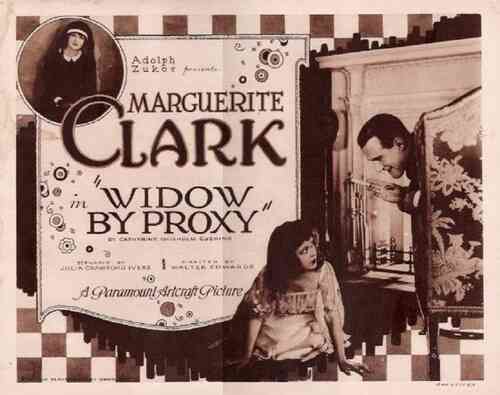
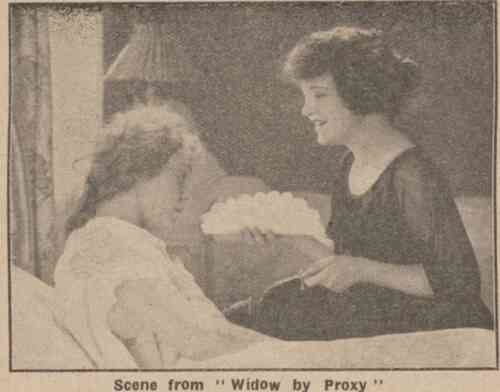
The catalyst for the film's central conceit arrives with the revelation of a $5,000 inheritance from Jack's estate, a sum Dolores, in a display of fierce, almost self-destructive pride, refuses to accept. It is Gloria, with a pragmatism born of necessity, who masterminds the audacious plan: a complete identity swap. Gloria, assuming the persona of the aristocratic 'widow' Dolores, ventures forth to Pennington Manor. Her mission? To charm the formidable aunts and secure the inheritance that Dolores so stubbornly rejects. Gloria's quick wit and inventive spirit are immediately apparent as she fabricates a lineage, complete with a duchess godmother, a detail that instantly elevates her in the eyes of the status-obsessed Pennington matriarchs. This initial success in navigating the treacherous social waters of the Pennington household is a triumph of improvisational genius, setting the tone for the delightful complications that follow.
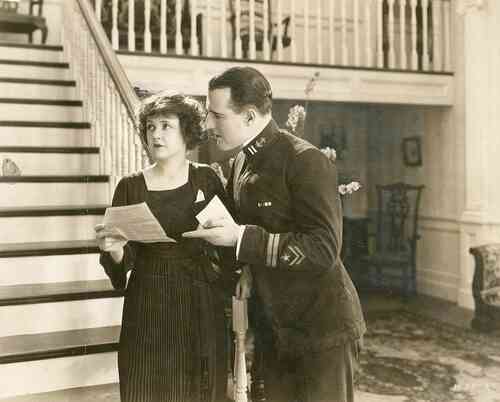
However, as often happens in tales of elaborate subterfuge, the emotional stakes escalate beyond mere financial gain. A burgeoning, undeniable romance blossoms between Gloria (as 'Dolores') and Steven, Jack's brother. Their connection is swift and intense, a whirlwind courtship culminating in a hurried marriage proposal as Steven prepares for his own naval deployment. Just as the fraudulent wedding bells are about to chime, fate delivers its most unexpected blow: Jack returns, alive and well, from the war. This shocking twist shatters the carefully constructed illusion, plunging everyone into a maelstrom of confusion, heartbreak, and ultimately, revelation. The genius of the narrative lies not just in the setup of the deception but in its dramatic, emotionally charged unraveling, culminating in the true Dolores's appearance to untangle the intricate web of mistaken identities and misplaced affections.
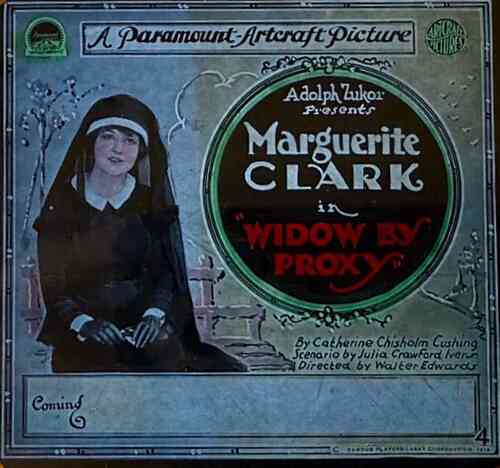
The success of a silent film hinges almost entirely on the expressive capabilities of its cast, and Widow by Proxy is blessed with a remarkable ensemble. Marguerite Clark, a luminous star of the era, delivers a masterclass in dual portrayal, embodying both the proud, somewhat rigid Dolores and the quick-witted, charming Gloria. Her ability to convey distinct personalities through subtle gestures, facial expressions, and body language is truly exceptional. As Dolores, she projects a quiet dignity, a woman bowed but not broken by circumstance. As Gloria, she radiates a vibrant energy, a playful cunning that makes her masquerade utterly believable and endearing. This dual role is the film's undeniable anchor, showcasing Clark's versatility and magnetic screen presence. Her performance reminds one of similar intricate character work seen in films like The Lily and the Rose, where actresses often had to convey complex emotional states without dialogue.
The supporting cast is equally compelling. Gertrude Norman and Al W. Filson as the Pennington aunts, Sophronia and Angelica, are a comedic tour de force. Their stiff-necked adherence to social propriety and their gradual, almost imperceptible thawing under Gloria's charm provide much of the film's humor. They are caricatures, certainly, but caricatures imbued with enough humanity to be more than mere foils. Nigel Barrie, as Steven, embodies the dashing romantic lead with a sincerity that makes his rapid falling in love with 'Dolores' entirely credible. His earnestness provides a vital emotional counterpoint to the film's more farcical elements. And then there's John Gilbert, in a pivotal but relatively brief role as Jack. His return from the war, a moment of profound shock and heartbreak, is handled with a touching vulnerability that foreshadows his later dramatic prowess. Rosita Marstini and Gertrude Claire also contribute solid performances, rounding out a cast that perfectly understands the nuances of silent film acting.
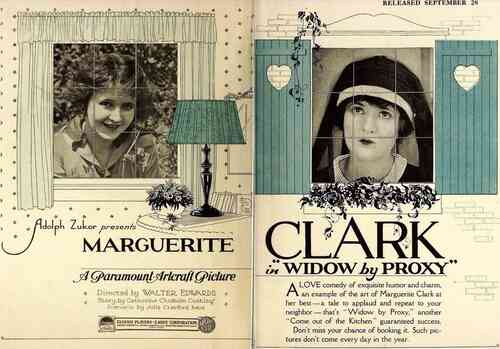
While undoubtedly a romantic comedy, Widow by Proxy delves into a rich array of thematic concerns that resonate far beyond its lighthearted surface. The most prominent is the trenchant critique of class distinction and social prejudice. The Pennington sisters' initial refusal to acknowledge Dolores, solely due to her profession as an actress, highlights the era's rigid social stratification and the arbitrary judgments placed upon individuals based on their perceived social standing. Gloria's success in impersonating a 'lady' with a fabricated aristocratic connection underscores the superficiality of such distinctions, revealing how easily appearances can be manipulated to gain acceptance. This theme of social climbing and identity manipulation finds parallels in other contemporary films such as A Modern Cinderella, which also explored the challenges of navigating societal expectations.
The film also subtly touches upon the lingering impact of World War I. Jack's presumed death and subsequent miraculous return serve as a potent reminder of the war's devastating reach and the emotional toll it exacted on families. Steven's impending naval duty further grounds the narrative in the historical reality of the period, adding a layer of urgency and pathos to his romance with Gloria. This element, though not central, provides a somber backdrop to the otherwise buoyant comedic proceedings, a quiet acknowledgment of the world's larger anxieties. Films like The Ships That Meet similarly explored the human connections and disconnections wrought by global conflicts.
Moreover, the contrast between Dolores's unyielding pride and Gloria's pragmatic resourcefulness offers a fascinating study in human nature. Dolores's refusal of the inheritance, though born of a noble sentiment, is ultimately self-defeating. Gloria, on the other hand, embodies a more modern sensibility, willing to bend societal rules for survival and, ultimately, for love. This dynamic showcases the shifting values of the early 20th century, where traditional notions of honor were beginning to contend with the practicalities of a rapidly changing world. The narrative also playfully explores the concept of identity itself: who are we when stripped of our societal labels? Can love truly transcend the masks we wear, or are we destined to fall for the illusion?
The directorial vision for Widow by Proxy, while uncredited in some historical accounts, showcases a clear understanding of comedic timing and dramatic tension. The pacing is exquisite, allowing the intricate plot to unfold with clarity despite the numerous twists and turns. The use of visual gags, expressive intertitles, and well-staged scenes keeps the audience engaged throughout. The film avoids becoming overly convoluted, a common pitfall for stories reliant on mistaken identity, thanks to its disciplined execution.
The screenplay by Catherine Chisholm Cushing and Julia Crawford Ivers is a marvel of construction. Adapting a stage play, they successfully translate its theatrical energy into cinematic terms. The dialogue, conveyed through intertitles, is sharp and witty, driving the plot forward while also revealing character. Their ability to weave together multiple narrative threads – the initial prejudice, the financial desperation, the identity swap, the budding romance, and the dramatic return – into a cohesive and satisfying whole is truly commendable. It speaks to a sophisticated understanding of dramatic structure and comedic potential. This level of intricate plotting and character development can also be observed in films like Gambier's Advocate, which similarly navigated complex human relationships with a keen eye.
As a product of the silent era, Widow by Proxy relies heavily on visual storytelling. The production design, though perhaps not as lavish as some of the epics of its time, effectively establishes the contrasting worlds: the austere elegance of Pennington Manor versus the humble, precarious dwellings of Dolores and Gloria. Costuming plays a crucial role, particularly in highlighting Gloria's transformation from a struggling teacher to a 'lady' of society. The visual cues, from gestures to set pieces, are meticulously employed to convey character, emotion, and narrative progression without the benefit of spoken dialogue.
The cinematography, while adhering to the conventions of the period, is effective in capturing the emotional beats of the story. Close-ups are used judiciously to emphasize key expressions, while wider shots establish the spatial relationships and social dynamics. The film's overall aesthetic contributes significantly to its charm, transporting the viewer back to a time when cinema was still finding its voice, yet already masterfully communicating complex human experiences. It showcases the burgeoning artistry of early cinema, much like the visual storytelling in The Firefly, which also captivated audiences through its compelling imagery.
Widow by Proxy, despite its age, retains a remarkable freshness. Its comedic elements are still genuinely funny, its romantic entanglements still genuinely engaging, and its social commentary still surprisingly relevant. It stands as a testament to the enduring power of well-crafted storytelling and compelling performances. For modern audiences, it offers a fascinating glimpse into the social mores and cinematic techniques of a bygone era, while simultaneously delivering a universally appealing narrative of love, deception, and self-discovery.
The film's exploration of identity and societal expectations, particularly concerning women, is particularly noteworthy. Dolores's initial rejection for being an actress, and Gloria's need to fabricate a more 'respectable' background, highlight the constraints placed upon women in that period. Yet, both characters, in their own ways, challenge these norms – Dolores through her unwavering pride, Gloria through her audacious ingenuity. This makes Widow by Proxy more than just a lighthearted comedy; it's a subtle, yet significant, piece of social commentary.
In comparison to other films of its time that explored similar themes, such as The Little Dutch Girl with its focus on cultural identity, or even the more dramatic Beauty in Chains, Widow by Proxy distinguishes itself with its buoyant spirit and the sheer cleverness of its central premise. It proves that even without spoken dialogue, cinema could weave intricate narratives that were both entertaining and thought-provoking, capable of eliciting laughter, empathy, and genuine surprise.
In conclusion, Widow by Proxy is far more than a mere historical curiosity; it is a vibrant, intelligent, and thoroughly enjoyable film that deserves a wider audience. Its intricate plot, brought to life by outstanding performances, particularly from Marguerite Clark, offers a delightful escape into a world of charming deception and heartwarming romance. The film's subtle critiques of societal prejudices and its underlying humanism ensure its lasting appeal. For anyone with an appreciation for the artistry and ingenuity of early cinema, or simply a love for a well-told story, Widow by Proxy is an absolute must-see. It's a reminder that great storytelling, regardless of the technological limitations of its era, possesses a timeless quality, capable of entertaining and moving audiences across generations. This delightful silent era comedy is a testament to the power of a clever script, charismatic actors, and a story that understands the complexities of the human heart, even when cloaked in an elaborate ruse.
IMDb —
1921
Community
Log in to comment.