DbcultAccessing Vault...
Cult Review
Senior Film Conservator
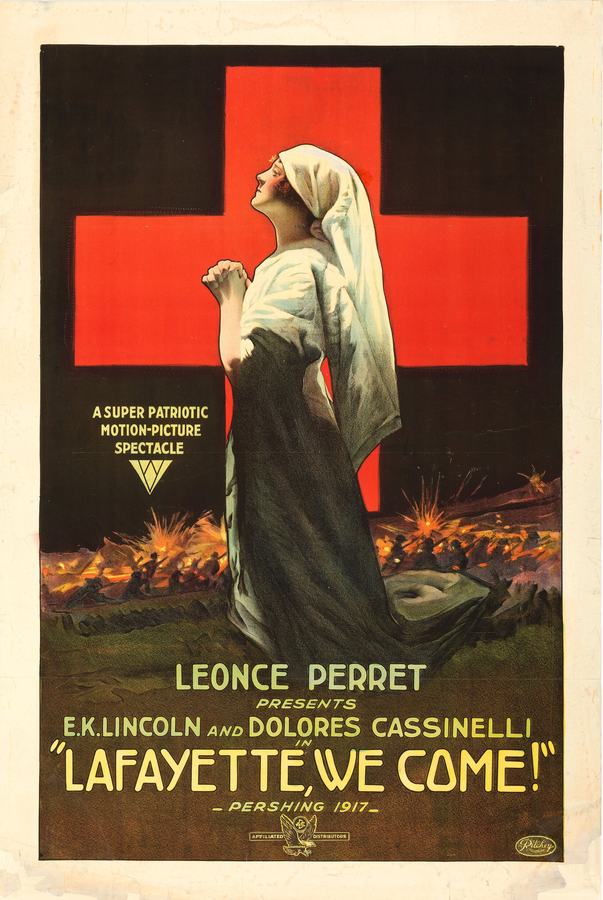
Stepping back into the cinematic landscape of the early 20th century, one often encounters narratives that, despite their age, resonate with an astonishing contemporaneity. Such is the case with 'Lafayette, We Come' (which you can explore further via its dedicated page), a film that, even in its silent grandeur, speaks volumes about love, duty, and the insidious nature of suspicion during humanity's most trying times. Released amidst the very real shadow of global conflict, this picture isn't merely a period piece; it's a testament to the emotional complexities that war invariably engenders, crafting a thrilling tale of romance entangled with the chilling tendrils of espionage.
The film introduces us to Leroy Trenchard, portrayed with a compelling earnestness by E.K. Lincoln. Lincoln's portrayal imbues Leroy with a blend of youthful idealism and burgeoning patriotism, making his character instantly relatable to audiences of the era who were witnessing similar transformations in their own communities. His devotion to Therese Verneuil, brought to life by the luminous Ethel Winthrop, forms the emotional core of the narrative. Winthrop, with her delicate expressions and graceful demeanor, crafts a Therese who is both vulnerable and fiercely independent, a woman whose love transcends geographical and societal boundaries. Their initial scenes together establish a profound connection, a romantic idyll soon to be shattered by the harsh realities of a world at war.
As Leroy heeds the call to arms, joining the American forces destined for the battlefields of France, the narrative takes a pivotal turn. This act of self-sacrifice, motivated by national pride and a desire to protect the values he holds dear, separates him from Therese. However, Therese is no passive damsel awaiting her hero's return. Her decision to follow Leroy to France, volunteering as a Red Cross nurse, is a powerful statement of agency and unwavering commitment, echoing the real-life contributions of countless women during the Great War. This aspect of the plot resonates with the themes explored in films like 'Just a Woman', which often highlighted the strength and resilience of female characters navigating challenging circumstances, though 'Lafayette, We Come' injects a layer of wartime urgency that amplifies Therese's resolve.
The European front, however, is not merely a stage for heroic deeds and compassionate care; it is a crucible of suspicion and paranoia. The arrival of Therese, seemingly a beacon of hope and familiar comfort for Leroy, soon becomes shrouded in a sinister cloud of doubt. It is here that the film masterfully pivots from a romantic drama to a gripping spy thriller. The whispers begin, subtle at first, then growing in intensity: could Therese Verneuil, the woman Leroy loves, actually be Princess Sonia, a German spy? This question forms the dramatic linchpin of the entire second act, transforming every tender glance and every selfless act into a potential deception.
The casting of Dolores Cassinelli, known for her captivating presence, as the potential Princess Sonia adds another layer of intrigue. While the plot suggests Therese *is* Princess Sonia, Cassinelli's enigmatic aura could easily lend itself to such a dual role, or perhaps even a deliberate misdirection by the filmmakers to keep audiences guessing. The tension derived from this identity crisis is palpable, forcing both Leroy and the audience to constantly re-evaluate Therese's actions and motivations. Is her dedication to the Red Cross a genuine act of humanitarianism, or a meticulously crafted facade for espionage? This kind of moral ambiguity and character scrutiny is a hallmark of compelling wartime narratives, reminiscent of the intricate webs of deceit spun in films like 'The Voice in the Fog', where hidden identities and secret agendas drive much of the suspense.
Emmett King, as a figure of authority or perhaps a counter-intelligence operative, plays a crucial role in amplifying this suspicion. His stern gaze and deliberate actions often serve as the external manifestation of the growing doubts plaguing Leroy. The film uses the visual language of silent cinema – close-ups on furrowed brows, suspicious glances, and hurried exchanges – to build an atmosphere of pervasive distrust. The stakes are incredibly high; a German spy within the Allied lines could compromise vital information, leading to devastating losses. This personal drama is thus inextricably linked to the broader geopolitical conflict, making Therese's true identity a matter of life and death for countless soldiers.
The ensemble cast, including the contributions of Marcel Duchamp, Ernest Maupain, and Valentine Petit, while perhaps in supporting roles, undoubtedly contributed to the rich tapestry of the film's world. Duchamp, better known for his revolutionary art, appearing in a film of this nature offers an intriguing footnote, hinting at the cross-pollination of creative minds during this vibrant era. Their collective performances, guided by the director's vision, create a convincing portrayal of a society under immense strain. The pacing of 'Lafayette, We Come' is particularly noteworthy. It commences with a relatively serene romantic build-up, gradually escalating the tension as the war intrudes and the espionage plot thickens. This slow burn allows the audience to become deeply invested in Leroy and Therese's relationship before the rug is dramatically pulled out from under them.
Cinematically, the film likely employed a range of techniques common to the period, yet often innovative for their time. The use of dramatic lighting to accentuate shadows and create a sense of foreboding would have been crucial in conveying the film's darker themes. Intertitles, the textual explanations interspersed throughout silent films, would have carried a heavy burden, not just to convey dialogue, but to hint at psychological states, to raise questions, and to reveal crucial plot points about Therese’s suspected identity. The effectiveness of these intertitles in maintaining suspense and clarity without disrupting the visual flow is a subtle art, and one that 'Lafayette, We Come' appears to have handled with considerable skill, drawing the audience deeper into the moral quandary presented by Therese's dual nature.
Beyond the thrilling plot, 'Lafayette, We Come' delves into profound thematic territory. The central conflict of Therese's identity forces a brutal examination of trust – not just between lovers, but within a nation at war. How does one reconcile personal affection with national security? What does it mean to sacrifice for a cause, and what if that sacrifice is betrayed by someone you hold dear? These are questions that resonate throughout the film, making it more than just a simple adventure story. It touches upon the propaganda of the era, where the enemy was often dehumanized, and suspicion of 'the other' was actively fostered. The narrative challenges this by placing a potentially 'othered' individual at the very heart of the protagonist's emotional world. This complex interplay of personal loyalty versus national duty also surfaces in films like 'Man's Woman', where characters frequently grapple with difficult choices under extraordinary pressure, often with their moral compasses tested to their limits.
The film's title itself, 'Lafayette, We Come', is a poignant nod to the historical alliance between France and the United States, famously attributed to General Pershing. This patriotic rallying cry underscores the film's broader context of American involvement in World War I, framing the personal struggles of Leroy and Therese against a backdrop of international camaraderie and shared sacrifice. The looming threat of a German spy, therefore, isn't just a threat to individual lives, but to the very spirit of this alliance and the collective effort to secure victory. This nationalistic fervor, blended with the personal drama, provides a potent emotional cocktail for audiences of the time, who were deeply invested in the war's outcome.
While specific details of its critical reception might be lost to the mists of time, the very existence and thematic richness of 'Lafayette, We Come' suggest it was a film designed to captivate and provoke thought. Its fusion of romance and espionage was a popular genre, allowing filmmakers to explore complex emotions within a thrilling framework. This blend of genres is also evident in other contemporary films, such as 'Herregaards-Mysteriet' or 'The Club of the Black Mask', which similarly leveraged mystery and intrigue to engage their audiences, albeit often without the same intense wartime backdrop.
The enduring appeal of films like 'Lafayette, We Come' lies in their ability to transcend their historical context and speak to universal human experiences. The agony of love threatened by war, the moral dilemma of trust versus suspicion, and the courage required to confront betrayal are all timeless themes. Even without the benefit of synchronized sound, the emotional depth conveyed through the actors' performances and the director's visual storytelling would have been powerfully felt. The silent era, often underestimated, was a period of profound cinematic innovation, where artists learned to communicate intricate narratives and nuanced emotions through pure visual artistry. This film stands as a testament to that craft.
In a broader context, the film also contributes to the cinematic record of how America viewed its role in World War I. It’s a snapshot of the national psyche, reflecting both the idealism of intervention and the anxieties of a world plunged into unprecedented conflict. The portrayal of a German spy, Princess Sonia, taps into the prevalent wartime propaganda that often demonized the enemy, yet by making her potentially the object of the protagonist's affection, the film introduces a layer of tragic complexity that elevates it beyond mere jingoism. It forces a contemplation of the human cost of conflict, not just in terms of lives lost on the battlefield, but in the shattering of personal bonds and the corrosion of faith.
Examining 'Lafayette, We Come' today offers more than just a glimpse into historical filmmaking; it provides a window into the prevailing sentiments and fears of a bygone era. It reminds us that even in times of great upheaval, the human heart grapples with the same fundamental emotions: love, fear, loyalty, and betrayal. The film's narrative, though rooted in a specific historical moment, speaks to the timeless struggle of maintaining one's humanity and personal integrity when the world around them descends into chaos. It's a poignant reminder that even the most passionate love can be tested to its absolute limits when trust itself becomes a weapon in the hands of war.
The film, through its compelling performances and intricate plot, solidifies its place as a significant piece of early 20th-century cinema. It’s a narrative that, for all its silent-era conventions, pulsates with a vibrant energy, drawing viewers into its web of romantic entanglement and perilous espionage. The ultimate resolution of Therese’s true identity – whether she is indeed the beloved nurse or the cunning spy – remains the film’s most potent question, a suspenseful thread that holds the entire fabric of the story together. This ambiguity, or eventual revelation, would have been a powerful emotional payoff for contemporary audiences, leaving a lasting impression. Like 'Reputation', which also explored the fragile nature of public perception and personal truth, 'Lafayette, We Come' challenges its audience to look beyond surface appearances, urging a deeper understanding of character in a world fraught with danger.
In conclusion, 'Lafayette, We Come' is more than a historical artifact; it is a compelling piece of storytelling that deftly intertwines the personal with the political, the romantic with the perilous. It stands as a testament to the power of silent cinema to convey complex narratives and profound emotions, cementing its status as a film worthy of continued study and appreciation. Its exploration of love under duress and the ever-present threat of betrayal in wartime offers a rich, layered viewing experience that remains relevant even in our own complex times, reminding us of the enduring human capacity for both profound love and devastating deception.
IMDb —
1919
Community
Log in to comment.