DbcultAccessing Vault...
Cult Review
Senior Film Conservator
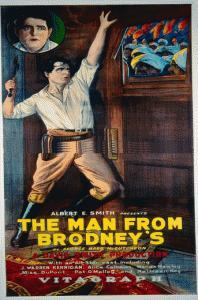
Ah, the silent era! A time when narratives unfurled with a grand, almost operatic sweep, where emotions were writ large across faces, and the very absence of spoken dialogue somehow amplified the drama. To revisit a gem like 'The Man from Brodney's' is to step into a time capsule, not merely observing a historical artifact, but experiencing a vibrant, pulsating piece of storytelling that, despite its age, still manages to captivate and thrill. This particular cinematic journey, a drama set amidst the alluring yet perilous India Seas, offers a potent cocktail of romance, intrigue, and heroic derring-do, a testament to the enduring power of classic narratives.
The allure of exotic locales has always been a powerful draw for filmmakers, and 'The Man from Brodney's' leverages this appeal with a setting that is both visually rich and dramatically fertile. The 'India Seas' of the film are less a meticulously researched geographical location and more a canvas for orientalist fantasy, a stage upon which the grand passions and treacherous schemes of colonial-era adventure tales could play out. This was a common trope in early 20th-century cinema and literature, offering audiences a vicarious escape into worlds far removed from their own. Think of the sweeping vistas hinted at, the opulent court settings, and the underlying tension between indigenous power structures and external influences. While the specifics of the political landscape might be broadly sketched, the emotional stakes are always sharply defined.
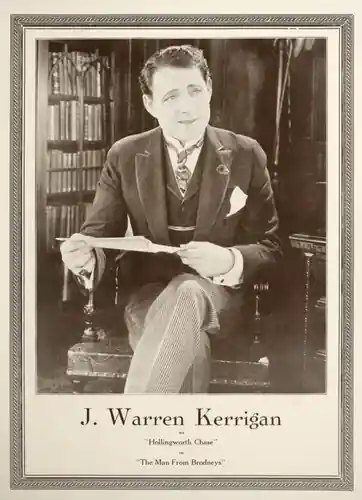
The film plunges us into a world where an American, Hollingsworth Chance (portrayed with earnest charisma by J. Warren Kerrigan), finds himself unexpectedly embroiled in the intricate power struggles of a princely court. Kerrigan, a prominent leading man of his time, brings a blend of innocence and burgeoning heroism to the role, making his character's journey from outsider to protector utterly compelling. His presence anchors the narrative, providing a relatable entry point into a world of unfamiliar customs and hidden dangers. The film's strength lies in its ability to translate the exotic into the universally understood language of human emotion: love, fear, loyalty, and betrayal. It’s a testament to the craft of storytelling that these themes resonate so strongly even today, decades after its initial release.
At its heart, 'The Man from Brodney's' is a classic romantic drama, but one elevated by a generous helping of court intrigue. The plot, penned by George Barr McCutcheon and C. Graham Baker, is a meticulously crafted web of deceit and danger. Princess Geneva (Alice Calhoun), the object of Chance's affections, is no mere damsel in distress; she is a figure of regal bearing and quiet strength, a princess whose very existence poses a threat to those who covet her throne. Calhoun imbues Geneva with a delicate balance of vulnerability and resilience, making her plight genuinely affecting and her ultimate salvation all the more satisfying. The chemistry between Kerrigan and Calhoun, though wordless, speaks volumes, conveying a deep, unspoken bond that drives Chance's unwavering commitment.
The 'court intrigue' element is where the film truly shines, transforming a simple love story into a high-stakes thriller. We are introduced to a gallery of suspicious characters, each with their own motives and hidden agendas. The film cleverly uses visual cues and nuanced performances to hint at the machinations unfolding behind palace walls. It's a masterclass in silent suspense, where a glance, a gesture, or a subtle change in posture can convey more than pages of dialogue ever could. The narrative builds steadily, ratcheting up the tension as Chance, initially perhaps naive to the depths of the danger, gradually awakens to the sinister forces at play. His journey is one of discovery and self-actualization, as he sheds his outsider status to become the decisive force needed to protect the woman he loves and, by extension, the rightful order of the kingdom.
In some ways, the narrative echoes the adventurous spirit found in films like The Thrill Chaser, though 'Brodney's' leans more heavily into dramatic stakes rather than comedic escapades. The relentless pursuit of justice and the overcoming of seemingly insurmountable odds are universal themes that resonate across genres and eras. Here, the 'supreme test' faced by Chance isn't just a physical challenge; it's a moral and emotional crucible, forcing him to confront his fears and demonstrate courage in the face of overwhelming power. The film excels in portraying this internal and external struggle, making his eventual triumph feel earned and deeply cathartic.
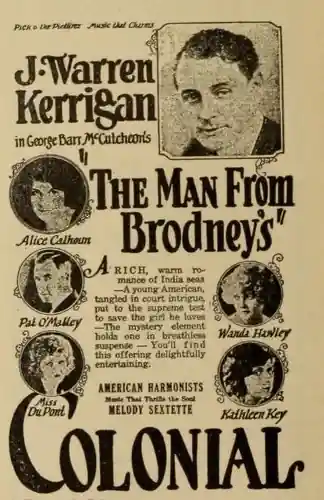
The brilliance of silent cinema rests heavily on the shoulders of its performers, who had to convey entire emotional landscapes without the benefit of spoken words. J. Warren Kerrigan, as Hollingsworth Chance, is a charismatic anchor. His expressive eyes and earnest demeanor make him an ideal silent film hero – honorable, determined, and deeply in love. He embodies the classic American archetype: the upright individual who, through sheer moral fortitude, can overcome any obstacle, even in a foreign land. His performance is a study in restrained power, building from quiet observation to decisive action.
Alice Calhoun, as Princess Geneva, is equally compelling. She projects a serene dignity that makes her plight all the more poignant. Her expressions convey a quiet strength, an inner resolve that prevents her from ever being merely a passive victim. The vulnerability she displays is always tempered by an underlying regality, ensuring that she remains a character worthy of Chance's heroic efforts. The silent screen often demanded a certain theatricality, but Calhoun manages to infuse her performance with genuine pathos, drawing the audience into her predicament.
The supporting cast, including Kathleen Key, Wanda Hawley, Miss DuPont, Glen Cavender, Pat O'Malley, and Bertram Grassby, each contribute vital pieces to the intricate puzzle. Grassby, in particular, likely plays a significant antagonist, leveraging his talent for portraying menacing figures with subtle menace. The effectiveness of the intrigue relies heavily on these actors' ability to convey duplicity and hidden motives through gesture and facial expression alone. Without a single spoken word, they craft a believable ecosystem of allies and adversaries, each playing their part in the unfolding drama. This ensemble work is crucial; a weak link could easily unravel the delicate balance of the narrative. Their collective efforts elevate the film beyond a simple romance to a robust, suspenseful drama. The subtle interplay of power and deceit among them brings to mind the intricate human dynamics seen in films like Powers That Prey, where hidden agendas constantly shift the balance of power.
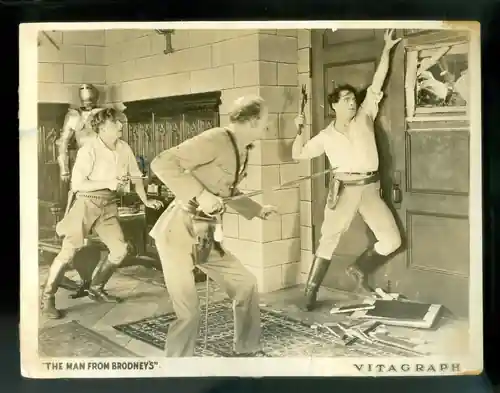
For a film of its era, 'The Man from Brodney's' likely showcased considerable visual ambition. While specific details of its cinematography are not readily available, the very premise of 'India Seas' suggests a desire for spectacle. Silent films, often compensating for the lack of sound with visual flair, frequently employed elaborate sets, costumes, and location shooting (or clever studio simulations thereof) to transport audiences. One can imagine sweeping shots of ships, bustling market scenes, and opulent palace interiors, all designed to immerse the viewer in this exotic world. The use of intertitles, the textual cards that provided dialogue and narration, would have been skillfully integrated to maintain narrative flow without disrupting the visual rhythm. The challenge for directors of this period was to tell a story primarily through imagery, and 'Brodney's' would have relied on strong visual storytelling to convey its complex plot.
The artistry of the silent film director lay in their ability to choreograph movement, expression, and mise-en-scène to create meaning. The pacing, often dictated by the emotional beats rather than rapid-fire dialogue, would have allowed for lingering shots on faces, emphasizing the internal struggles of the characters. This deliberate rhythm is a hallmark of silent cinema, inviting the audience to actively participate in the emotional decoding of the film. Compared to the frenetic pace of modern action films, the measured cadence of 'Brodney's' would have offered a different, perhaps more contemplative, form of engagement. This careful construction of visual narrative can be seen in other silent epics, creating a sense of grandeur that transcends the technological limitations of the time.
The production values, while perhaps modest by today's standards, would have been designed to evoke a sense of authenticity and spectacle. Costumes would have been meticulously crafted to reflect the perceived 'Indian' aesthetic, contributing significantly to the film's atmosphere. Even if much of the 'India Seas' was recreated on a Hollywood backlot, the intention was to transport, to create an immersive experience. The visual storytelling techniques employed here are foundational to cinematic language, influencing generations of filmmakers. The ambition to create grand, immersive worlds, even with the technological constraints of the time, is a shared trait with films like Ocean Swells, which similarly sought to capture the majesty and mystery of distant, watery realms.
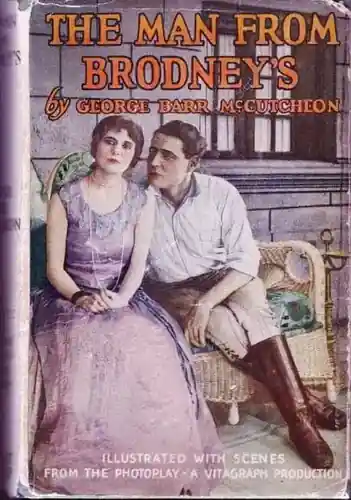
Beyond the surface-level adventure and romance, 'The Man from Brodney's' delves into themes that remain pertinent even today. The concept of an outsider navigating complex foreign politics, the struggle for rightful succession, and the ultimate triumph of love and justice against corruption are timeless. Chance's journey is an exploration of moral courage, demonstrating that heroism isn't always about brute strength, but often about unwavering conviction and strategic thinking. His willingness to put his life on the line for Princess Geneva speaks to a universal ideal of selfless love, a theme explored with poignant depth in films like Desire or The Soul of a Magdalen, albeit with different narrative contexts.
The film also touches upon the clash of cultures, albeit through a romanticized lens. The 'India Seas' setting, while perhaps stereotyped, allows for a dramatic contrast between Chance's American pragmatism and the ancient, intricate traditions of the court. This cultural juxtaposition provides fertile ground for both misunderstanding and eventual understanding, adding layers to the narrative beyond simple good versus evil. The film, in its own way, examines loyalty – to a person, to a cause, and to one's own moral compass. The characters are forced to make choices that define their allegiances, and it is in these moments of decision that the film's thematic weight truly comes to bear.
The idea of a 'supreme test' is central to the human experience, and 'The Man from Brodney's' visualizes this concept with dramatic flair. It's a testament to the narrative's strength that despite the passage of time and the evolution of cinematic techniques, these fundamental human struggles continue to resonate. The silent film's reliance on visual metaphor and grand gestures often made these themes even more palpable, stripping away the complexities of dialogue to reveal the raw emotional core. This directness, this unvarnished portrayal of fundamental human drives, is a significant part of its lasting appeal. It harks back to an era where storytelling was often more elemental, more universally understood through shared human experience rather than nuanced linguistic expression.
'The Man from Brodney's' is more than just a relic from the past; it is a vibrant piece of cinematic history that continues to engage and entertain. It reminds us of the profound artistry that flourished during the silent era, where storytellers and performers had to innovate constantly to communicate complex emotions and intricate plots without the aid of spoken dialogue. The film's strength lies in its compelling narrative, the committed performances of its lead actors, and its ability to transport the audience to an exotic world of high-stakes romance and perilous intrigue. It stands as a testament to the universal appeal of a well-told story, regardless of the technological limitations of its time.
For contemporary viewers, watching 'The Man from Brodney's' offers a unique opportunity to appreciate the foundational elements of filmmaking. It allows for a deeper understanding of how visual language, physical performance, and narrative structure were honed and perfected in the absence of sound. It's a film that invites introspection, encouraging us to consider the essence of human drama stripped bare. In an age saturated with sound and visual effects, the quiet power of a silent film can be a surprisingly refreshing and deeply moving experience. Much like discovering the nuanced artistry in a film such as Det gamle Købmandshjem, it offers a window into a different cultural and artistic sensibility.
Ultimately, 'The Man from Brodney's' is a delightful journey into a bygone cinematic landscape, a thrilling adventure that reaffirms the timeless appeal of love conquering all, even amidst the most treacherous of circumstances. It's a film that deserves to be rediscovered, celebrated for its craftsmanship, its emotional resonance, and its enduring capacity to enchant. It proves that a compelling story, told with passion and skill, transcends the boundaries of time and technology, continuing to speak to the human heart across generations. For those who appreciate the rich tapestry of early cinema, this film is a vibrant thread, weaving together romance, adventure, and the eternal struggle between good and evil into a truly memorable experience. Its legacy, much like the enduring appeal of J. Warren Kerrigan himself in other cinematic endeavors like American Methods, solidifies its place as a significant contribution to the silent film canon.
IMDb 6.3
1914
Community
Log in to comment.