DbcultAccessing Vault...
5.7/10
Senior Film Conservator
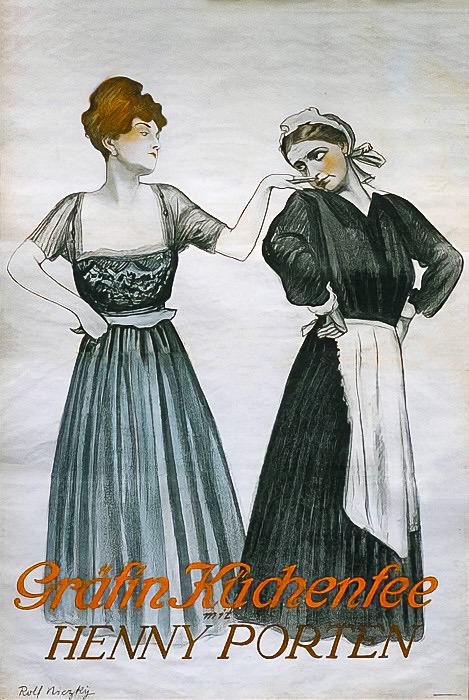
A definitive 5.7/10 rating for a film that redefined the boundaries of cult cinema. Gräfin Küchenfee remains a cornerstone of transgressive art.
The Weimar moon hangs low over Gräfin Küchenfee like a silver dinner plate awaiting a severed head. Robert Wiene—yes, the same Viennese prankster who gave us the twisted corridors of Caligari—now turns his jagged lens toward the drawing room, that bourgeois aquarium where titles flutter like dying moths against the glass. What emerges is not a horror but a social masquerade so brisk, so electrically amoral, that it feels like champagne spiked with battery acid.
Plot synopses flatten champagne; let us instead taste the bubbles. Picture a manor whose bricks are mortared with gossip: the King is en route to appraise the Countess as one might inspect a broodmare. Yet the prospective mare has bolted, gallivanting with a trio of suitors whose libidos syncopate like jazz in a Berlin cellar. Into her vacant gown steps Karolina, the kitchen’s unheralded empress, a woman who can flambé a soufflé while quoting Molière in fluent Saxon dialect. Around her the staff orchestrate a pageant of fabricated nobility, each apron metamorphosing into ancestral robes stitched from pure chutzpah.
Meanwhile the authentic Countess, now a guttering comet in county stripes, sits in a dank cell insisting she is Karolina the maid. Identity becomes a reversible coat; names slip off tongues like lemon seeds. Wiene stages these somersaults with a kinetic relish that predates Lubitsch’s later, silkier bedroom conspiracies. Where Lubitsch would whisper, Wiene elbows you in the ribs, then buys you a schnitzel.
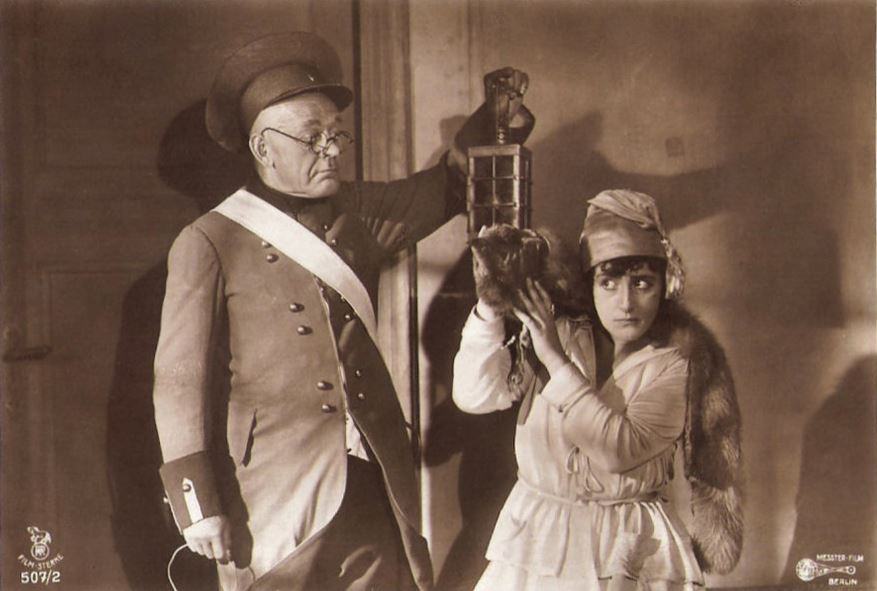
The cinematographer Willy Hameister carves chiaroscuro that would make a Caravaggio blush. In the banquet sequence, tuxedoed impostors glide across checkerboard floors; the camera peers through crystalware so that faces refract into cubist shards—anticipating the optical pranks of The Rail Rider by a full decade. Candlelight pools in goblets like molten topaz, while shadows gnaw the wainscoting with rodent persistence. Every frame hoards texture: damask, liver-spotted gloves, the satin hiss of a train dragged across parquet.
Wiene’s camera is restless, almost carnivorous. It stalks corridors, peeks through keyholes, then vaults into a high-angle godshot as the impostor Countess greets her regal visitor. The effect is less theatrical than cinematic—an early manifesto that German silents could be limber, not just expressionist granite. Compare this sprightliness to the static tableaux of Vendetta (1914); Wiene pirouettes where others posed.
Henny Porten essays dual personas—Countess and counterfeit—yet avoids mere stunt. Her shoulders telegraph nobility even when draped in a scullery shawl; the tilt of her clavicles is a coronet no jail can confiscate. Opposite her, Reinhold Schünzel as the lecherous Count purrs through waxed moustache like a tomcat who has read Nietzsche. Watch him calculate in real time: eyes narrowing, fingers drumming quadrilles on a trouser seam, the arithmetic of debauchery performed in plain sight.
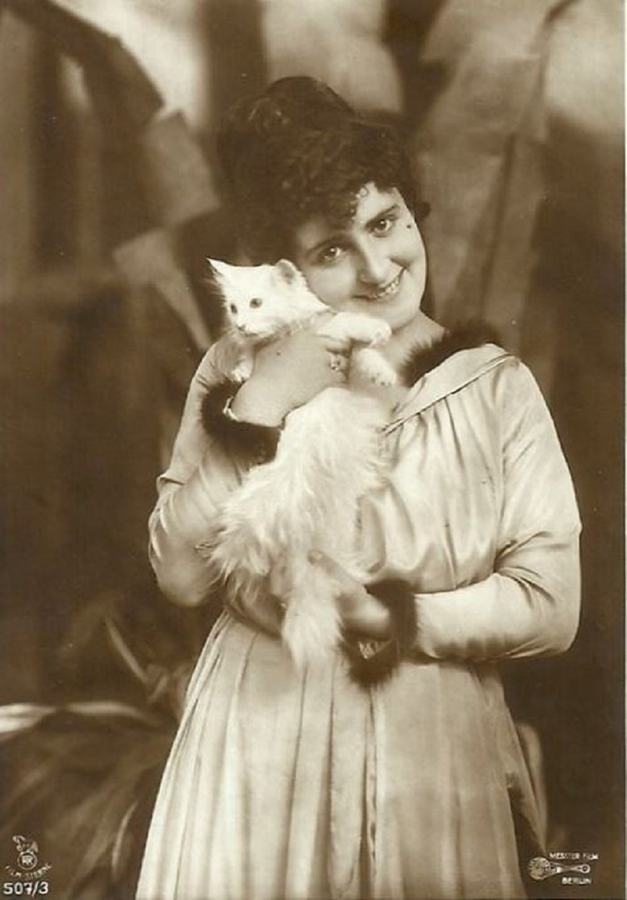
In smaller roles, Paul Biensfeldt turns a butler’s obsequious bow into a semaphore of insurrection, while Martin Lübbert as the pastry-cum-chancellor inflates with puffed-up grandeur until his own hat seems ready to revolt. The King—played by Heinrich Schroth with the weary smirk of a man who realises monarchy is mostly furniture—provides the perfect foil: credulous yet cynical, a coin with heads on both sides.
Wiene’s screenplay, feather-light yet barbed, suggests aristocracy is simply the art of being noticed while wearing better laundry. When Karolina-as-Countess lectures on foreign policy using recipes—“A colony is like a roux, stir constantly or it burns”—the metaphor lands with the ping of silver on porcelain. The film ribs the illusion of blue blood, yet reserves its sharpest skewer for the upward-greedy servants who mimic their oppressors with zeal. The proletariat doesn’t storm the palace here; it sneaks in through the servants’ entrance and tries on the master’s smoking jacket.
This theme resonates across the Wiene diaspora. One recalls the bureaucratic clowning of The Manager of the B & A, or the gendered power swaps in The Awakening of Helena Ritchie. But Gräfin Küchenfee distills the joke to its 80-proof essence: identity is drag, and drag is destiny.
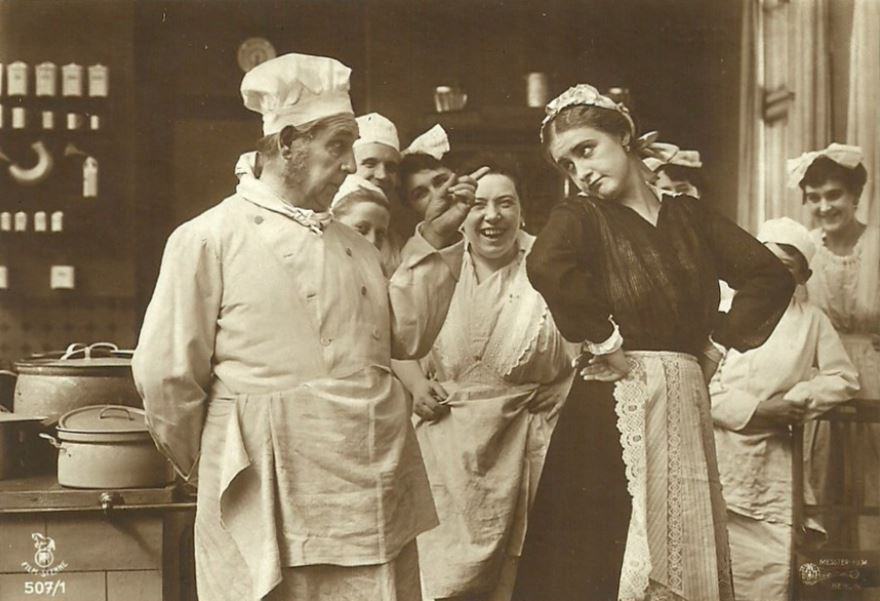
Unlike the lugubrious pacing of Ashes of Hope, Wiene’s film snaps along like a metronome on Benzedrine. Intertitles arrive just long enough to wink, never to linger. One card reads: “Nobility is a garment—button carefully.” Then we’re thrust into a cross-cut montage: the King’s retinue ascending marble stairs while the Countess crawls through hay in shackles. The dialectic between high and low gains kinetic urgency; suspense is born not from what but from when the mask will slip.
Surviving prints are mute, yet recent restorations have commissioned scores that fuse Weimar cabaret with Baroque harpsichord. When the “false” Countess waltzes, a muted trumpet blurts like a tipsy courtier; during her jailhouse pantomime, a celesta tinkles the same motif in minor key—same melody, altered fate. The juxtaposition nails the film’s thesis: circumstances rearrange the notes, but the tune is ours to whistle.
Cinephiles hunting for lineage might splice this DNA into later comedies of switched selves: Lili offers a gamine who reinvents via puppetry, while Tess of the Storm Country shows poverty donning righteousness as armour. Yet unlike Hollywood’s moral neatness, Wiene leaves scuffs on the silverware. When order “restores”, a scullery maid’s sigh hints she preferred the masquerade; the Countess, back in her rightful satin, eyes the door as if measuring escape velocity.
For decades the film slumbered in an Oslo archive, a single nitrate print bloated like soggy strudel. Enter the Munich Film Museum: 4K wet-gate scans, Desmet color grading for amber intertitles, a score stitched from wax cylinders found in a Weimar bordetto. Streaming rights currently orbit between Kino Lorber and Criterion; check your favourite boutique platform or hunt a region-free Blu-ray imported under the title Countess Kitchen-Magic—a mistranslation so delicious one hopes it sticks.
Weimar cinema is often remembered for ghoulets and alleyways; Gräfin Küchenfee reminds us Germans could also pirouette. The film is a champagne toast to ephemerality: identities bubble, overflow, go flat. Yet the aftertaste is sweet, metallic, unforgettable. View it for the gender politics, revisit for the visual wit, quote it when your dinner guests drone on about pedigree. After all, as Karolina quips in the film’s most seditious intertitle: “A Countess is only a cook who never had to wash her own dishes.”
So uncork the bottle, tilt the lamp, and let the flicker remind you: if titles could be swapped like napkins, perhaps the throne itself is a kitchen chair with better upholstery. And somewhere in the celluloid ether, Henny Porten winks at you across a century, whispering without moving her mouth: “Button carefully, darling. The garment is all.”
IMDb —
1919
Community
Log in to comment.