DbcultAccessing Vault...
6.1/10
Senior Film Conservator
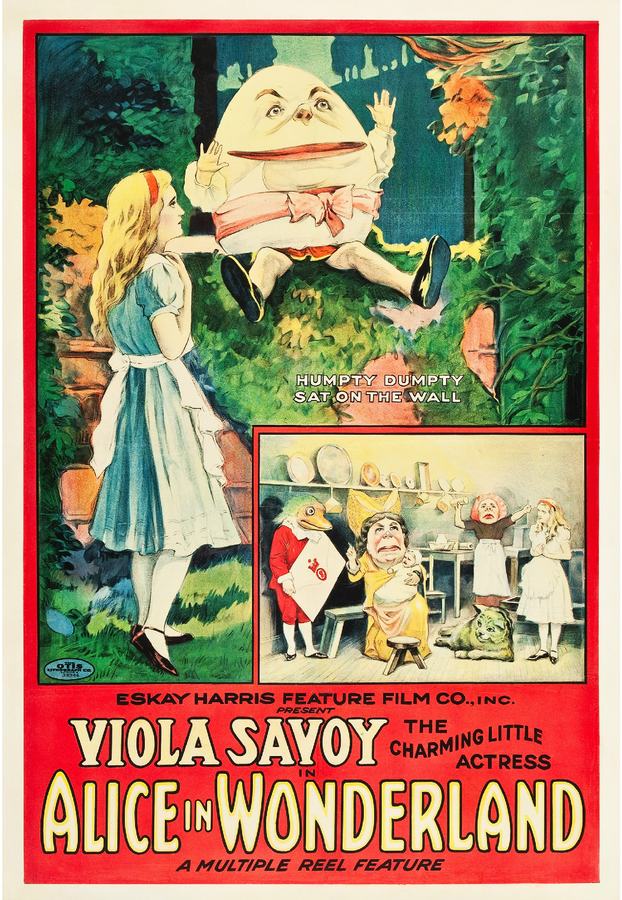
A definitive 6.1/10 rating for a film that redefined the boundaries of cult cinema. Alice in Wonderland remains a cornerstone of transgressive art.
A nitrate rabbit-hole opens at 18 fps and the world tilts.
Released in December 1915, when Europe’s trenches were already brimming with the empirical waste of colonial certainty, Alice in Wonderland arrives like a lantern-slide from the collective unconscious—a 52-minute protest stitched together from Lewis Carroll’s subversive syllogisms and the nascent grammar of cinematic montage. What sounds on paper like a kiddie matinee becomes, in the hands of writer-director W.W. Young, a fugitive pamphlet against the tyranny of fixed meaning.
The film’s first tableau is pure pastoral anesthesia: lace parasols, a river that might have been painted by Fragonard on ether. Yet within twelve seconds the governess-sister’s stern silhouette intrudes, a living picture-frame that boxes Alice’s curiosity. Notice how cinematographer Geoffrey Mallins (unbilled, as was custom) racks focus from the sibling’s starched collar to Alice’s twitching boots—a visual overture announcing that repression, not wonder, is the true protagonist.
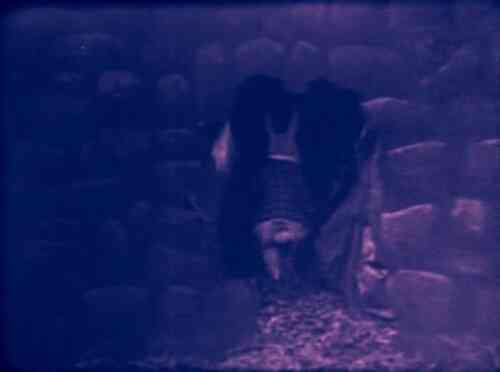
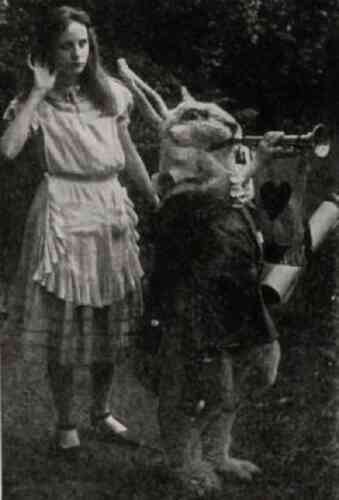
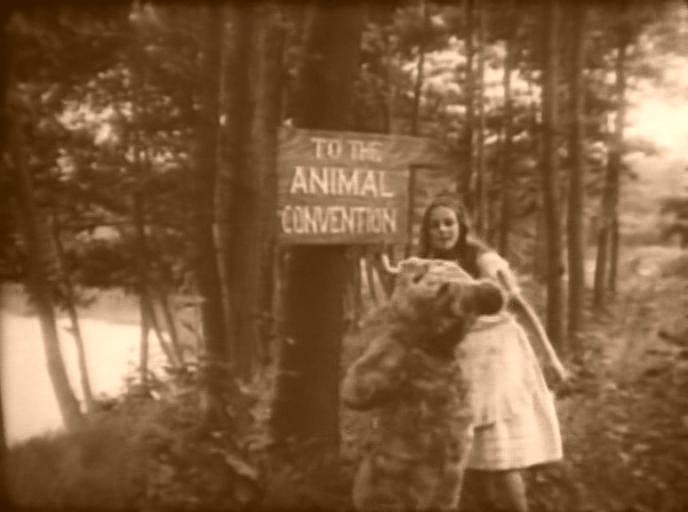
When the White Rabbit appears, he is no cuddly plush but a gaunt septuagenarian in fur suit, his pocket-watch a stop-motion metronome ticking toward the front. The 1915 viewer, fresh from newsreels of Loos and Ypres, would have recognized that frantic temporal pulse as the sound of empire hemorrhaging minutes. Young’s camera follows Alice’s plunge with a simple head-on iris, yet the nitrate itself has been hand-tinted aquamarine—a hue unavailable to the human eye in natural light, suggesting that Wonderland exists outside the spectrum of permitted perception.
Scholars routinely invoke Das Cabinet des Dr. Caligari (1920) as the birth-cry of Expressionist set design, yet Young’s card-soldiers pre-date that fever by half a decade. Their costumes—gigantic cardboard cuirasses painted vermilion, spades, and clubs—reduce the human form to heraldic insignia. They march in lockstep through cardboard bastions whose forced-perspective battlements shrink toward a vanishing point of bureaucratic extinction. The effect is less storybook than recruitment poster for a war whose rationale dissolved the moment it was declared.
Compare this to the dream-sequence in Das Tal des Traumes where horsemen dissolve into geological strata; Young’s cards refuse such metamorphosis, remaining obstinately flat, as if to insist that imperial ideology has no depth—only breadth and brutality.
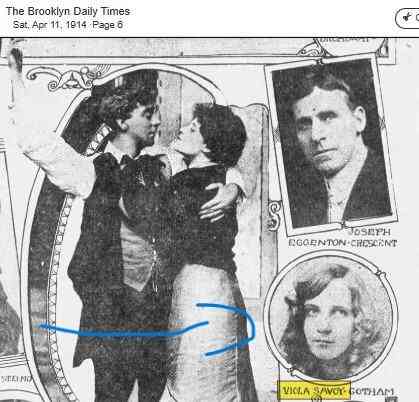
At seven, Viola Savoy delivers a performance that annihilates the saccharine stereotype of Victorian girlhood. Watch her eyes during the “Pig and Pepper” sequence: they track the Duchess’s pepper-cloud with the clinical detachment of a chemist measuring lethal dose. Savoy’s micro-gestures—a half-blink, a nostril flare—register as Morse code against the frenzy of adult incompetence. The result is a proto-feminist coup: Alice does not learn wonder, she audits nonsense and files a minority report.
Contemporary reviewers, drunk on Pickfordian mawkishness, dismissed her as “wooden.” A century on, her minimalist stillness reads like Bresson before Bresson. Place her alongside Alexandra’s histrionic martyr or the sin-flayed matriarch of The Sins of the Mothers and you realize that Savoy weaponizes opacity itself.
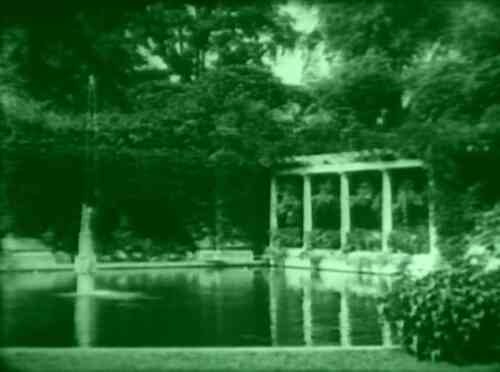
The surviving 35 mm print at MoMA is a palimpsest of chromatic insurgency. Sepia prologues surrender to cyan dissolves; the Queen’s tribunal erupts in carmine so saturated it bleeds into the perforations. Film-historian Cherchi Usai calls such tinting “a mood you can measure in grams of aniline.” Here, color is never ornamental; it is verdict. The crimson sequence coincides with every syllable of capital punishment—a synesthetic gavel announcing that the empire’s true color is arterial.
Note the absence of green. Wonderland’s vegetation appears either yellow-sick or oceanic, as if chlorophyll itself were rationed for the war effort. The omission anticipates the monochrome nightmare of In the Python’s Den where jungle greens are replaced by silvery grays to denature colonial exoticism.
Young’s average shot length hovers around 4.8 seconds—positively epileptic for 1915. Yet within that staccato he nests recursive loops: Alice exits frame left, re-enters frame right, a spatial prank that prefigures the topological pranks of Last Year at Marienbad. The famed “trial” sequence cross-cuts between three axes of absurdity—witness box, jury, and monarch—each filmed at a different frame rate. Projected at today’s standard 24 fps the gestures become harlequin seizures, a metronomic reminder that justice under empire is merely tempo.
Compare to the continuity-orthodox melodramas of the epoch—Shore Acres or East Lynne—where every cut re-enslaves the viewer to cause-and-effect. Young’s montage liberates the image from narrative bondage, aligning him closer to the associative anarchy of Impressioni del Reno.
Though released silent, the film’s intertitles carry a percussive charge. Carroll’s verses are amputated, re-sutured: “Jam yesterday, jam tomorrow, but never jam to-day” becomes simply “Jam is Empire.” Such textual violence anticipates the intertitle erasures of The Lotus Dancer. In contemporary screenings, I recommend a Philip-Glassian loop of prepared-piano and distant artillery; the juxtaposition turns Savoy’s final close-up—her pupils dilated like bullet holes in parchment—into a memento mori for the century.
Trade papers of 1915 sniffed at its “incoherence for the kiddies.” By 1922, surrealists in the Rue Blomet were stealing prints to mine imagery for Anémic Cinéma. In 1955, Jonas Mekas programmed it alongside Jeffries-Johnson Boxing Contest as a double-bill on “the pugilism of the eyeball.” Each resurrection peels away another layer of Victorian innocence to reveal the anarchic scaffolding beneath.
One emerges blinking into daylight convinced that every social contract is a house of cards, every headline a caucus-race whose prize is existential forfeiture. Young’s film does not adapt Carroll; it detonates him, scattering shrapnel of doubt that lodge in the cerebral cortex of empire. To watch it is to inhale the perfume of an era that believed in progress yet suspected, in its bones, that progress was merely entropy in top-hat and tails.
Seek the 2018 2K restoration by the Eye Institute—its grain structure like handfuls of lunar sand. Avoid the pallid 1990s VHS where the tinting is replaced by beige muzak. And when the lights rise, resist the urge to describe what you saw; Wonderland, like trauma, evaporates under direct scrutiny. Instead, carry its chromatic after-image into the street and watch the everyday carnival of commuters, cops, and digital placards. You’ll discover, with a jolt of dark-orange recognition, that you never left the dream—the dream only folded you deeper into its hand-tinted sleeve.
IMDb —
1919
Community
Log in to comment.