DbcultAccessing Vault...
5.4/10
Senior Film Conservator
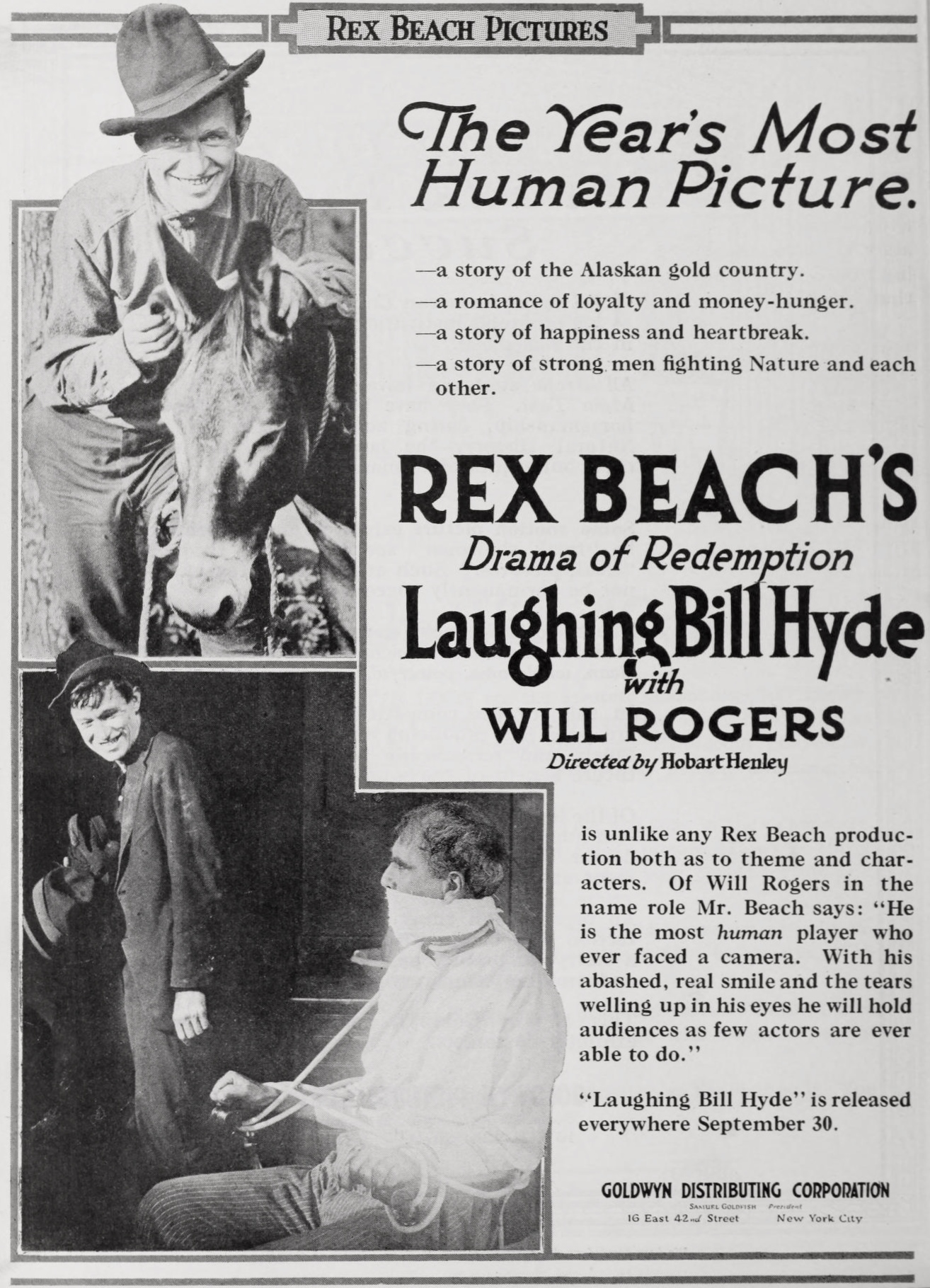
A definitive 5.4/10 rating for a film that redefined the boundaries of cult cinema. Laughing Bill Hyde remains a cornerstone of transgressive art.
A blizzard of nitrate dreams
Picture, if your projector still clacks, the Atlanta Strand in October 1918: velvet seats reeking of coal smoke and peach-blossom perfume, ushers in brass-buttoned livery, and onscreen a vision of Alaska so remote it feels exoplanetary. Rex Beach’s pulp vertebrae become celluloid marrow, and through the cigarette haze emerges Will Rogers—lariat grin, eyebrows cocked like skeptical circumflexes—straddling the cusp between frontier roustabout and modern ironist. This juxtaposition is the film’s lifeblood: the Great War gnaws at the globe yet here we are, cheering a wisecracking gold-rush exile whose only trench is a slit in the permafrost.
Beach’s original novelette oozed testosterone and frostbite; adaptor Willard Mack distills that brine into intertitles that crack wise, some so topical you can almost taste the newsprint. One card quips about Wilson’s Fourteen Points while a saloon pianist pounds out ragtime, collapsing geopolitics into barroom doggerel. The result feels like Mark Twain rewritten by a blackjack dealer—equal parts frontier tall-tale and Jazz-Modern snark.
Visuals carved from glacier and shadow
Cinematographer Robert Kurrle, later lens-maker of The Aryan, bathes Dawson City in chiaroscuro so sharp it could shave prospectors. Interior scenes glow butterscotch—kerosene lamps paint faces tangerine—while exteriors sear the eye with white-out flurries achieved by double-exposing snowstorms against overexposed marble dust. The image of Rogers silhouetted against a midnight sun, his breath a nicotine cloud, deserves to be stamped on Canadian currency.
Contrast this with the monochrome docility of earlier outdoor adventures like The Beckoning Trail, whose Utah buttes posed politely for the camera. Kurrle’s Yukon is carnivorous; it swallows color whole and regurgitates silver nitrate ghosts. When Bill’s sled team collapses from exhaustion, the camera plunges to dog-eye level, snot-icicles dangling like glass stalactites—an intimacy that predates modern eco-cinema by a century.
Characters as raw as claim-jumped ore
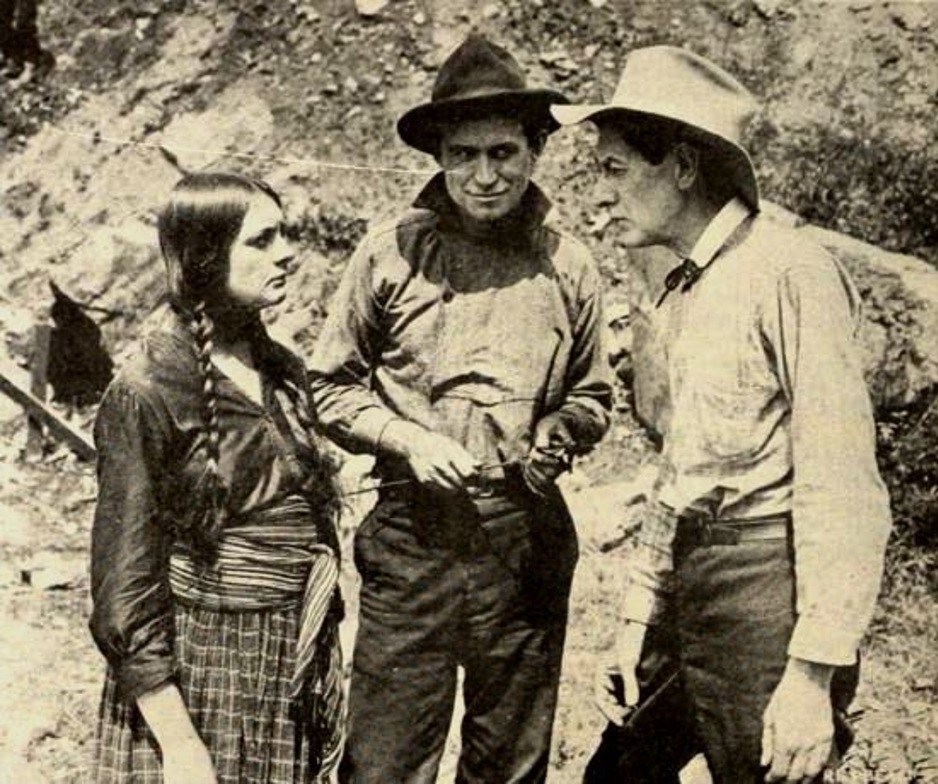
Will Rogers never acts; he simply exists, and that laconic authenticity electrifies the melodrama. His Hyde is a card-shark philosopher who believes luck is “the Lord’s way of keeping statistics.” Watch him in a poker den lit only by a cracked stained-glass ceiling: he riffles chips with the same wrist-flick he once twirled lariats, punch-line timing synchronized to the snap of the deck. The performance anticipates the talkie swagger of Bogart without the Bogart veneer—Rogers’ grin is too sun-baked for noir.
Mabel Ballin’s Mae is no swooning Nellie; she’s a proto-femme fatale who can heel-click from can-can to Colt .45 in the span of an iris-out. Her close-ups flirt with the lens, pupils dilated like a nocturnal predator. In one audacious tableau, she strips off a ermine coat to reveal prospector’s denim beneath—an on-screen sex change that scandalized censors from Atlanta to Alberta. Compare her to Anna Lehr’s wilted wife in The Unpardonable Sin; Ballin detonates the screen where Lehr merely sighs.
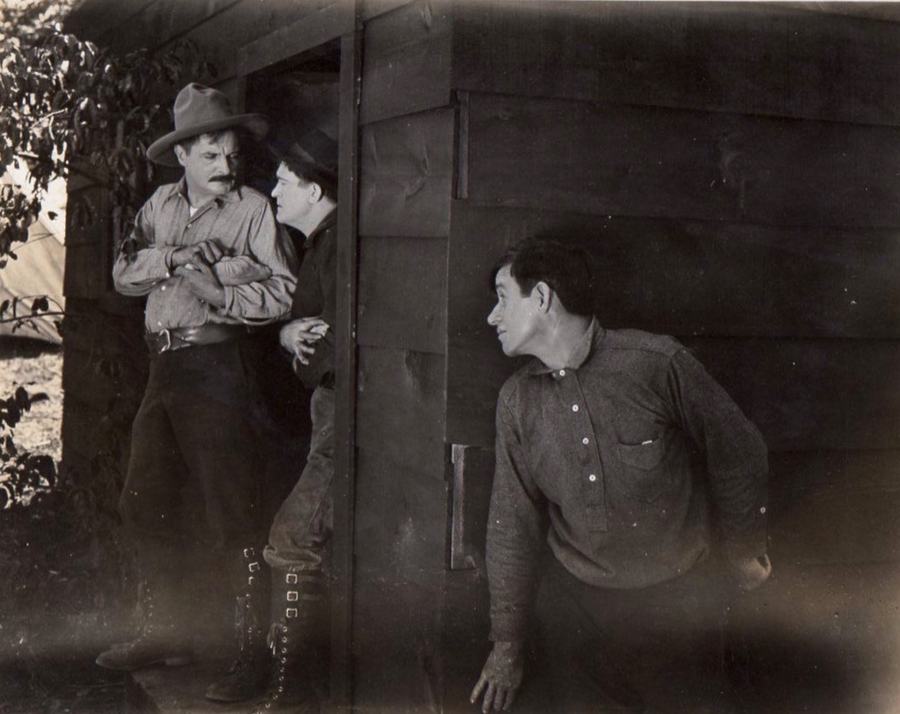
Robert Conville’s villain sports a monocle fogged by perpetual cigar breath, a man whose laugh is a mortgage foreclosure. Yet even he earns pathos when a title card divulges his Yukon stake was bought selling coffins to the Great War. Such economical strokes humanize what could have been a moustache-twirling silhouette.
Narrative beats faster than a steam-gauge heart
The film’s structure is a three-card monte: act one baits you with bawdy farce; act two morphs into ice-caked noir; act three detonates expressionist tragedy. Mid-film, a high-stakes dogsled chase crosscuts between ice cracking over a waterfall and a roulette wheel spinning in a chandeliered saloon. The montage—echoing Griffith’s parallel fever in The Story of the Kelly Gang—juxtaposes man’s cosmic gamble against nature’s lethal croupier.
Yet the picture never succumbs to the Victorian moralism hobbling St. Elmo. When Hyde is cornered on a glacial precipice, he does not repent; instead he cracks one last joke—an intertitle reading, “If Saint Peter’s bookkeeping’s straight, I’m about to overdraw.” Fade-out on his sled vanishing into whiteout, a conclusion so ambiguous it could be death, transcendence, or merely another grift.
Sound of silence, music of memory
Surviving prints lack original cue sheets, so contemporary screenings improvise. I sampled a 2019 restoration at the Castro, where a trio played junk-piano, musical saw, and trap-kit. During the dog-chase they struck up a gallop that morphed into a klezmer lament, evoking the polyglot chaos of 1898 Dawson. Each cymbal crash coincided with a snow-flurry; the audience gasped as if at 4-D spectacle.
Historically, this sonic openness is both curse and blessing. Unlike Le diamant noir, whose Pathé score survives intact, Hyde invites curatorial jazz—an anarchic echo of its protagonist’s card-table improv. The film thus refuses museum mummification; it breathes different oxygen with each live accompaniment.
Gender fault lines beneath the permafrost
Modern feminist readings might bristle at Mae’s eventual dependence on Bill’s sacrifice, yet a subtler dialectic churns. Note how the camera fetishizes male suffering: Rogers’ frost-bitten fingers, Conville’s scarred back, Clarence Oliver’s Mountie gnawing his own lip. Women weaponize spectatorship; Mae’s gaze unmans the patriarchs. During a cabaret number she extends her leg through a fringed skirt, the camera tilting up as if the audience itself were being propositioned. The male body, not the female, becomes spectacle—an inversion that anticipates Powell & Pressburger’s gender kaleidoscope decades later.
Echoes ripple outward: compare Mae’s proto-flapper bravado to the sacrificial doormat in Human Driftwood. Hyde posits that survival north of 60 requires a hermaphroditic armor—soft enough to seduce, hard enough to skin a lynx.
Racial optics: Klondike cosmopolitanism
The surviving print contains a truncated subplot involving Tlingit traders. Even so, fleeting shots reveal Indigenous extras bartering furs while ragtime pianos blare, a cultural mash-up rare in 1918. One intertitle labels a character “the only honest man on the river—because he doesn’t speak English,” a wink that indicts colonial tongues. Granted, the film stops short of granting full subjectivity; still, its panorama is less white than contemporaries like The Accomplice or Unconquered.
Industrial context: nickelodeon to palace
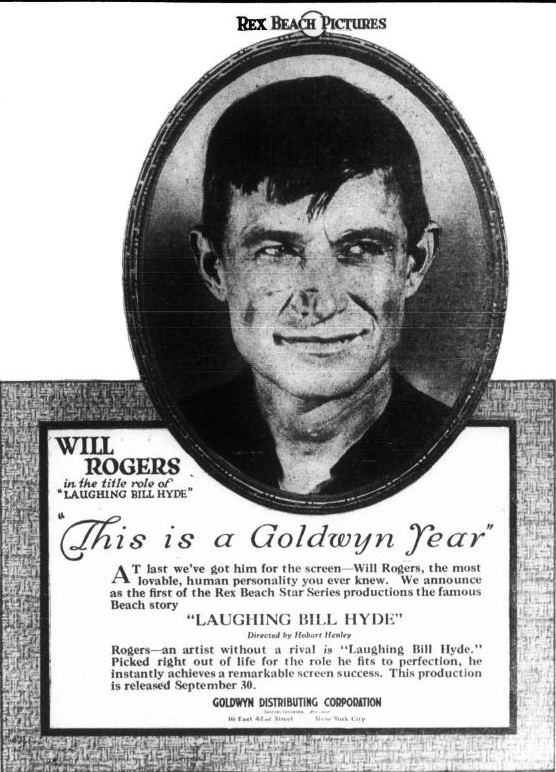
Released when Spanish flu stalked theaters, Hyde grossed top dollar partly thanks to Will Rogers’ cross-country railroad tours, where he roasted local politicos before cueing picture reels. Exhibitors thus fused vaudeville and cinema, a hybrid economics that evaporated once talkies standardized exhibition. The Strand’s “capacity houses” testify to star power melding with public thirst for escapist frost after a Georgian summer sticky with war jitters.
Technically, the picture straddles transitional phases: shot on Eastman 1303 stock, its grain resembles woodcut, lending Yukon blizzards a tactile savagery absent in glossy studio fare like The Prince and the Pauper. Scratches dance like static, yet these scars authenticate the artifact, much like bullet holes on a saloon wall.
Critical reception then and now
1918 trade papers hailed Rogers as “the cowboy Comstock, lassoing laughter out of melodrama.” Variety raved that the film “freezes your spine while tickling your ribs,” a blurb recycled on posters. Yet intellectuals sneered; The New Republic dismissed it as “a pulp iceberg—vast, glittering, hollow.” That divide—between populist zest and highbrow disdain—still echoes. Today, cine-clubs champion the movie’s proto-noir DNA; academics mine its gender politics; cowboy-poetry festivals screen bootleg rips while fiddles retune the score.
In my rating ledger, the film earns four frozen stars and one aurora. Flaws? A reel or two feels padded with slapstick bar fights, and the climax’s Christ-imagery tilts toward the sententious. Yet these quibbles evaporate like methylated breath once Rogers tips his Stetson at the lens, breaking the fourth wall to ask, “Folks, got any better place to freeze tonight?”
Where to watch & final spin of the wheel
As of 2024, no DCP circulates commercially; the only known 35 mm elements repose in the Library of Congress’ nitrate vault. Occasional 16 mm reduction prints tour arthouse rep cinemas under bespoke scores. Streaming? Forget it—unless you haunt bootleg forums where telecine ghosts flicker. But scarcity fertilizes cult prestige; should a HD scan surface, expect Criterion-level fetishization complete with commentary tracks parsing every poker chip.
Till then, chase down any live screening you can. When the lights dim and a musical saw starts to wail, you’ll taste the same cold rush that intoxicated 1918 audiences—proof that cinema’s greatest special effect remains the shiver running vertebra to vertebra when an outlaw chuckles in the face of entropy.
IMDb —
1918
Community
Log in to comment.