DbcultAccessing Vault...
6.7/10
Senior Film Conservator
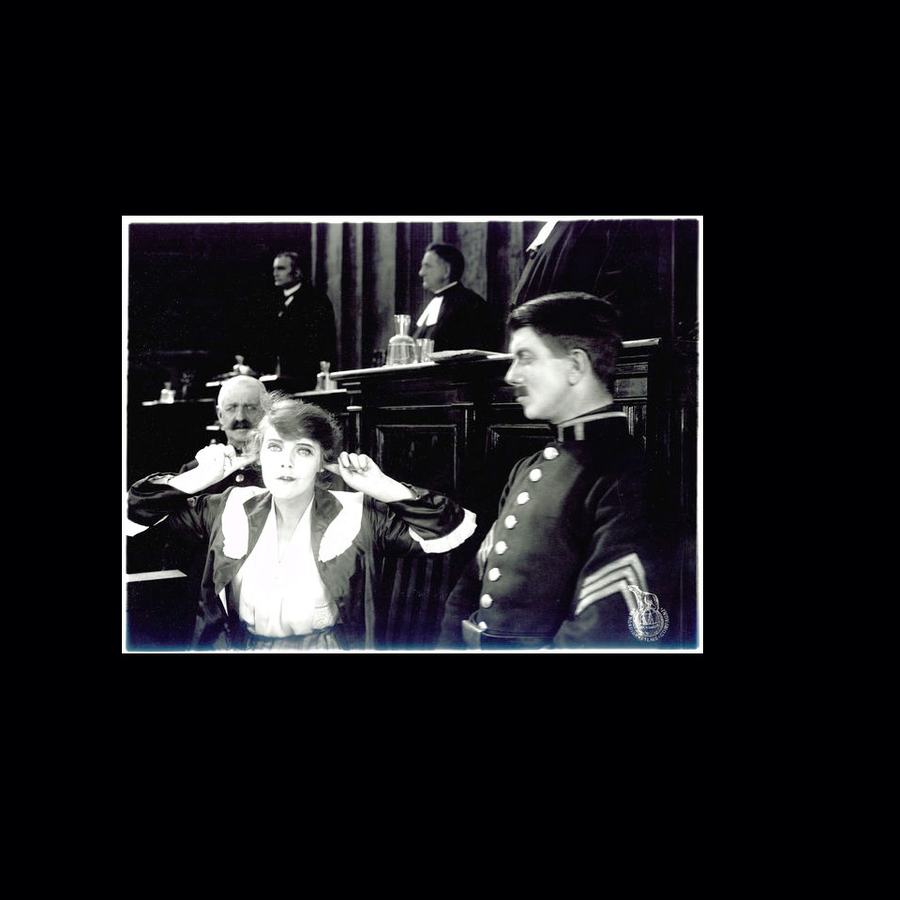
A definitive 6.7/10 rating for a film that redefined the boundaries of cult cinema. Lavinen remains a cornerstone of transgressive art.
There are silences that detonate louder than any talkie explosion, and Lavinen hoards them like nitroglycerin in a velvet purse. Viewed today, the film feels less a relic than a prophecy: a pre-Code morality play that understood, almost a century ago, that women’s labor is never merely domestic—it is actuarial. Every mended hem, every forced smile, is an entry in a ledger tallied by men who mistake collateral for affection.
Emanuel Gregers’ direction strips melodrama to the marrow. Notice how he blocks Maria’s first meeting with Asp: the camera perched at calf-level, as though the very floorboards are eavesdropping. Asp’s offer is framed in a single intertitle—“I can arrange comfort, but comfort has its own arithmetic.” No exclamation mark, no villainous moustache-twirl; the horror is fiduciary. Carl Lauritzen plays Asp with the blasé efficiency of a bank clerk foreclosing on a widow, his pince-nez catching the gleam of a predator certain the food chain is alphabetical.
Maria, incarnated by Astrid Holm with the hollowed eyes of someone who has slept above a sewing machine for three years, never once begs for pity. Her stoicism is the film’s most political act: she refuses to perform the feminine abjection the camera expects. Instead, she accumulates micro-victories—an extra button saved, a tram fare withheld—until the viewer realizes her thrift is not prudence but insurgency.
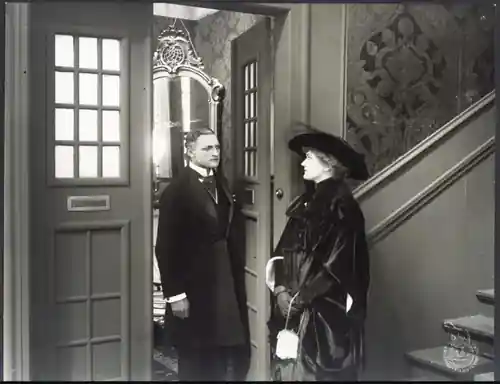
The narrative structure mimics glacial drift: a slow millimetre grind that suddenly shears into crevasse. Middle reels fracture time through match-cuts between the hem of a wedding dress and the cuff of a prison uniform, suggesting history’s sick sense of symmetry. Viewers familiar with East Lynne’s Victorian penance plots will recognize the scaffold, yet Lavinen refuses the cathartic deathbed pardon; its Calvinist chill is closer to The Velvet Hand’s determinist doom.
Jon Iversen, as Maria’s clueless husband Weyner, embodies institutional blindness: a man who can parse Latin maxims yet cannot read the terror flickering across his wife’s cheekbones. His final scene—discovering Asp’s resurrected contract while rifling through a drawer for cufflinks—plays like a bedroom farce hijacked by Greek tragedy.
Cinematographer Carlo Bentsen shoots Copenhagen as an abacus: canals resemble slate-grey columns of numbers, streetlamps dot the night like decimal points. The recurring visual motif is the doorway half-open—a threshold where moral accounting might still be revised, yet characters perpetually hover, paralyzed by compound interest of regret.
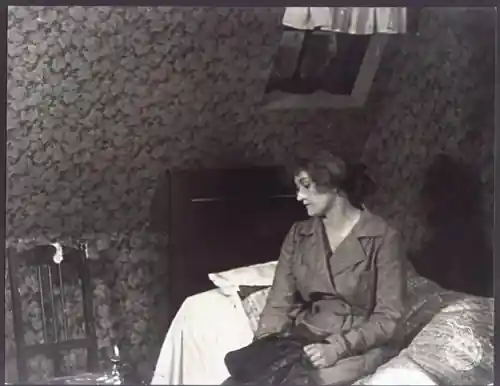
“In the silent era, faces had to speak entire subplots; Holm’s left eyebrow alone could indict a patriarchal judiciary.”
Color tinting—originally amber for interiors, cobalt for exteriors—survives only in fragments, but even the desaturated Kino restoration pulses with moral temperature. The titular avalanche is never shown; instead we get an aftermath of tableaux: a child’s sled abandoned perpendicular to the tracks, a scarf snagged on barbed wire, flapping like a surrender flag stitched by ghosts.
Watch the film with a contemporary score—perhaps something post-rock and glacier-paced—and you’ll notice how its interrogation of transactional intimacy anticipates gig-economy precarity. Maria’s contract with Asp is the 1924 equivalent of a zero-hour subscription: services rendered off-clock, emotional labor unitemized. The film whispers a question still toxic today: What part of a woman’s body is not annexable collateral?
The censors of the time, distracted by flashes of ankle and the implication of “kept woman” status, missed the bigger heresy: the suggestion that marriage itself might be a predatory refinance. In that sense, Lavinen dovetails thematically with The Gilded Cage, though it lacks that film’s Jazz-Age opulence, swapping champagne bubbles for the sour smell of damp wool and coal dust.

Carl Lauritzen’s Asp is not a villain but a system—an early bureaucratic android whose eroticism is indistinguishable from accountancy. Watch the way he tabulates Maria’s waist with the same fiduciary stare he gives a typeset proof. Astrid Holm counters with a performance so interior it threatens to implode the frame; when she finally slams the door on Asp, the gesture lands with the seismic thud of a glacier calving.
Bodil Ipsen, in a minor role as Maria’s seamstress confidante, steals reels with reaction shots that could teach masterclasses in silent-era parsimony. A single blink telegraphs “I told you the world devours us, but did we have to provide the cutlery?”
The film’s spatial politics deserve a treatise. Men occupy verticality: offices on second floors, editorial mezzanines, judges’ benches. Women are horizontal—basement workshops, kitchen alcoves, the claustrophobic low-ceiling flat Maria shares with her fiancé. When Maria finally ascends a staircase in the third act, the camera tilts upward, but the landing is cut short by a fade-to-black, as if the film itself doubts her right to elevation.

“To call Lavinen a ‘woman’s picture’ is to call the Guernica a ‘horse study’.”
Compare this to the frontier verticality of Code of the Yukon, where masculinity stakes claims by scaling mountains; here, verticality is the privilege of those who keep the ledger, not those who pay the interest.
The 2018 Danish Film Institute restoration from a decomposed Czech print is blemished yet breathtaking: scratches dance like frost on a windowpane, emulsion bubbles swell and burst like suppressed sobs. The optional Danish intertitles with English subtitles preserve period idioms—“debt of the heart carries no statute of limitations”—phrases that feel ripped from a ledgersome Ibsen outtake.
Streaming is scattershot: occasional appearances on Mubi’s Nordic sidebar, 1080p rips on niche torrents seeded by grad students in gender studies. Physical media remains the holy grail; a Region-B PAL DVD includes a scholarly commentary that excavates production stills showing director Gregers’ handwritten margin notes: “Maria must never smile first.”
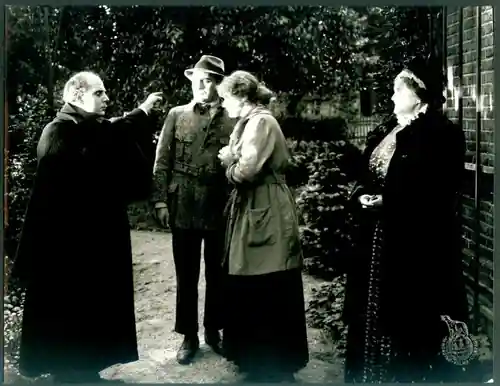
Early reviews in Berlingske Tidende dismissed the film as “a chilly slice of life best left on the fjord.” Decades later, feminist archivists reclaimed it as a missing link between A Woman’s Fool and Dreyer’s Day of Wrath. The picture’s influence seeps into Bergman’s chamber pieces—watch Holm’s close-ups and tell me you don’t prefigure Harriet Andersson’s shattered mirror in Through a Glass Darkly.
The avalanche metaphor itself has become academic shorthand for repressed trauma resurfacing; syllabi cite the film alongside The Primal Lure to illustrate how nature—supposedly neutral—mirrors patriarchal violence. Yet unlike the rugged wilderness of that wilderness programmer, Lavinen’s avalanche is urban, psychological, a whiteout of moral accountability.
So what lands after the snow settles? A woman who has learned that contracts scribbled in desire are written in disappearing ink, yet their indentations scar the page beneath. A man left holding a piece of paper now as brittle as his certitude. And the viewer, stranded in the twenty-first century, recognizing that the ledger never closed—it merely migrated to subscription models, auto-renewed in microscopic small print.
Lavinen does not roar; it exhales. And in that exhalation lingers a frostbite warning to any society still auctioning off its women’s futures in quiet rooms off the main corridor. Watch it—preferably alone, preferably after midnight when the radiator clicks like a metronome counting debts you forgot you owed. Then, when the final intertitle fades, listen to the silence that follows; it is the sound of an avalanche still happening, just slightly out of frame.
Rating on the retro-scale: 9.2/10 — a masterpiece buried less by time than by cultural amnesia.

IMDb 5.5
1935
Community
Log in to comment.