DbcultAccessing Vault...
6.8/10
Senior Film Conservator
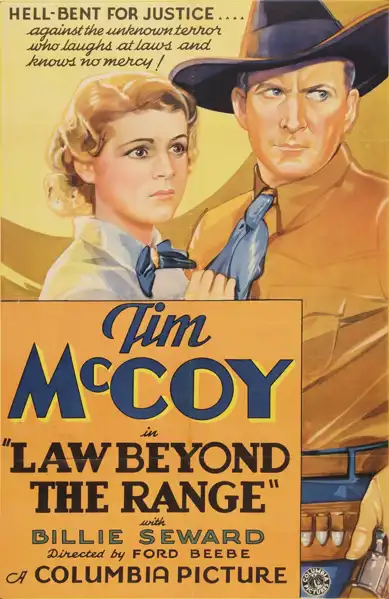
A definitive 6.8/10 rating for a film that redefined the boundaries of cult cinema. Law Beyond the Range remains a cornerstone of transgressive art.
If you have a soft spot for 1930s B-westerns where the plot moves faster than the horses, you’ll dig this. It’s perfect for a rainy afternoon when you don't want to think too hard but still want to see some bad guys get their comeuppance.
If you need high-budget polish or modern pacing, skip it. You’ll probably hate how quickly the legal system—or lack thereof—is glossed over in the first ten minutes.
The whole thing kicks off with Tim getting kicked off the Rangers. It’s pretty brutal, honestly. He lets his buddy Kane skip town after a murder accusation, and suddenly the badge is gone. It feels less like a tragedy and more like a Tuesday for these guys.
Then he starts running a newspaper. Because, sure, why not? It’s a classic trope, but watching a guy who is better at throwing a punch than editing a column try to take down a corrupt Sheriff named Heston is strangely charming. The scenes in the print shop have this dusty, cramped energy that feels authentic even if the dialogue is pure melodrama.
There is this moment in the middle where Tim is just staring at a desk, looking for clues, and the camera lingers on his hat for like, five seconds too long. It felt like the director was trying to make a point about the burden of the law, or maybe he just liked the lighting. It’s those little, pointless pauses that make the movie feel human rather than manufactured.
The fight scenes are exactly what you expect. Everyone flails around with their fists like they’re trying to swat flies. It’s not graceful, but it’s violent enough to keep you awake.
I couldn't help but compare the pacing to The Lumberjack. Both films have that same sense of urgency where characters just teleport from the saloon to the canyon without a second thought. It makes the world feel smaller, maybe a bit more claustrophobic.
There’s a stooge Sheriff character who is so obviously bad that it becomes funny. Every time he walks into a room, you know he’s about to say something stupid that helps the protagonist win. It’s a bit lazy, but honestly? I enjoyed it. We don't always need complex villains.
The film doesn't try to be more than a quick, punchy ride. It’s not trying to win an Oscar. It’s just trying to get the good guy to win and the bad guy to stop talking. 🤠
Sometimes the audio crackles in a way that makes you feel like you're sitting in a drafty theater in 1935. I actually liked that. It adds a bit of texture to the whole experience that you just don't get with modern digital transfers.
If you want to see a movie where the hero spends more time fixing broken windows than actually solving the murder, you're in the right place. It’s messy, it’s short, and it does the job.
IMDb 5.9
1926
Community
Log in to comment.