DbcultAccessing Vault...
Cult Review
Senior Film Conservator
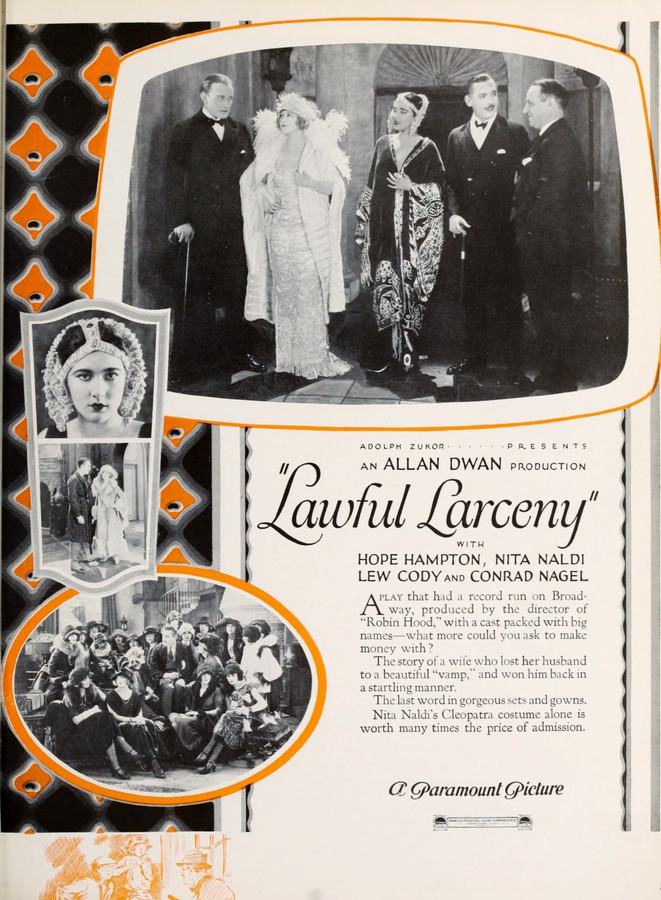
The year 1923 represented a pivotal juncture in the cinematic evolution of the 'New Woman,' and Lawful Larceny stands as a scintillating, if overlooked, monument to this era's shifting tectonic plates of morality. Directed with a keen eye for social artifice, the film transcends the mere melodrama of a husband’s infidelity to explore the transactional nature of high-society relationships. It is a world where the drawing room and the gambling den are indistinguishable in their capacity for cruelty. Unlike the rugged morality play found in The Learnin' of Jim Benton, which seeks redemption through frontier ethics, Lawful Larceny finds its resolution through the sophisticated subversion of the very vices it depicts.
The narrative engine of Lawful Larceny is fueled by the sybaritic excesses of the post-war American elite. Andrew Dorsey, portrayed with a palpable sense of weak-willed vulnerability by Conrad Nagel, serves as the quintessential proxy for the bourgeois man easily led astray by the promise of easy thrills. His entrapment by Vivian Hepburn is not merely a matter of bad luck at the cards, but a systematic dissection of his character by a predatory apparatus. Nita Naldi, the screen’s definitive vamp, imbues Vivian with a serpentine grace that makes her villainy feel almost like a natural law. She is the shadow counterpart to the domestic ideal, a woman who has weaponized her autonomy to build an empire of illicit gains.
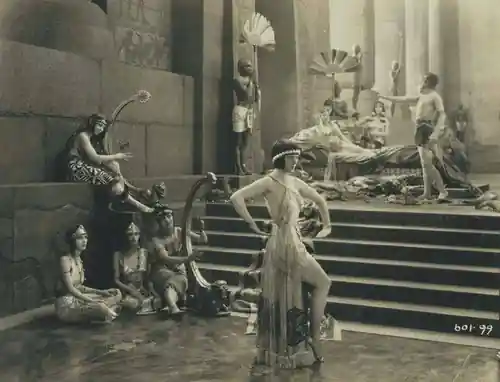
When we contrast this with the more whimsical or tragic explorations of male frailty in A Ladies Man, we see that Lawful Larceny is far more cynical regarding the motives of its players. There is no accidental fall here; there is only the calculated hunt. The gambling house itself is a character—a labyrinth of mirrors and velvet where reality is distorted and the 'house' always wins, not through luck, but through the meticulous engineering of despair.
The true brilliance of the film lies in the transformation of Marion Dorsey, played with an unexpected steeliness by Hope Hampton. Initially presented as the dutiful wife returning from the cultural refinement of Europe, Marion’s pivot into the role of a 'wealthy widow' is a masterclass in performative gender. She recognizes that to defeat a vamp, she must become a more potent version of the archetype. This meta-theatrical element—a woman playing a woman playing a seductress—adds layers of psychological complexity that were rare for the period. It echoes the thematic duplicity found in The Truthful Liar, where the truth is merely a tool for a larger deception.
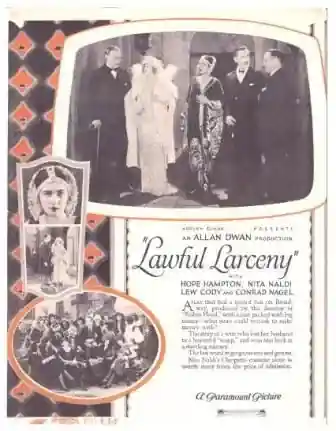
Hampton’s Marion is not seeking to restore the status quo through forgiveness; she is seeking restitution through superior intellect. Her seduction of Guy Tarlow (Lew Cody) is a cold-blooded tactical maneuver. Cody, known for his 'heavy' roles, provides the perfect foil—a man who believes he is the hunter, only to realize he has been the prey all along. The chemistry between Hampton and Cody is electric, grounded in a shared understanding of the era’s 'gold-digging' tropes, yet subverted by Marion’s underlying virtuous motivation.
Visually, Lawful Larceny utilizes the chiaroscuro lighting typical of early 20s dramas to heighten the sense of moral ambiguity. The scenes within the gambling house are bathed in a soft, hazy glow that masks the rot beneath the surface, while Marion’s confrontations with Vivian are shot with a sharp, unforgiving clarity. The costumes, particularly the extravagant gowns worn by Naldi and Hampton, serve as armor in this social warfare. These are not merely clothes; they are declarations of power and intent.
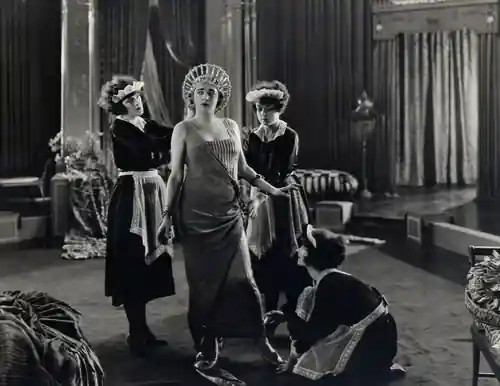
Consider the scene where Marion first enters the Hepburn salon. The camera lingers on her poise, capturing the way she commands the space without uttering a word. It is a sequence that rivals the atmospheric tension of Rupert of Hentzau from the same year, though focused on psychological rather than physical swashbuckling. The intertitles, too, avoid the flowery sentimentality of the previous decade, opting instead for a dry, almost sardonic wit that reflects the characters' pragmatism.
The film’s title, Lawful Larceny, is a brilliant oxymoron that encapsulates the central ethical dilemma. Is theft justifiable when it is used to reclaim what was stolen through fraud? The film argues for a sort of 'natural law' that supersedes the corrupt statutes of the gambling den. Marion’s decision to return the money she did not lose is a fascinating touch—it establishes her not as a thief, but as a restorer of balance. She refuses to descend to Vivian’s level of total avarice, yet she is savvy enough to know that a complete return of the funds would be a tactical error.
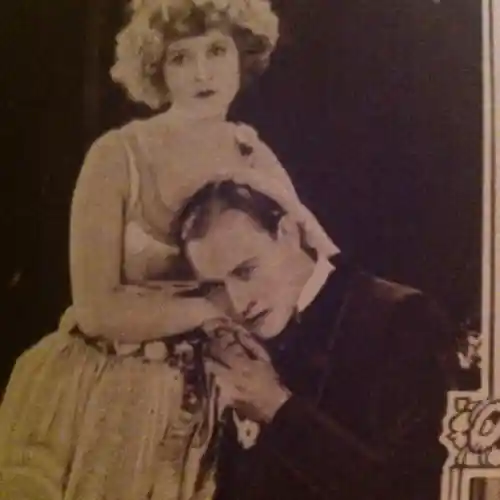
This nuanced approach to morality is what separates Lawful Larceny from more didactic works like The Silent Lie. Here, the characters are allowed to be messy, vengeful, and manipulative without the narrative demanding their immediate sanctification. Marion’s victory is one of wit, not of pure-hearted suffering. It is a proto-feminist triumph where the wife saves the husband, not through domestic labor, but through her ability to navigate and dominate the world of men and 'fallen' women.
While many silent films of the era have faded into the obscurity of melodrama, Lawful Larceny remains surprisingly modern in its sensibilities. The cast, featuring luminaries like Gilda Gray and Dolores Costello in smaller roles, represents the pinnacle of 1920s screen talent. The film serves as a precursor to the 'Pre-Code' era of the 1930s, where female agency and moral complexity would become the hallmarks of the silver screen. It lacks the over-the-top biblical moralizing of Sodom and Gomorrah, preferring instead to find its drama in the intimate betrayals of the urban elite.
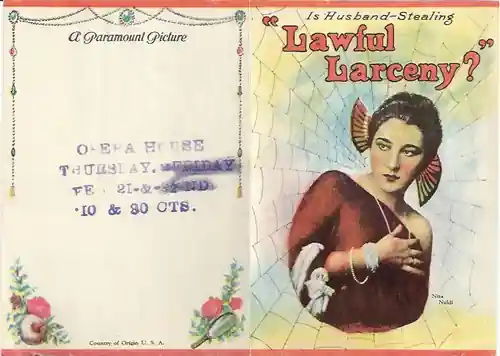
In the broader context of international cinema, such as the Danish Kvinden med de smukke Øjne, we see a global fascination with the 'woman with the beautiful eyes' as a figure of both desire and danger. Lawful Larceny takes this archetype and turns it inside out, showing that the most dangerous woman is not the one who wants to destroy a home, but the one who is willing to do anything to protect it.
To watch Lawful Larceny today is to witness the birth of the modern thriller. It eschews the simplistic 'good vs. evil' dichotomy for a more realistic 'smart vs. gullible' dynamic. The final moments, where Marion stands triumphant over the irate Vivian, are deeply satisfying not because virtue has won, but because intelligence has prevailed. It is a film that respects its audience’s maturity, assuming they will understand the irony of a 'lawful' crime.
For those interested in the evolution of the crime drama and the portrayal of women in early cinema, this film is essential viewing. It pairs beautifully with contemporary silent dramas like Richard the Brazen, providing a more feminine, psychological counterpoint to the era's masculine adventure stories. Lawful Larceny is a testament to the enduring power of a well-told story of revenge, proving that even in the silent era, the loudest statements were often made through a clever plan and a cold, calculating gaze.
Critic's Rating: 8.4/10
"A sharp, biting social commentary that uses the tropes of the 'vamp' film to deliver a sophisticated narrative of female empowerment and financial retribution. Hope Hampton and Nita Naldi are a formidable pairing that keeps the tension taut from the first card dealt to the final safe cracked."
IMDb 5.4
1935
Community
Log in to comment.