DbcultAccessing Vault...
7.2/10
Senior Film Conservator
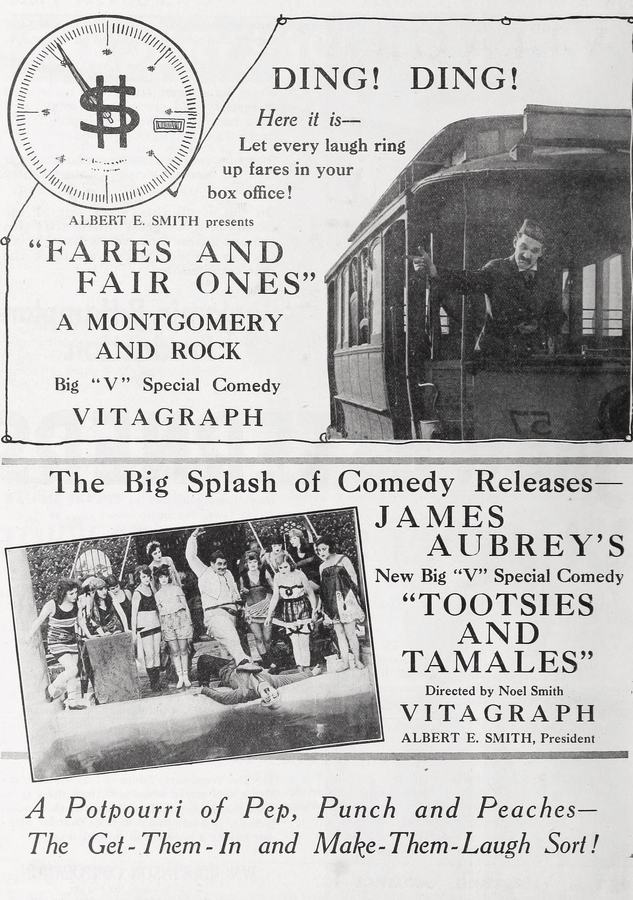
A definitive 7.2/10 rating for a film that redefined the boundaries of cult cinema. Tootsies and Tamales remains a cornerstone of transgressive art.
The year 1919 was a crucible for the language of cinema, a period where the syntax of visual storytelling was being forged in the heat of independent production houses. Tootsies and Tamales, a frantic short featuring the burgeoning talents of Richard Smith and the legendary Oliver Hardy, stands as a testament to the era's unbridled creativity and its penchant for blending high-stakes melodrama with the visceral impact of physical comedy.
In the early twentieth century, the concept of the 'heavy' was not merely a character archetype but a physical requirement. Oliver Hardy, long before his legendary partnership with Stan Laurel, perfected this role with a nuanced blend of menace and buffoonery. In this film, his character’s pursuit of the heroine is portrayed through a lens of entitlement that feels remarkably modern in its critique of toxic masculinity, albeit filtered through the exaggerated gestures of silent pantomime.
The villain's strategy—kidnapping the father to secure the daughter—is a trope as old as the medium itself, yet here it is executed with a rhythmic pacing that keeps the audience in a state of constant agitation. The father, bound and gagged, serves as the emotional anchor, a silent witness to the escalating absurdity. Unlike the more grounded dramas of the time like The Hillcrest Mystery, this film leans into the surreal, suggesting that the world of the comedy is one where the laws of physics are merely suggestions.
One of the most striking sequences involves the hero being forced to drink with his antagonist. In a moment of pure cinematic invention, the hero spits out explosives, a gag that serves as a brilliant metaphor for the 'spitfire' nature of the genre. This isn't just a joke; it is a subversion of the power dynamic. The hero, seemingly outmatched by the villain’s confederates, uses his own body as a site of resistance. This level of physical ingenuity is reminiscent of the work seen in Polly of the Circus, where the physical environment is constantly being recontextualized for the sake of the narrative.
The inclusion of a bear to facilitate an armistice is perhaps the film’s most idiosyncratic detour. It reflects a time when animal actors were utilized with a cavalier disregard for safety that resulted in uniquely unpredictable energy. This 'truce' is fragile, predicated on the villain’s sudden interest in 'studying figures'—a high-brow pursuit that is inevitably shattered by the hero’s clumsy interference. It highlights the recurring theme of the film: the impossibility of peace between the chaotic energy of the hero and the rigid, controlling nature of the villain.
The 'bull-fight' holiday serves as the film’s grand set-piece. In silent cinema, holidays and public festivals were often used to justify large-scale production values and crowd scenes. However, Tootsies and Tamales subverts the expectation of a traditional bullfight. The hero’s success in the ring is not a moment of triumph for the community, but a catalyst for the villain’s ultimate act of desperation. The contrast between the public celebration and the private threat to the father’s life creates a dual-narrative tension that is expertly handled.
Compared to the more somber tones of Otets Sergiy or the diplomatic tensions of Diplomacy, the stakes here are presented through a lens of high-octane action. The hero doesn't just kill the bull; he shatters the villain’s ego, leading to the decision to ignite the bomb. The bomb itself is a classic silent film device, a ticking clock that forces the resolution into a narrow window of time. The fight between the hero, the heroine, and the confederates is choreographed with a frantic precision that showcases the athletic prowess of the performers.
Visually, the film utilizes the stark contrasts of its outdoor locations to create a sense of isolation and peril. The 'shack' where the father is held becomes a character in its own right—a fragile structure that represents the precariousness of the characters' lives. When the trio finally escapes to the hero’s sea-craft, the shift from the dusty land to the open water provides a visual catharsis. The sea-craft represents freedom, a departure from the terrestrial conflicts that have defined the film’s first two acts.
The final explosion is a masterpiece of early special effects. In an era before digital manipulation, the destruction of the shack was a one-take opportunity. The timing of the villains rushing inside just as the fuse reaches its end is a quintessential example of the 'just-in-time' editing style that would become a staple of Hollywood action. This explosive finale provides a definitive sense of closure that is often missing from the more ambiguous endings of films like Life Without Soul.
When we look at Tootsies and Tamales alongside contemporaries like The Yankee Girl or A Wife by Proxy, we see a distinct stylistic choice. While many films of the era were moving toward longer, more complex narratives, this short remains committed to the purity of the gag. It doesn't concern itself with the social commentary of The Shine Girl or the romantic entanglements of The Love Girl. Instead, it focuses on the elemental conflict between good and evil, played out through the medium of the body.
The film’s legacy is perhaps most strongly felt in the way it paved the way for the more sophisticated comedies of the 1920s. The collaboration between Hardy and Ross as writers shows an early understanding of the importance of the 'setup' and 'payoff' structure. Even in a film as seemingly chaotic as this, there is a rigorous logic to the gags. The 'figures' the villain studies are not just props; they are a setup for the later disruption. The 'bull-fight' is not just a holiday; it is the arena for the hero’s transformation.
Watching Tootsies and Tamales today is an exercise in archaeological appreciation. We are seeing the raw materials of comedy before they were polished by decades of studio refinement. There is a grit to the production—a sense that the actors were genuinely in danger during the fight scenes and that the 'explosives' were more than just puffs of smoke. It lacks the polish of Mr. Grex of Monte Carlo, but it makes up for it with a sheer, unadulterated zeal for the moving image.
The hero’s journey from a target of anger to a savior on a sea-craft is a microcosm of the American cinematic dream: the individual who, through a combination of luck, skill, and explosive expectoration, overcomes the forces of tyranny. It is a story told without words but with a profound understanding of how to move an audience. The heroine, too, is more than just a damsel; her participation in the final fight and the rescue of her father suggests a level of agency that was increasingly present in the films of the late 1910s, such as Beatrice Fairfax.
In the grand tapestry of film history, this short might be a small thread, but it is a vibrant one. It captures a moment in time when anything was possible on screen, and the only limit was the imagination of the filmmakers and the amount of gunpowder they could safely (or unsafely) pack into a shack. For fans of Oliver Hardy, it is an essential piece of the puzzle, showing the 'Heavy' in his prime, before he found his 'Thin' counterpart and changed comedy forever. It is a wild, tamale-fueled ride that reminds us why we fell in love with the movies in the first place.
IMDb 6.2
1918
Community
Log in to comment.