DbcultAccessing Vault...
Cult Review
Senior Film Conservator
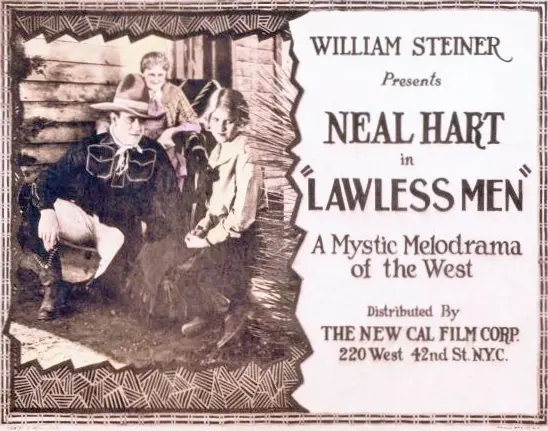
The silver screen, even in its nascent years, possessed an uncanny ability to distill the essence of human struggle against the backdrop of an indifferent, often hostile world. Among the myriad narratives etched into celluloid during the early 20th century, Lawless Men stands as a compelling testament to the enduring power of justice, even when justice is a personal quest forged in the fires of false accusation. This isn't merely a tale of cowboys and outlaws; it's a profound exploration of identity, vindication, and the raw, untamed spirit of the American frontier. From its very opening frames, the film plunges the viewer into a vortex of moral ambiguity and righteous indignation, setting the stage for a journey that transcends mere geographical traversal, becoming instead a spiritual odyssey for its protagonist, Steve McKay.
Our narrative commences with Steve McKay, portrayed with a compelling blend of stoicism and simmering resolve by Neal Hart, emerging from the confines of incarceration. His freedom, however, is not a liberation in the truest sense; it is merely a reprieve, a provisional release from a prison that could not hold his spirit, but whose shadow still darkens his name. He stands accused of a heinous crime: the murder of Jim Sharp, a figure of significant personal consequence as the father of Ruth, the woman who holds McKay's affections. This initial premise immediately establishes a powerful emotional core, intertwining personal tragedy with a profound injustice. McKay is not just a man seeking to clear his name; he is a man fighting for his very soul, for the right to love and be loved, unburdened by the stigma of a crime he did not commit. The legal system, for all its supposed impartiality, has failed him, leaving him to navigate the treacherous path of self-vindication in a world where rumor and circumstantial evidence often outweigh truth.
This theme of false accusation, of a protagonist unjustly maligned, resonates deeply with other cinematic narratives of the era. One might draw a parallel to the intense dramatic tension found in a film like The Witching Hour, where reputation and perception play a crucial role in the unfolding drama, albeit in a vastly different genre. Here, in the rugged West, the stakes feel even more visceral, more immediate. McKay's quest for the real killer, Black Bart, is not a mere police procedural; it is a primal hunt, an act of self-preservation and a desperate plea for recognition of his inherent goodness. The burden of proof, effectively, falls upon his own shoulders, demanding an extraordinary display of courage and tenacity. His journey is a testament to the resilience of the human spirit when confronted with overwhelming adversity, a silent scream for justice against the deafening roar of public condemnation.
The heart of Lawless Men beats to the rhythm of relentless pursuit. McKay's odyssey to track down Black Bart is painted across the vast, indifferent canvas of the American West, a landscape that is as much a character in the narrative as any human player. From the rugged, imposing mountains of Montana, through the sun-baked, arid plains of New Mexico, and finally into the stark, breathtaking desolation of Arizona, the chase unfolds with an almost mythic grandeur. Each state traversed represents not just a change in scenery, but a deepening of McKay's resolve, a further hardening of his spirit. The cinematography, even in its silent era constraints, manages to convey the immense scale and unforgiving nature of this journey, emphasizing the isolation and sheer physical endurance required. This isn't a quick jaunt; it's a protracted, arduous expedition, a testament to McKay's unwavering commitment to truth.
Black Bart, the elusive antagonist, serves as the perfect foil. His cunning and capacity for evasion elevate McKay's pursuit from a simple tracking mission to a complex cat-and-mouse game. The tension is palpable, not just in the physical chase
IMDb —
1912
Community
Log in to comment.