DbcultAccessing Vault...
7.2/10
Senior Film Conservator
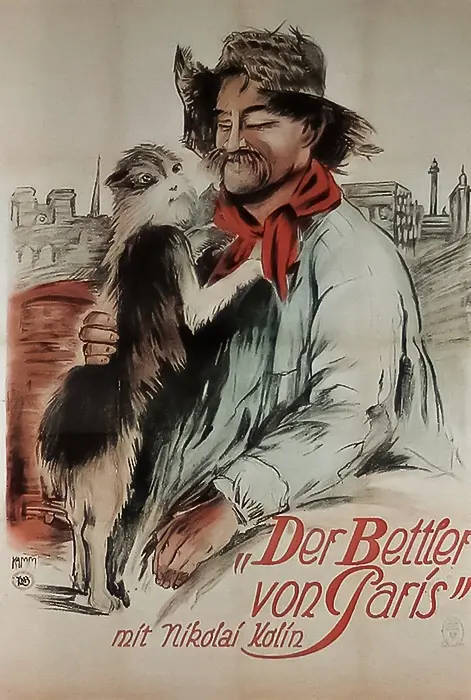
A definitive 7.2/10 rating for a film that redefined the boundaries of cult cinema. Le chiffonnier de Paris remains a cornerstone of transgressive art.
Cinema in the 1920s often acted as a conduit for the anxieties of the past, and Le chiffonnier de Paris (1924) stands as a monumental pillar of this retrospective obsession. Directed with a keen eye for the textures of poverty and the sheen of aristocratic decadence, the film transcends its melodramatic roots to become a sociological study of 1840s Paris. The narrative, penned by the radical Félix Pyat, is not merely a story of a ragman; it is an exploration of the 'chiffonnier' as a secular saint—a man who gathers the discarded fragments of society and, in doing so, preserves its lost humanity.
Nicolas Koline’s portrayal of Jean is a masterclass in silent expressionism. Eschewing the histrionics common in the era, Koline imbues the character with a weary, gravitational dignity. His movements are heavy, weighed down by the literal and metaphorical sacks of debris he carries. This performance provides a stark contrast to the ethereal presence of Francine Mussey as Marie. Where Jean represents the grit of the pavement, Marie represents the aspiration of the spirit. The film’s visual language frequently juxtaposes the verticality of the Parisian social ladder, moving from the damp, horizontal sprawl of the slums to the soaring, gilded ceilings of the Baron’s estate.
The central conflict—Marie being humiliated for wearing a dress she herself crafted—is a brilliant metaphor for the alienation of labor. In a scene that mirrors the thematic depth found in The Blue Bonnet, the film interrogates the ownership of beauty. Marie has the skill to create opulence, yet she is forbidden from inhabiting it. Baron Hoffmann, played with chilling arrogance by Paul Ollivier, represents the parasitic nature of the ruling class. He does not create; he merely consumes and judges. When he insults Marie, he isn't just attacking a young woman; he is asserting that the worker has no right to the fruits of their own artistry.
This sequence is filmed with a claustrophobic intensity. The cameras, though static by modern standards, capture the predatory gazes of the party-goers, making the viewer feel Marie’s isolation. It is here that Henri de Berville (René Maupré) enters the fray. Henri serves as the bridge between the two worlds, a figure of enlightened nobility who recognizes that virtue is not a byproduct of birthright. This dynamic of the 'protector' is a common trope, yet in the hands of these performers, it feels less like a cliché and more like a necessary moral intervention against a backdrop of systemic cruelty.
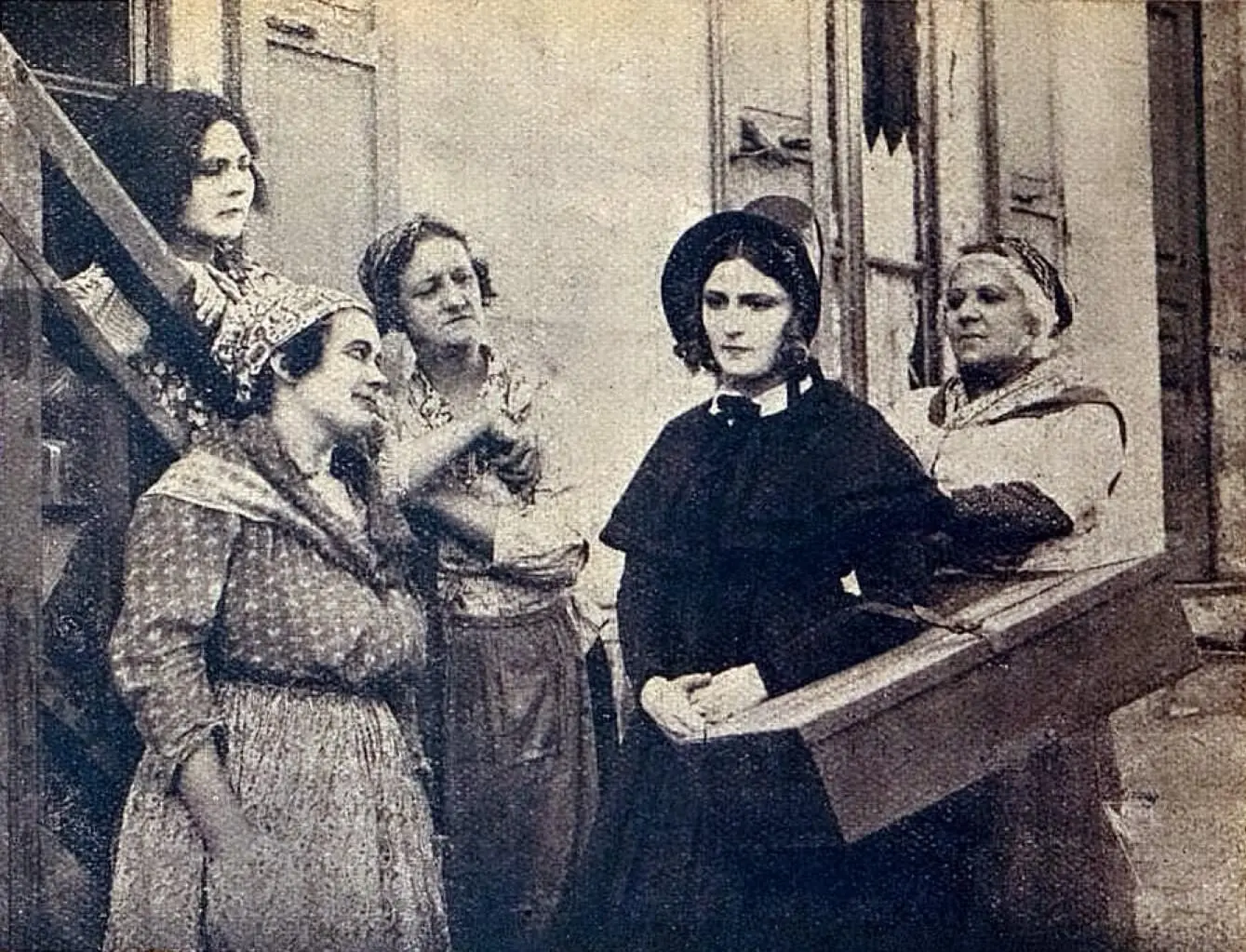
The production design of Le chiffonnier de Paris deserves extensive praise. The recreation of 1846 Paris is not a romanticized postcard version but a tactile, breathing environment. The set designers utilized deep shadows and sharp angles to evoke the sense of a city that is both a playground for the wealthy and a labyrinth for the destitute. In many ways, the film shares a visual DNA with Merry-Go-Round, particularly in its depiction of the precarious nature of urban life.
Lighting plays a crucial role in establishing the film's moral compass. Jean is often bathed in a soft, naturalistic light when he is in his element, suggesting a purity of purpose. Conversely, the Baron’s environments are often harshly lit, emphasizing the artificiality and coldness of his world. This use of light as a narrative tool is a hallmark of the French silent tradition, where the image was expected to speak louder than any intertitle could. The film avoids the pitfalls of being a mere 'stage play on film' by utilizing the camera to frame characters in ways that suggest their psychological state—Marie often appears small and vulnerable in large rooms, while Jean dominates the frame when he is in the streets, showing where the true power lies.
While some modern audiences might find the plot’s reliance on coincidence—the ragman witnessing the murder, the secret lineage—to be archaic, these elements are essential to the genre’s function as a social mirror. Much like The Root of Evil, the film uses extreme scenarios to highlight the very real disparities of the time. The 'murder' that Jean witnesses is not just a plot point; it is a catalyst that reveals the interconnectedness of all social classes. The blood of the victim stains the hands of the elite, and it is the man of the streets who must carry the burden of the truth.
The film’s pacing is deliberate, allowing the gravity of Marie’s situation to sink in. We see her long hours at the sewing machine, the strain on her eyes, and the meager rewards of her toil. This realism grounds the later, more fantastical elements of the plot. When the climax arrives, it feels earned because we have been immersed in the struggle of these characters. The resolution is not just a happy ending but a restoration of balance, a theme also explored with varying degrees of success in La muerte civil.
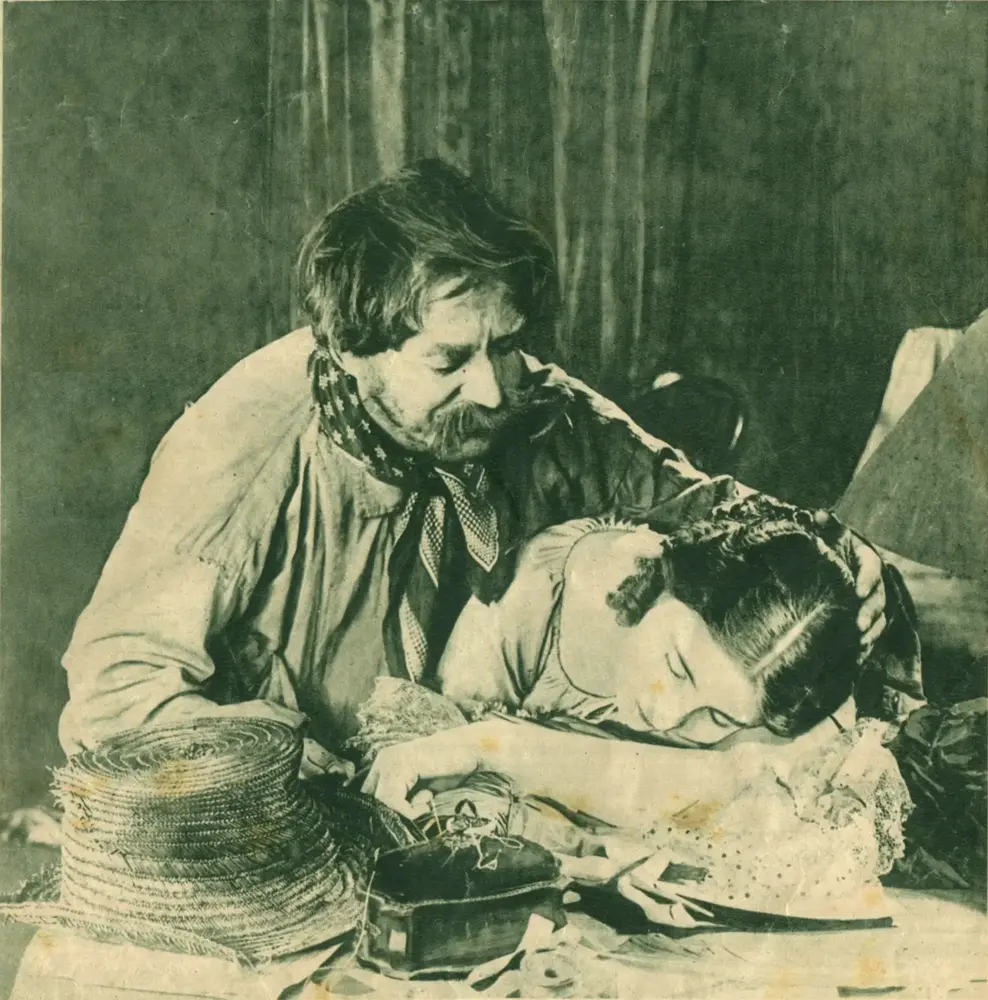
The cinematography, handled by a team of uncredited but clearly skilled technicians, employs a variety of techniques to maintain visual interest. There are moments of double exposure and clever editing that hint at the psychological trauma of the characters. When Jean remembers the night of the murder, the past bleeds into the present through the use of shadows and superimposed images. This sophisticated approach to storytelling elevates the film above the standard fare of the mid-20s.
Furthermore, the intertitles are kept to a minimum, allowing the physical performances to carry the emotional weight. Hélène Darly, though in a supporting role, provides a nuanced counterpoint to the main cast, and the ensemble work suggests a cast that was deeply attuned to the director's vision. The film doesn't shy away from the darker aspects of the human condition—greed, vanity, and betrayal are all on full display—but it ultimately champions the idea that the 'scraps' of society are often where the most value is found. It is a cinematic philosophy that resonates even today, reminding us that the gaze of the artist should often be directed downward, toward the forgotten corners of the world.
Le chiffonnier de Paris is more than a relic; it is a vibrant, breathing piece of art that captures a specific moment in French history and cinematic evolution. It challenges the viewer to look past the surface—past the rags and the finery—to find the core of human dignity. In comparing it to other works of the era, such as The Young Diana or the gritty realism of Mud and Sand, one can see how this film occupies a unique space. It possesses the heart of a populist anthem and the eye of a meticulous painter.
The film’s enduring power lies in its refusal to simplify its characters. Jean is not just a hero; he is a man burdened by a secret. Marie is not just a victim; she is a creator. Even the villains are given a terrifyingly human face. As we watch the final frames, we are left with the image of the ragman continuing his rounds, a sentinel of the streets who knows that while the world may throw things away, nothing is ever truly lost. It is a profound meditation on memory, justice, and the enduring strength of the human spirit in the face of overwhelming odds.
For those interested in the evolution of French cinema, or for those who simply appreciate a well-told story of triumph over adversity, this 1924 gem is essential viewing. It stands alongside films like La voix d'or as a testament to the power of the silent screen to convey complex social messages. In the end, Le chiffonnier de Paris reminds us that the true measure of a man is not what he owns, but what he is willing to protect.
"A hauntingly beautiful examination of Parisian life, where the discard of the city becomes the treasure of the soul. Nicolas Koline delivers a performance for the ages, grounding a soaring melodrama in the cold, hard reality of the cobblestones."
IMDb —
1926
Community
Log in to comment.