DbcultAccessing Vault...
7.2/10
Senior Film Conservator
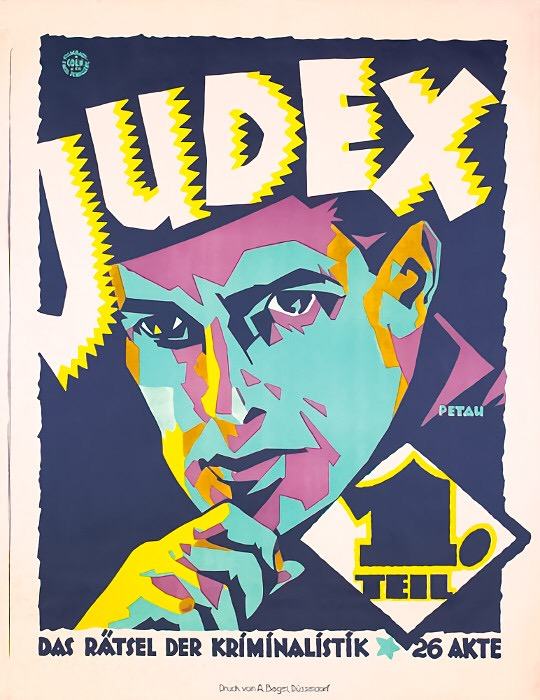
A definitive 7.2/10 rating for a film that redefined the boundaries of cult cinema. Judex remains a cornerstone of transgressive art.
A moonlit parchment of 1916 nitrate unfurls, and suddenly cinema’s first masked superhero materializes—not from a comic panel but from the smoky anxieties of a continent bleeding in trench mud.
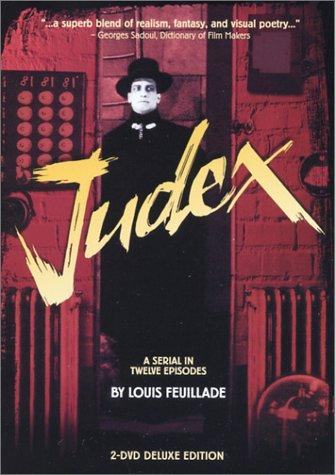
When Louis Feuillade released Judex as a weekly serial, French audiences were already addicted to his poisonous urban fables. After the hallucinatory success of Fantômas and Les Vampires, Feuillade could have simply dished out more criminal opium. Instead he flipped the moral axis: what if the silhouette in the cloak were not a sociopath but a redeemer? The result is a twelve-movement symphony of shadows that feels closer to medieval mystery plays than to modern Saturday-matinee escapism.
Plot, for the uninitiated, reads like a fever dream dictated by a reformed anarchist to a lovesick poet.
Banker Favrauxom—note the sulfuric suffix—has built a fortune on forged collateral and orphaned heirs. Enter Judex, a name whispered like a vow of penitence, whose mailed threat (“Your crimes have an appointment with the abyss”) arrives embossed with a phoenix seal. What follows is not a linear hunt but a spiral of disguises: Judex appears now as a circus strongman, now as a blind war veteran, now as a mute Trappist monk. His true face, when finally revealed beneath the slouch hat, belongs to René Cresté—chiseled, melancholic, already bearing the weight of a family curse.
Feuillade, ever the poet of architecture, stages much of the intrigue in crumbling châteaux whose stone arteries echo with bootsteps. The director’s camera rarely moves; it broods. Static long shots turn corridors into labyrinths and gardens into purgatorial waiting rooms. In episode seven, when Diana Monti (the serpentine Musidora) kidnaps Jacqueline Favrauxom (Yvette Andréyor) and spirits her through a subterranean canal, the sequence feels borrowed from a Gothic engraving—only the flicker of water and the hiss of a magnesium lamp remind us we are watching twentieth-century shadows combust onto celluloid.
Yet calling Judex a mere revenge tale is like calling Notre-Dame a pile of stones.
Under the hood of its pulp engine throbs a theological inquiry: can a man purge sin without staining his own soul? Judex’s answer is ambiguous. He wields death certificates like indulgences, yet spares the banker’s daughter because love has infected his retributive calculus. The serial’s most haunting moment arrives in episode ten: Judex stands behind a lattice screen as Jacqueline confesses her father’s crimes to a priest. The camera holds on Cresté’s eyes—two wet discs reflecting a conscience split between duty and desire. No intertitle intrudes; the silence is scalding.
Feuillade’s palette is binary—ink black and cadaver grey—yet within that austerity he finds chromatic emotion. Consider the costume of Diana Monti: a nun’s habit stripped of crucifix, the wimple sharpened into predatory wings. When she glides across the rooftop of Saint-Mandé prison, her silhouette becomes a perverse cherub, a dark inversion of Judex’s own avian emblem. The director rhymes their movements: both characters descend chimneys, both send coded letters via homing pigeon, both bend gender expectations—Judex through his nurturing of the orphaned Licorice Kid, Diana through her command of male henchmen.
Episode five delivers the serial’s most audacious set piece: a masked ball where every guest wears the same domino. The camera, positioned at balcony height, glides across a sea of identical faces until a gloved hand swaps a child’s bracelet for a bomb timer. The sequence predates Hitchcock’s The Lady Vanishes motif of evil hiding in plain sight, yet Feuillade adds a moral vertigo: we cannot tell predator from savior, and the edit refuses to help. The bomb detonates off-screen; we learn of it via a newspaper insert soaked in tea, the headline bleeding ink like a stigmata.
René Cresté’s Judex exudes the weary magnetism of a man who has read the Book of Job too often. His body language is ecclesiastical: shoulders angled in perpetual genuflection, palms open in a gesture that could be benediction or surrender. Watch how he removes his hat—never rushed, always with the gravity of a priest unveiling a relic. Against him, Musidora’s Diana is all feral geometry: cheekbones sharp as communion wafers, eyes flicking like switchblades. Their scenes together feel like black mass, a liturgy recited backwards.
Yvette Andréyor’s Jacqueline suffers the script’s only patriarchal blind spot—she spends three episodes drugged in a sarcophagus—yet her awakening carries erotic voltage. When she finally recognizes Judex as her midnight savior, Feuillade cuts to an extreme close-up: her pupils dilate, a tremor travels from clavicle to lower lip. It is 1916, and silent cinema just invented the female gaze.
Modern restorations often drown silent films in syrupy orchestral pastiche, but Judex demands sparseness. I recommend pairing it with Yasmine Hamdan’s ambient Arabic loops or Erik Satie’s Gymnopédies played at 75% speed. The dissonance unlocks the film’s subtext: Judex as colonial wound, France haunted by the Algerian battalions it sacrificed at Verdun. Every time a carrier pigeon disappears into cloud cover, you sense the trenches yawning open beyond the frame.
Where The Exploits of Elaine weaponizes proto-feminist spunk and Napoleon mythifies history through polyvision, Judex occupies a liminal corridor between medieval allegory and modern noir. Its DNA echoes in Lang’s Dr. Mabuse, in Franju’s 1963 remake, even in Christopher Nolan’s The Dark Knight—all films that ask whether wearing a mask reveals or erases the self. Yet none match the serial’s chiaroscuro spirituality: Judex’s cape flutters like a cassock, his underground lair a catacomb wired for telegraphy.
Compare also to Pennington’s Choice, where morality is a ledger balanced by bourgeois guilt; Judex keeps no ledger, only a candle that gutters when forgiveness outweighs justice.
The 4K restoration by Gaumont in 2022 excavates textures previously lost to nitrate rot: you can now count the serge threads in Judex’s coat, smell the dust motes in Favrauxom’s boudoir. The Blu-ray offers two scores—a throbbing electro suite by Bernardo Baró and a faithful piano reduction by Henri Gadbi. Streamers beware: most online prints stem from a 1999 VHS transfer that crops the crucial balcony wide shot in episode eight, rendering the masked ball visually incoherent. Physical media remains the only path to revelation.
Judex is not a relic; it is a prophecy written in shadow. It foretells the comic-book vigilante, the anti-hero binge, the moral ambiguity that would saturate twenty-first-century television. Yet it also mourns a world before irony, where a masked man could believe absolution possible and a director could stage salvation inside a ruin. Watch it at midnight, lights off, windows open so the rustle of leaves syncs with the film’s nocturnal pulse. When the final chapter ends and the phoenix seal dissolves into white fog, you may find yourself checking the lock on your own door—not for safety, but for penance.
Verdict: 9.5/10 — A cathedral of shadows whose bells still toll a century later.

IMDb 7.3
1932
Community
Log in to comment.