DbcultAccessing Vault...
9.1/10
Senior Film Conservator
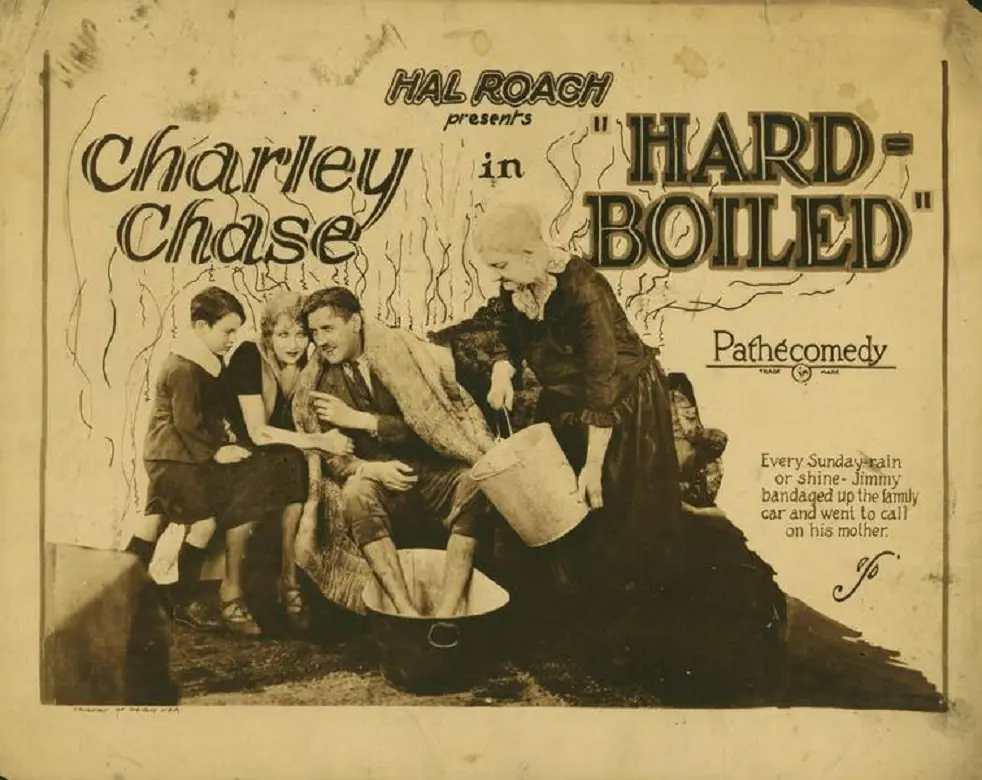
A definitive 9.1/10 rating for a film that redefined the boundaries of cult cinema. Hard Boiled remains a cornerstone of transgressive art.
Is this film worth watching today? Short answer: yes, but only if you appreciate the specific rhythm of 1920s situational comedy. It is a mandatory watch for silent film enthusiasts and a curious artifact for those interested in the evolution of the 'Everyman' character.
This film is for viewers who enjoy the subtle, embarrassed humor of Charley Chase and the explosive reactions of James Finlayson. It is definitely not for those who require fast-paced modern editing or high-stakes dramatic tension.
This film works because it leans into the inherent awkwardness of its lead actor. Charley Chase was never the acrobat that Keaton was or the athlete that Lloyd was; he was the master of the 'slow burn' and social humiliation. This film fails because the central conceit—a man pretending to be tough—is stretched thin even for a two-reel short, leading to some repetitive beats in the middle act. You should watch it if you want to see the DNA of modern cringe comedy, such as Curb Your Enthusiasm, in its earliest form.
Charley Chase occupies a unique space in the silent era. In Hard Boiled, he doesn't rely on a 'tramp' costume or a 'glasses' persona. He looks like a normal office worker, which makes his transition into a 'hard-boiled' character all the more ridiculous. When he enters the gym to prove his mettle, his physical insecurity is palpable. It is a performance rooted in psychology rather than just stunt work.
Take, for instance, the scene where he attempts to intimidate a group of actual toughs. His posture is stiff, his jaw is set too high, and his eyes betray a deep-seated terror. This isn't just slapstick; it’s a character study in performance anxiety. It reminds me of the social friction found in Call a Cop, where the comedy arises from a protagonist being vastly out of his depth.
James Finlayson, best known for his work with Laurel and Hardy, is the secret weapon here. His 'double-take' and 'squint' are used to perfection. As the father who demands a masculine son-in-law, he represents the rigid societal expectations of the 1920s. Every time Chase fails to be 'hard-boiled,' Finlayson’s reaction provides the necessary punctuation for the joke.
"The chemistry between a timid protagonist and a terrifying father-in-law is a trope as old as time, but here it feels fresh because of the specific physical language of the silent era."
The contrast between Finlayson's explosive energy and Katherine Grant’s more grounded performance creates a balanced comedic environment. Grant isn't just a prop; she provides the emotional stakes that make Charley’s desperate antics feel justified, much like the romantic subplots in The Sorrows of Love.
The cinematography in Hard Boiled is standard for the Hal Roach studio at the time, but the framing of the action is precise. Director Leo McCarey (though uncredited in some prints) understood that comedy is often found in the wide shot. By keeping the camera back, the audience can see the entire disaster unfolding, allowing the viewer to anticipate the collision before the characters do.
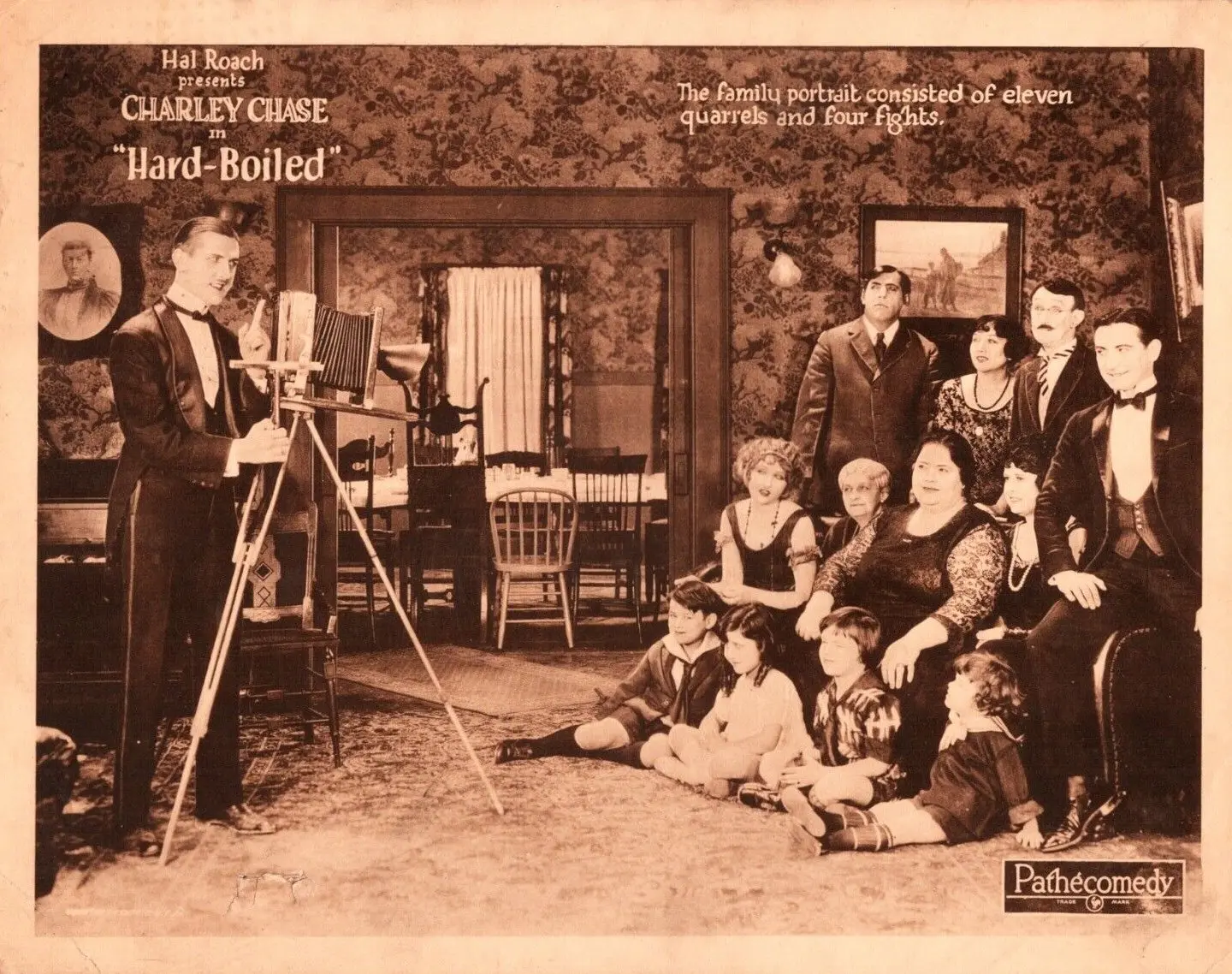
The pacing is brisk. Unlike the experimental or slow-moving narratives of European films like Der stumme Zeuge, Hard Boiled is built on a gag-per-minute ratio. However, the film avoids the chaotic, nonsensical energy of early Keystone shorts, opting instead for a narrative-driven humor that rewards attention.
Yes, it is worth watching if you want to understand the bridge between the pure slapstick of the 1910s and the sophisticated situational comedies of the 1930s. It captures a moment in time where the definition of 'masculinity' was being playfully deconstructed by the very medium that helped define it.
If you are looking for an epic adventure like Around the World in 80 Days, you will be disappointed. This is a small-scale, domestic comedy. But within that narrow scope, it excels. It is a tight, efficient piece of filmmaking that knows exactly what it wants to be.
Pros:
- Excellent physical comedy that doesn't rely on dangerous stunts.
- James Finlayson is at the top of his game.
- The film has a surprisingly modern 'cringe' sensibility.
Cons:
- The plot is somewhat predictable.
- Some of the secondary characters are underdeveloped compared to Chase and Finlayson.
One surprising observation: Hard Boiled is secretly a critique of toxic expectations. While it’s played for laughs, the central conflict is about a man who is perfectly kind and capable being forced to act like a violent idiot to satisfy a patriarch. In this way, it feels more relevant today than many of its contemporaries like The Yellow Dog.
The ending, which I won't spoil, subverts the idea of the 'tough guy' in a way that feels earned. It suggests that being 'hard-boiled' is less about how hard you can punch and more about having the guts to be yourself—even if 'yourself' is a bit of a klutz. It works. But it’s flawed.
Hard Boiled is a charming, albeit minor, entry in the Charley Chase canon. It doesn't have the grand scale of the era's biggest features, but it has more heart and cleverness than the average short. It’s a testament to Chase’s enduring appeal as an actor who could make failure look like an art form. If you have twenty minutes to spare, you could do much worse than watching Charley try, and fail, to be a tough guy.
IMDb —
1916
Community
Log in to comment.