DbcultAccessing Vault...
5.2/10
Senior Film Conservator
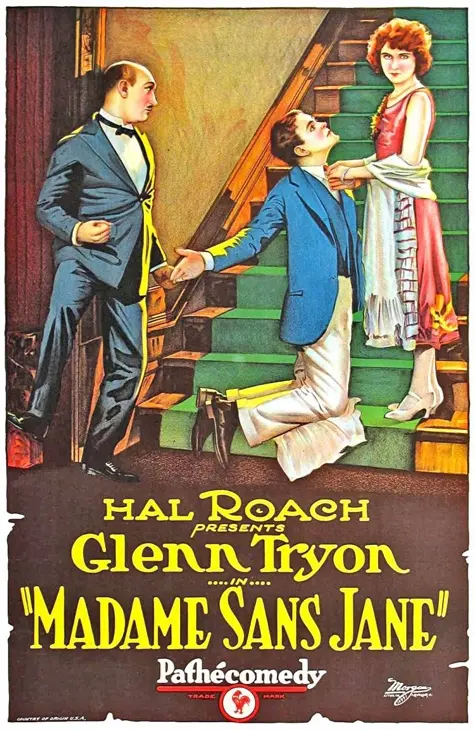
A definitive 5.2/10 rating for a film that redefined the boundaries of cult cinema. Madame Sans Jane remains a cornerstone of transgressive art.
Is Madame Sans Jane worth your time in the modern era? Short answer: yes, but only if you have a high tolerance for the mechanical, repetitive rhythms of late-silent-era slapstick and want to see a young Fay Wray before she became a legend.
This film is strictly for historians of the Hal Roach 'comedy factory' and those who find the 'man in a dress' trope inherently amusing; it is definitely not for viewers seeking a sophisticated romantic narrative or modern pacing.
1) This film works because the physical chemistry between Glenn Tryon and James Finlayson creates a frantic energy that prevents the thin premise from collapsing under its own weight.
2) This film fails because it relies too heavily on the audience's willingness to believe a father wouldn't recognize his daughter's own boyfriend simply because he put on a bonnet and a shawl.
3) You should watch it if you are tracking the evolution of the screwball comedy or want to analyze how Hal Roach used shipboard settings to maximize comedic tension.
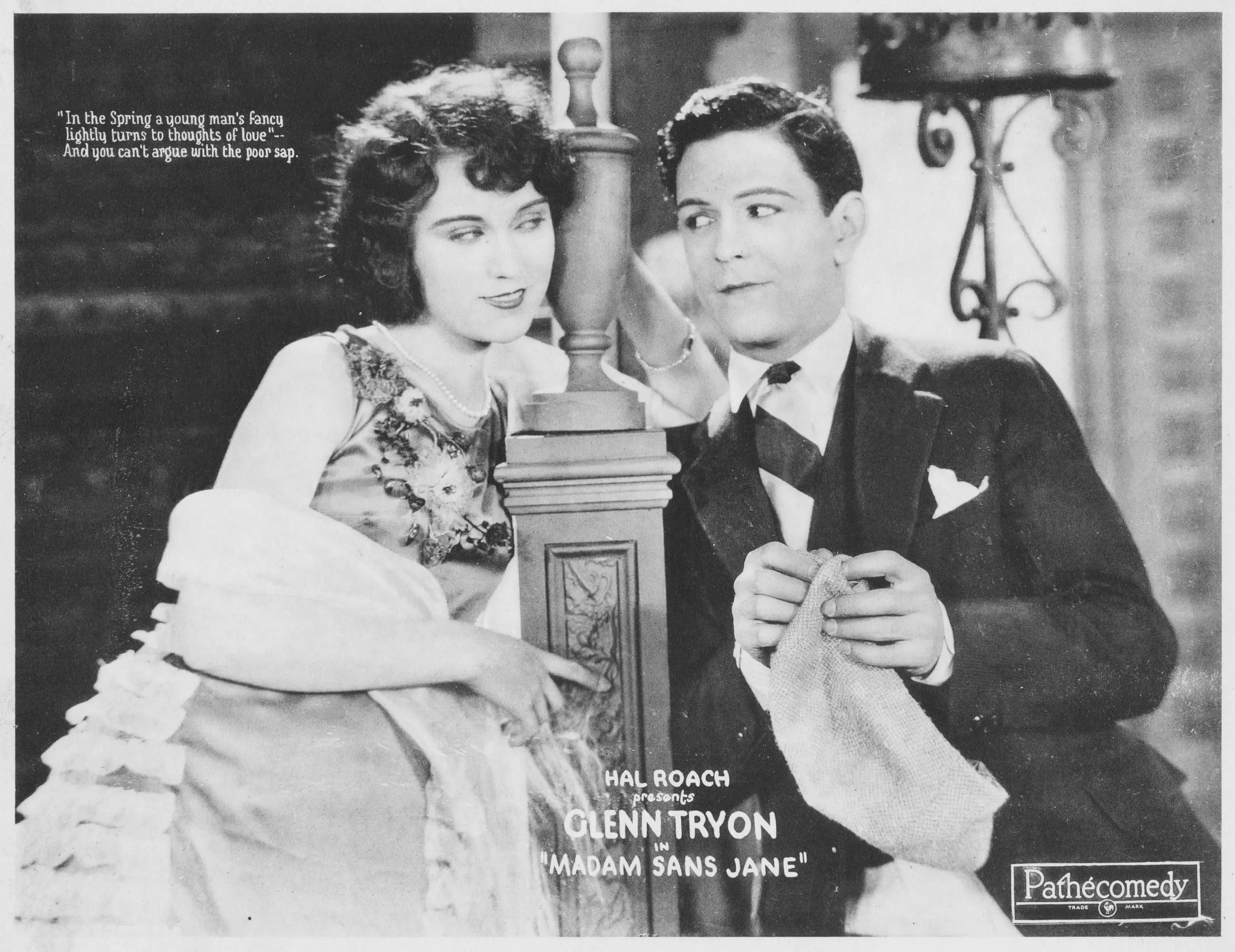
By 1927, Hal Roach had the short-form comedy down to a science. Madame Sans Jane is a prime example of this industrial approach to humor. It doesn't waste time with psychological depth. Instead, it treats the plot like a series of interlocking gears. Every scene is designed to build toward a physical payoff. The writing, credited to Roach himself, is lean. It functions on the principle of escalating discomfort.
The setup is classic: the disapproving patriarch. We see this in dozens of films from the era, such as The House Built Upon Sand, where family dynamics serve as the primary engine for conflict. However, Roach pivots from drama to absurdity by introducing the sea voyage. The ship is not a setting; it is a trap. It forces the characters into a confined space where the boyfriend’s disguise is constantly at risk of being unmasked by a stray breeze or a close encounter in a narrow companionway.
The gags are rhythmic. There is a specific moment where Glenn Tryon, in full feminine regalia, has to navigate a meal with the father. The way he handles a soup spoon while trying to maintain a 'ladylike' posture is a masterclass in physical anxiety. It works. But it’s flawed. The humor is broad, sometimes painfully so, but the execution is undeniably professional.
Glenn Tryon is often forgotten in the shadow of Keaton or Lloyd, but in Madame Sans Jane, he proves he was a capable leading man of the B-tier. His performance as the beau-turned-companion is surprisingly athletic. Playing a man playing a woman requires a double-layered performance, and Tryon leans into the 'clumsiness' of the masquerade. He doesn't try to be a convincing woman; he tries to be a man who is failing to be a woman, which is where the actual comedy lies.
Compare his performance to the more grounded roles found in A Man and His Money. While that film deals with social standing through a more traditional lens, Tryon uses the physical body to mock social conventions. His interactions with James Finlayson are the highlight. Finlayson, known for his 'double-take' and squinting frustration, is the perfect foil. Every time Finlayson looks at Tryon with a hint of suspicion, the tension ratchets up. It’s a predictable dynamic, but in the hands of these veterans, it feels earned.
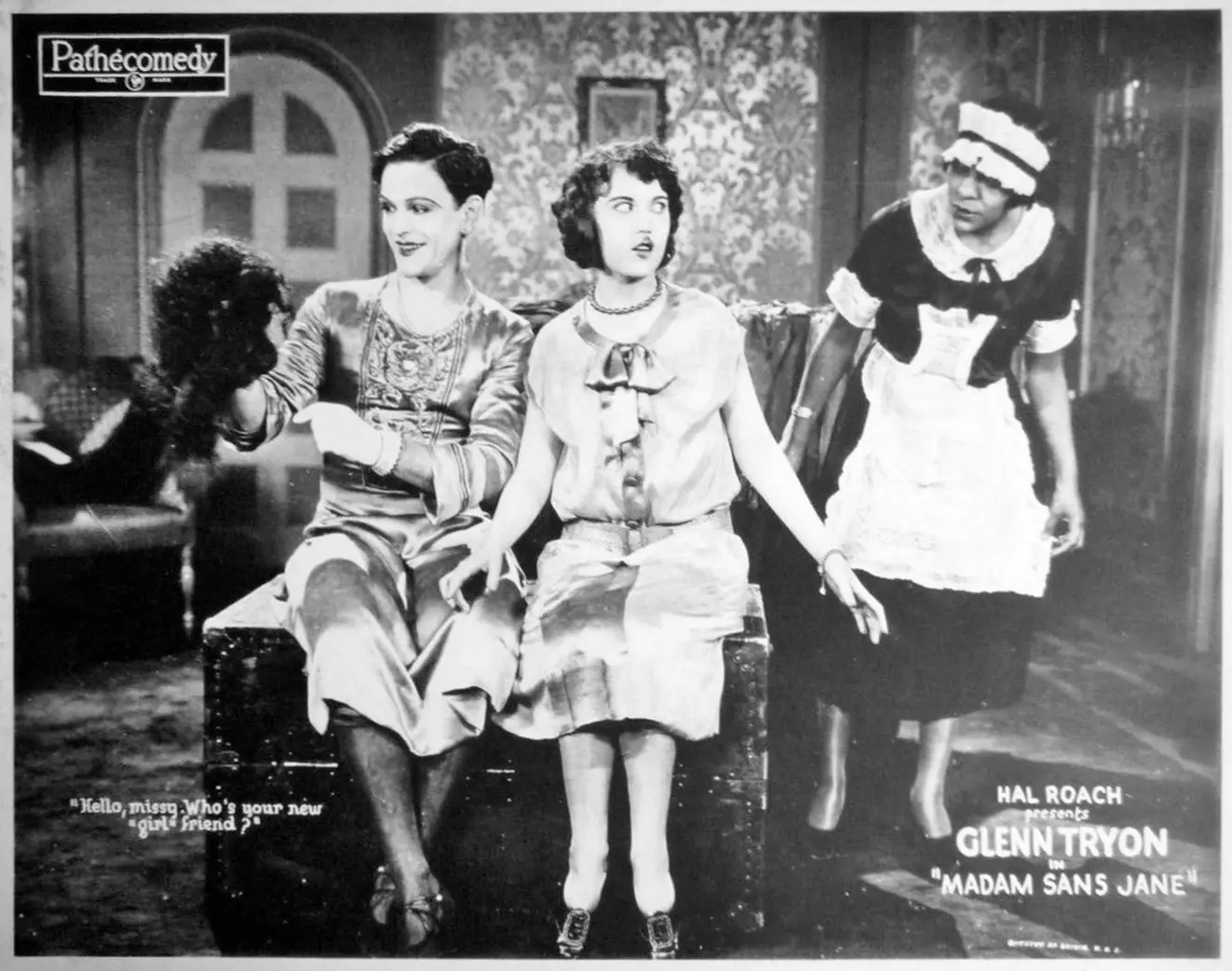
Seeing Fay Wray here is a revelation for those who only know her from her later horror work. In Madame Sans Jane, she is the 'straight man.' It is a thankless role in many ways, as she must react to the chaos around her without ever breaking the internal logic of the film. She brings a certain sweetness that balances the sweatiness of Tryon’s performance. Her presence reminds us of the versatility required of actors in the 20s; they had to move between films like The City of Silent Men and these frantic shorts with ease.
Wray’s chemistry with Tryon is understated. They feel like a real couple, which makes the father's intervention feel genuinely intrusive rather than just a plot device. When she looks at her disguised lover with a mix of terror and affection, she grounds the absurdity. Without her, the film would be nothing more than a series of disconnected sketches. She is the glue.
The cinematography in Madame Sans Jane is functional but effective. The use of the ship's deck provides a sense of scale that many indoor shorts lacked. There is a specific shot where the wind catches Tryon's dress, nearly exposing his trousers, while the father walks just feet away. The framing here is tight, emphasizing the lack of escape. It’s a visual strategy similar to what we see in Miss Jackie of the Navy, where the maritime setting dictates the action.
The lighting is flat, as was standard for many Roach productions of the time, but the editing is sharp. The transition from the father’s house to the ship is handled with a briskness that keeps the audience from questioning the logic of the boyfriend’s quick costume change. It’s all about momentum. If the film stops for a second, the audience realizes how ridiculous the situation is. So, it never stops.
We have to address the elephant in the room: the drag trope. In 1927, this was a staple of the 'low' comedy. It was used in films like Wild Women to elicit easy laughs from gender role reversal. Looking at it today, it feels both dated and strangely daring. There is an inherent subversion in seeing the 'hero' shed his masculinity to achieve his goals. However, the film never explores this beyond the surface level. It’s a costume, not a character study.
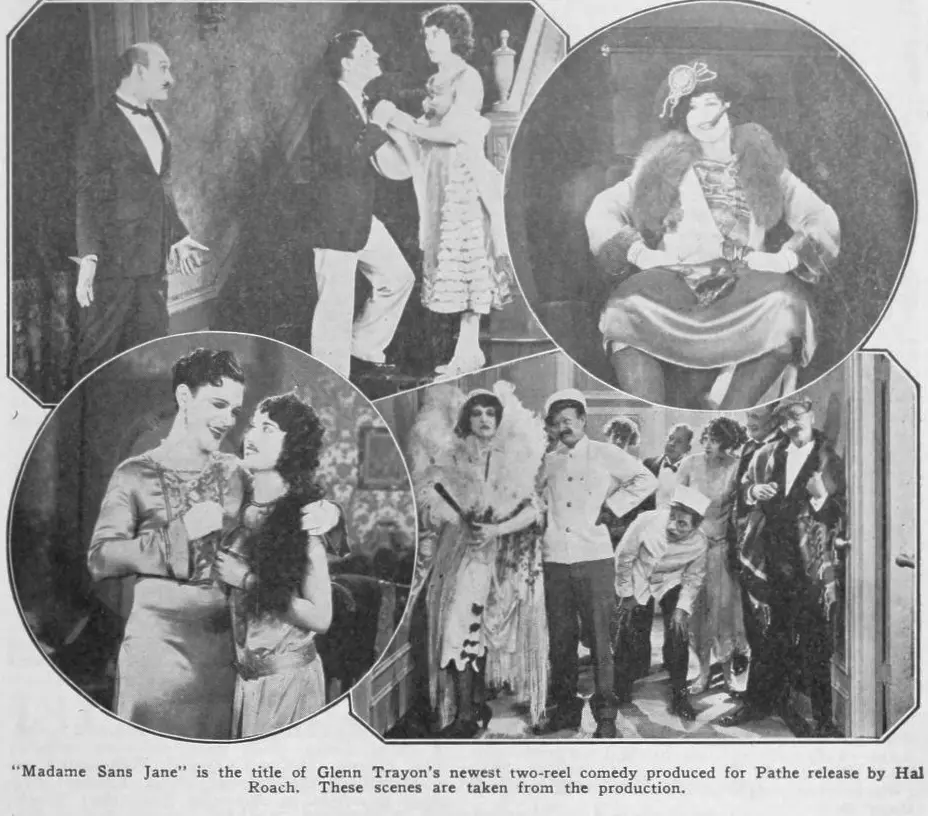
The father’s character is an interesting study in patriarchal ego. He is so convinced of his own authority that he becomes blind to the obvious. He hires a 'companion' to protect his daughter's virtue, yet he is the one who invites the 'wolf' into the fold. This irony is the film’s strongest narrative asset. It suggests that the older generation's obsession with control is exactly what makes them vulnerable to deception.
Direct Answer: Yes, if you are a fan of silent comedy or Fay Wray. Madame Sans Jane is a fast-paced, 20-minute burst of energy that showcases the peak of Hal Roach's gag-writing era. While the plot is paper-thin and the central conceit is unbelievable, the physical performances of Glenn Tryon and James Finlayson are technically superb. It is a historical artifact that still manages to pull a few genuine laughs through sheer commitment to its own absurdity. Don't expect depth; expect a man in a wig falling over things.
Pros:
- Energetic performances from the lead trio.
- Short runtime ensures it never overstays its welcome.
- High production values for a 1920s comedy short.
- Fascinating look at Fay Wray's pre-stardom screen presence.
Cons:
- The plot is entirely predictable from the five-minute mark.
- Some gags feel recycled from other Roach productions like Meatless Days and Sleepless Nights.
- The 'disguise' is laughably thin, even by silent film standards.
Madame Sans Jane is not a forgotten masterpiece, but it is a highly competent piece of entertainment. It serves as a bridge between the raw slapstick of the early 1920s and the more refined screwball comedies of the 1930s. While it lacks the poetic genius of a Buster Keaton feature or the emotional resonance of Breaking Home Ties, it succeeds in its primary goal: making the audience chuckle at the sight of a man trying to survive a sea voyage in a dress. It is light, airy, and entirely disposable—which is exactly what it was meant to be. If you have twenty minutes to spare, you could do much worse than this maritime madness.
IMDb 4.9
1924
Community
Log in to comment.