DbcultAccessing Vault...
Cult Review
Senior Film Conservator
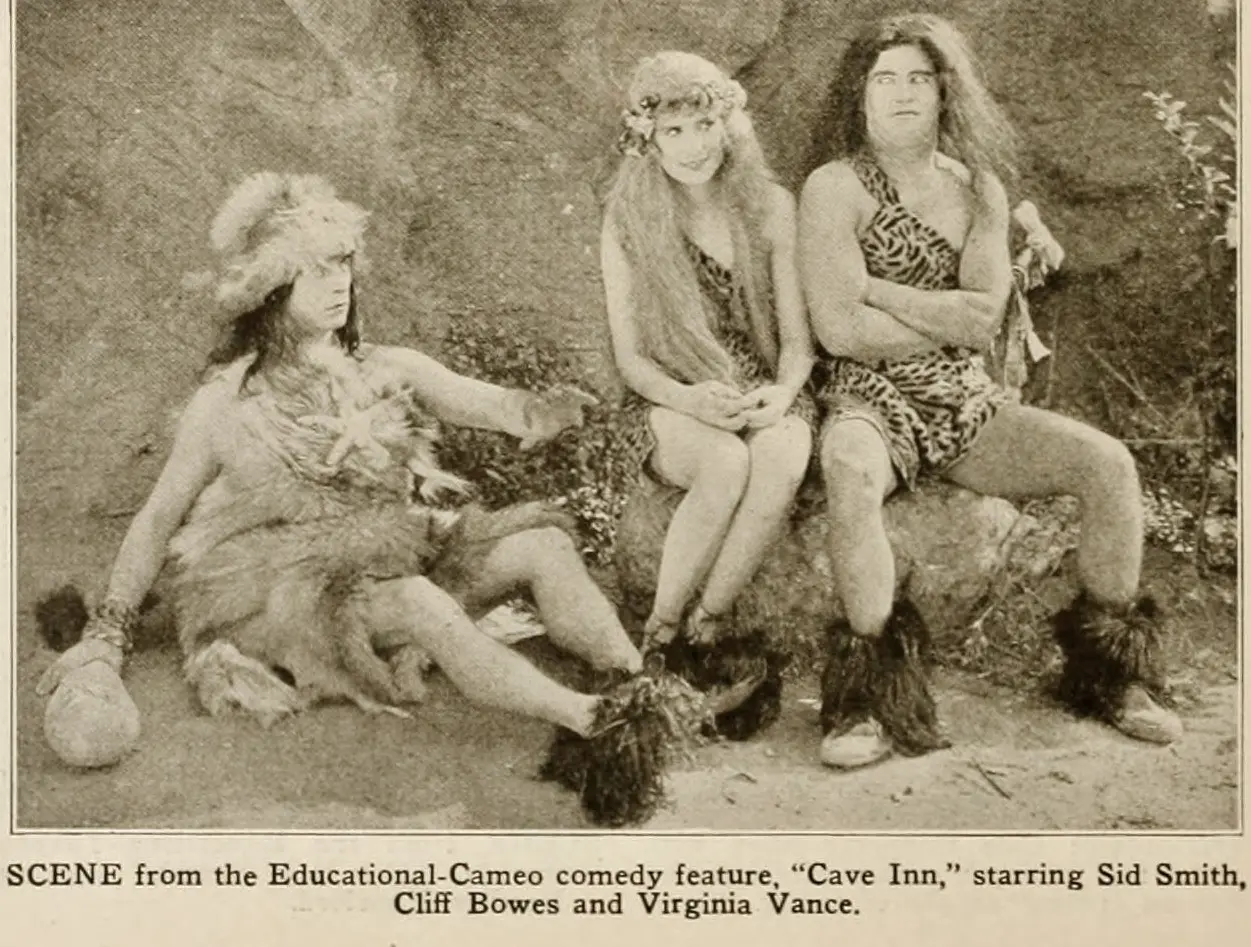
In the annals of silent cinema, where forgotten gems often lie buried beneath the sands of time, occasionally a flicker of prehistoric charm emerges to remind us of the boundless creativity that defined the medium's nascent years. 'The Cave Inn,' a seemingly simple burlesque on Stone Age romance, stands as one such delightful, if somewhat obscure, artifact. Released during an era when film was still finding its voice, this picture, with its uncredited writers and a plot distilled to its most primal essence, offers a fascinating glimpse into the comedic sensibilities of the early 20th century. It’s a testament to the universal appeal of humor, even when applied to the most ancient of human dilemmas: the quest for companionship.
The premise is disarmingly straightforward: a burlesque on love in the Stone Age. Yet, within this deceptively simple framework lies a surprising depth of observational comedy. The film eschews any pretense of historical accuracy, opting instead for a playful, anachronistic approach to its setting. We are not invited to a serious anthropological study, but rather to a caricatured world where primitive instincts clash with surprisingly modern romantic foibles. The absurdity is central to its charm, allowing for exaggerated gestures, broad physical comedy, and a comedic language that transcends the spoken word.
One might draw a parallel to other silent-era comedies that toyed with unconventional settings or situations, such as the delightful Squabs and Squabbles, which also explored domestic misunderstandings with a light touch, though without the prehistoric backdrop. 'The Cave Inn' takes this a step further, using the primeval setting to strip away societal norms and expose the raw, often ridiculous, mechanics of attraction and rivalry. The film’s characters, though clad in furs and wielding clubs, exhibit emotions and desires that are remarkably familiar to any modern viewer navigating the labyrinth of love.
The success of any silent comedy hinges heavily on the expressive capabilities of its cast, and 'The Cave Inn' is no exception. Sidney Smith, Virginia Vance, and Cliff Bowes, though perhaps not household names today, deliver performances that are both physically demanding and emotionally resonant within the comedic context. Sidney Smith, likely embodying the archetypal caveman suitor, must convey both brute strength and a surprising vulnerability in his pursuit. His physicality, a cornerstone of silent comedy, would have been crucial in selling the exaggerated struggles for affection.
Virginia Vance, as the object of desire, navigates the delicate balance between damsel-in-distress and resourceful primitive woman. Her reactions, whether of disdain, amusement, or eventual affection, would have guided the audience's understanding of the romantic entanglements. It’s a role that demands a nuanced performance, even within the confines of burlesque, to ensure she isn't merely a passive prize but an active participant in the comedic dance. Cliff Bowes, likely the rival or perhaps a bewildered bystander, would have contributed to the film's chaotic energy, his expressions and gestures adding layers to the comedic misunderstandings.
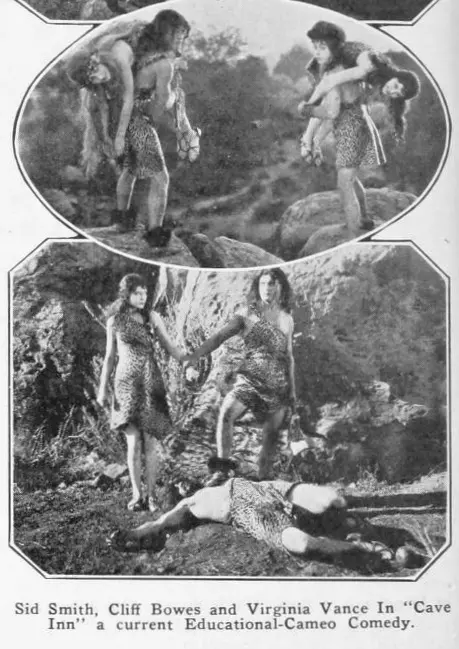
Their collective ability to communicate complex emotions and comedic timing without dialogue is a testament to the unique artistry of silent film actors. Each raised eyebrow, exaggerated stumble, or dramatic flourish serves as a word, a sentence, a paragraph in the film's narrative. This reliance on visual storytelling elevates 'The Cave Inn' beyond mere slapstick, imbuing it with a theatricality that harks back to vaudeville while simultaneously paving the way for more sophisticated cinematic comedies.
The term 'burlesque' in the context of 'The Cave Inn' implies a comic imitation or satirical distortion. This isn't just about making people laugh; it's about making them laugh at something familiar by presenting it in an absurd or unexpected way. The film lampoons the very conventions of romance, stripping away the societal niceties to reveal the raw, sometimes ludicrous, undercurrents of human mating rituals. It suggests that even with clubs and furs, the core dynamics of jealousy, courtship, and eventual pairing remain remarkably consistent.
Consider the comedic implications of a love triangle where the stakes are not merely social standing or wealth, but perhaps survival itself, yet played for laughs. This juxtaposition of high stakes with lowbrow humor is a hallmark of effective burlesque. It invites the audience to reflect on their own romantic endeavors, perhaps recognizing a touch of the primitive in their own sophisticated rituals. The film playfully questions whether humanity has truly evolved beyond the basic instincts of attraction and competition, or merely clothed them in more elaborate garments.
While 'The Cave Inn' might not possess the dramatic gravitas of a film like The Devil-Stone or the intricate plotting of a mystery, its strength lies in its unpretentious commitment to comedic entertainment. It doesn't aspire to grand statements, but rather to a series of well-executed gags and situational ironies. This focus on pure, unadulterated amusement is what makes it such a charming discovery for modern viewers.
Released around 1920, 'The Cave Inn' emerged during a vibrant period of cinematic experimentation. Filmmakers were still exploring the narrative and technical possibilities of the medium. The absence of credited writers was not uncommon, as many plots were developed collaboratively on set or were simply variations on popular themes. This collaborative, often improvisational, spirit infused many early comedies with a raw energy that is still palpable today.
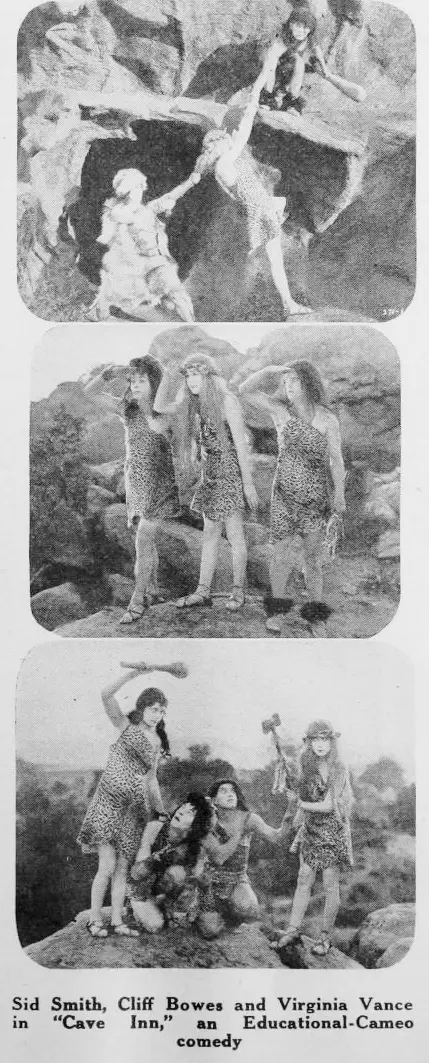
The film's visual style, while likely constrained by the technology of the day, would have relied on clear blocking, expressive intertitles (if any, given the nature of burlesque), and dynamic action to carry the story. One can imagine simple, yet effective, sets depicting a rudimentary cave dwelling or a primeval forest, serving as the backdrop for the comedic antics. The success of such a film often lay in its ability to transport the audience, however briefly, into its fantastical world, even with limited resources.
Comparing 'The Cave Inn' to contemporaries like The Phantom Fortune, which likely delved into more conventional dramatic narratives, highlights its unique position as a comedic outlier. While many films sought to tell grand tales, 'The Cave Inn' aimed for laughter, a vital component of the cinematic diet. Its focus on lighthearted amusement distinguishes it from more serious works and underscores the diversity of early film offerings.
For modern audiences, encountering 'The Cave Inn' is not merely an exercise in historical curiosity; it's an opportunity to connect with a foundational form of storytelling. It reminds us that humor, in its most basic form, is timeless. The film’s ability to elicit genuine laughter, despite the passage of a century and the absence of sound, speaks volumes about the enduring power of well-executed physical comedy and relatable human situations.
While it may not boast the intricate character development or profound social commentary of later, more sophisticated films, its charm lies in its simplicity and directness. It's a film that doesn't overthink itself, choosing instead to revel in the sheer joy of comedic performance. This unpretentious approach makes it remarkably accessible, even to those unfamiliar with silent cinema.
In a landscape dominated by epics and dramatic narratives, 'The Cave Inn' serves as a whimsical counterpoint, a reminder that sometimes the greatest cinematic pleasure can be found in a lighthearted glance at the absurdities of life. Its existence reinforces the notion that the early film industry was a fertile ground for all manner of creative expression, from the profound to the purely playful. To rediscover 'The Cave Inn' is to unearth a small, but significant, piece of cinematic heritage, one that continues to resonate with its understated brilliance and timeless humor.
'The Cave Inn' may not be frequently discussed in film theory seminars, nor will it likely top lists of the greatest films ever made. However, its contribution to the tapestry of silent comedy is undeniable. It demonstrates that even with a rudimentary plot and a simple setting, a talented cast and a clear comedic vision can create something genuinely entertaining and enduring. It's a film that invites us to laugh at ourselves, at our primal urges, and at the universal comedy of errors that is love. For those willing to venture into the delightful depths of early cinema, 'The Cave Inn' offers a refreshingly unpretentious and thoroughly enjoyable experience, proving that some jokes, like some human emotions, are truly prehistoric in their appeal and eternal in their laughter-inducing power.
IMDb 4.3
1917
Community
Log in to comment.