DbcultAccessing Vault...
Cult Review
Senior Film Conservator
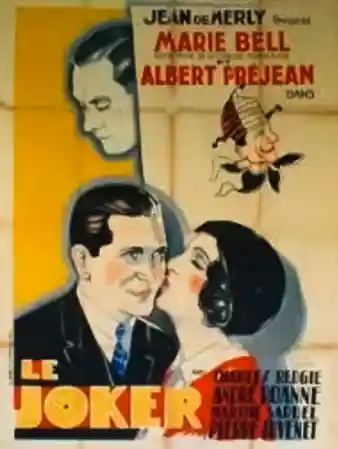
Alright, so 'Le joker.' Is it worth digging up today? Absolutely, if you have a soft spot for early French cinema that feels a little unpolished and very much of its time. This one’s for the folks who appreciate a slower pace and aren’t afraid of films that explore mood more than tightly wound plots. If you need explosions or crystal-clear motives, you’ll probably find yourself drifting off. 😴
The whole vibe of 'Le joker' is just… different. It’s like someone took a bunch of interesting ideas, threw them in a hat, and pulled them out one by one to make a movie. Charles Redgie as the titular Joker? He’s got this incredible, knowing smirk that says everything without him needing to utter a word. It’s subtle, but it sticks with you.
I kept thinking about that scene, early on, where the Joker just leaves those oddly placed calling cards at the grand ball. They weren't threatening, just… perplexing. A tiny, hand-drawn joker playing card, left on a silver platter next to a very serious-looking diplomat’s champagne flute. The camera just holds on that card for a beat too long, almost daring you to find meaning. And then the diplomat just brushes it off, but you can see him thinking about it later. 🤔
Albert Préjean, playing the detective, he’s got this weary charm. He’s not a super-sleuth, just a guy trying to make sense of things. There's a moment when he’s questioning a witness, and the witness, a small baker, keeps fussing with his apron. It feels so real, this little nervous habit. The movie is full of those tiny, blink-and-you-miss-it human touches.
The pacing, man. It’s not for everyone. Some scenes just linger. There’s a sequence where Marie Bell’s character, the socialite being targeted by the Joker, just walks through a crowded market. It goes on for ages, no dialogue, just the sounds of the street and her pensive expression. You really get a sense of the city, of 1930s Paris, almost like a documentary. You feel the bustle, the grit. 🥖
And the lighting! So many shadows. It gives everything a slightly dreamlike, almost noir-ish feel, even though it’s not a crime film in the usual sense. The way the light catches the smoke in the backrooms of the cabaret? Really nice stuff. They knew how to use light back then, even with limited tech. ✨
Now, the plot itself, it’s a bit… meandering. The Joker’s motivations are never spelled out in big, bold letters. Is he a prankster? A revolutionary? Just bored? The film lets you decide, which is kind of refreshing, but can also be a little frustrating if you like your stories tied up neat. I mean, one time he just swaps out all the sugar in a fancy cafe for salt. Why? Just because, I guess. It’s a bold move, not gonna lie.
There’s this one really strange scene where Florelle’s character, a singer, is performing, and the camera just focuses on her hands for a long time. Her gestures are so expressive. It’s not about the song she's singing at all, but the emotion in her fingers. Little things like that make it feel very personal, like you're just watching people live their lives.
The ending? Well, it’s not some big reveal. It just… wraps up. Some might call it anticlimactic. I found it fitting, almost poetic in its understated way. It doesn’t try to answer every question. It just leaves you with a feeling, a sense of having visited another time and place. And maybe, just maybe, you’ll start looking for your own little 'joker' cards in everyday life.🃏
For fans of early cinema who enjoy a film that’s more about atmosphere and character quirks than a tightly-wound mystery, give 'Le joker' a look. It’s got a certain charm that’s hard to ignore, even if it feels a little rough around the edges by modern standards.
IMDb 6.7
1926
Community
Log in to comment.