DbcultAccessing Vault...
Cult Review
Senior Film Conservator
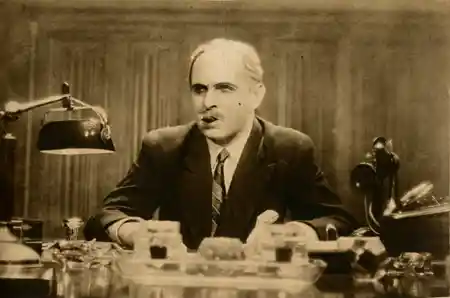
“Le requin,” from way back, is one of those old silent films that’s probably more for the curious than for a casual movie night. If you’re into seeing how stories were told without sound, or you just appreciate the weird beauty of early cinema, you might actually find something here. But if you need snappy dialogue and a plot that moves fast, you’ll likely be checking your watch. 🕰️
It’s a French film, and the title translates to “The Shark,” which immediately sets a certain tone. Don't expect Jaws, though. This 'shark' is definitely a person, a character who just tears through the lives of others without much thought.
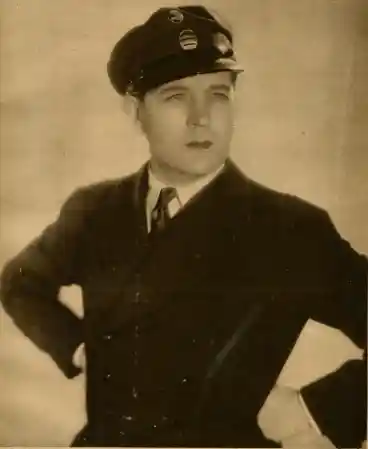
The whole thing feels very much of its time, which is part of the appeal. Lots of dramatic gestures. People really had to *emote* back then, didn't they? No dialogue to hide behind.
Albert Préjean, he’s got that sort of dashing, slightly troubled look about him. You can almost feel the weight of whatever secret he’s carrying. His eyes do a lot of the work. Sometimes, a little too much work, but that's silent film for ya.
There’s this one scene, I think it’s in a smoky, perhaps slightly seedy cafe. The lighting is just fantastic. All those deep shadows, and then a single lamp catching someone’s face. It makes everything feel so… *clandestine*.
Dora Stroeva, as the femme fatale type, is just magnetic. She moves with this deliberate slowness, every glance a calculated move. Her character is definitely the **shark** of the title, or at least a very convincing baitfish that hides a nasty bite. You just know she's trouble from the moment she glides into frame.
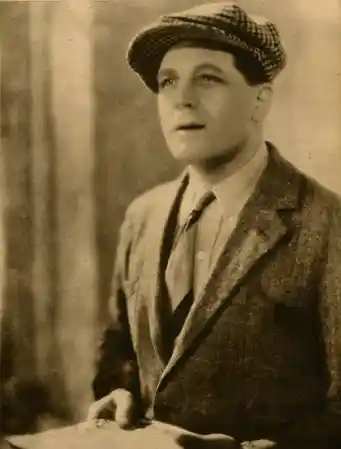
The story, what I could gather of it, is pretty classic — betrayal, hidden motives, maybe a love triangle gone very, very wrong. It’s hard to tell sometimes with the old title cards popping up, translating these bits of plot. You kinda have to piece it together.
Some moments just linger. Like a close-up on a hand slowly reaching for something, or a quick, almost imperceptible flinch. Those little things, they really stick with you, even more than the big, sweeping dramatic bits.
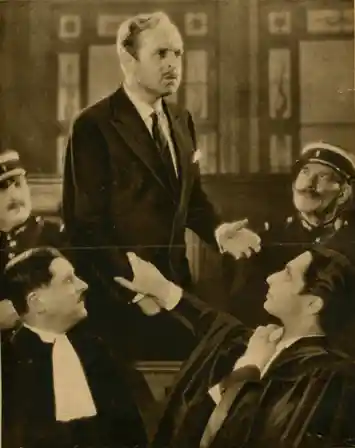
The pacing is… well, it’s a silent film. It takes its time. There’s a scene where someone is just walking down a street for what feels like a minute straight. You almost start to wonder if the camera operator just forgot to say "cut." But then something happens, and you're pulled back in.
Rudolf Klein-Rogge, he plays a sort of heavy, you know the type. Always glowering, always looking like he’s about to break something. He’s got that face. That’s probably why he was in so many of these films. He doesn’t really need words.
It’s fascinating to see how they used visual cues to build tension. A shadow stretching long across a wall, a sudden cut to a worried face. Simple, but effective. Sometimes, *too* simple. One reaction shot lingered so long it became funny. 😂
The print I watched, it had some wear and tear, which honestly, just added to the whole experience. Made it feel even more like I was looking into a window to the past. The scratches and flickering just felt… right.
This isn't a film you put on if you want to be entertained in a modern sense. It’s more like a historical artifact that still has a pulse. A bit creaky, sure, but it’s got its own kind of power.
For silent film enthusiasts, it’s worth a look, especially for the performances and that moody atmosphere. For everyone else? Maybe skip it unless you’re feeling particularly adventurous. It's a taste acquired, I guess. 🎬
IMDb 6
1934
Community
Log in to comment.