DbcultAccessing Vault...
7.5/10
Senior Film Conservator
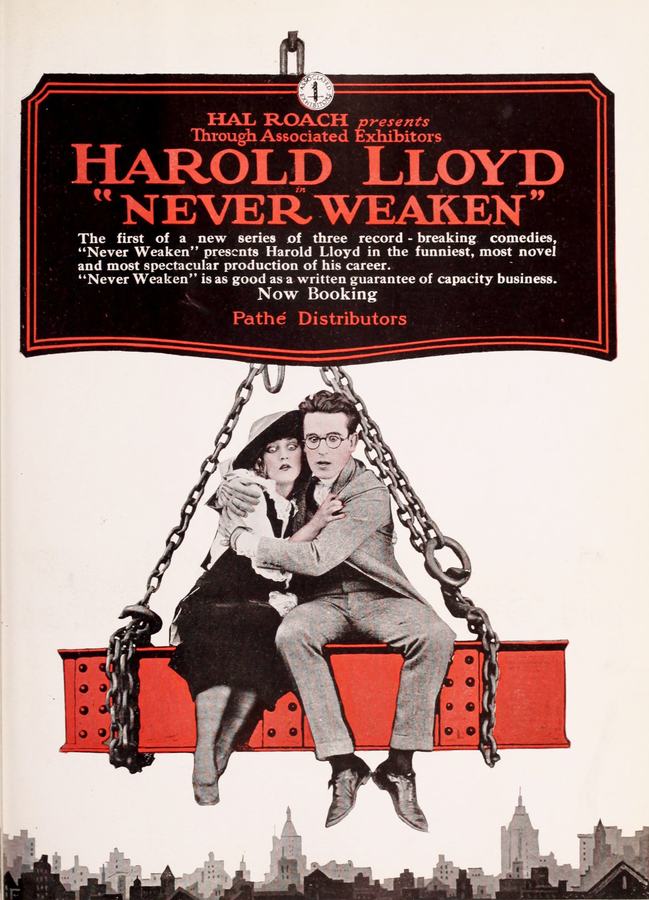
A definitive 7.5/10 rating for a film that redefined the boundaries of cult cinema. Never Weaken remains a cornerstone of transgressive art.
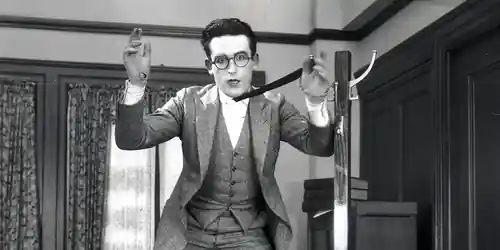
Harold Lloyd dangles above Broadway, the city a trembling mosaic of headlights and terror. One slip and the gag becomes a funeral. Yet the grin—those piano-key teeth—never wavers.
There is, in the marrow of Never Weaken, a daredevil theology: if faith can move mountains, frantic optimism can levitate a boy from Kansas above the clangorous arteries of New York long enough to pay the rent and secure the girl. Released in October 1921, three months before Keaton’s The Mystery of a Hansom Cab toyed with urban paranoia, this 19-minute whirlwind distills the entire Jazz-Age adrenaline spike into a single, escalating crescendo of pratfalls and vertigo. Harold Lloyd, that straw-haired everyman with horn-rimmed spectacles soldered to hope, weaponizes anxiety until it somersaults into transcendence.
Plot synopses flatten the experience—yes, our hero scrambles to prevent Mildred’s layoff by chasing quick-cash schemes—but the how detonates the mundane. The film’s first act is a kaleidoscope of occupational cosplay: Harold toggling between traffic semaphore and ironworker, a one-man gig-economy before the word existed. Each disguise is a paper-thin promise that tears the instant the wind of credibility blows. Roach and Taylor, scribbling gags on café napkins, understood that post-war audiences craved not just laughter but the metallic tang of peril; they built a Rube Goldberg contraption of circumstance whose final cog is gravity itself.
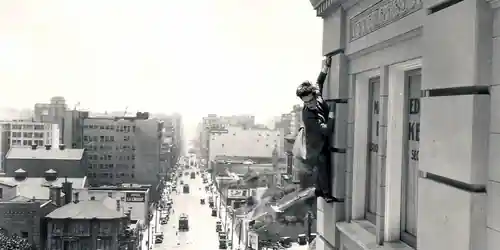
Consider the crucible of the skyscraper sequence. Lloyd, determined to drum up patients for Mildred’s boss, commandeers a window-washer’s seat. The camera plants itself inside the cradle, turning the audience into co-conspirators suspended over the grid. Below, streetcars shrink to beetles and neon signs hiss like serpents of electricity. Each time Harold kicks away from the façade, the frame lurches; each time he dangles one-handed, the celluloid seems to sweat. No rear-projection trickery here—only the honest-to-god void, documented by a lens that dared not blink. The effect is spiritual: a slapstick Stations of the Cross where resurrection arrives via a misplaced rivet and a conveniently flapping banner.
Yet the laughter is never pure; it’s alloyed with guilt. We guffaw because the body survives, but the subconscious remembers the 1920 elevator-shaft fatalities that newspapers splashed across columns adjacent to theater listings. Lloyd weaponizes that tension, folds it into a grin, then releases it in a cathartic bark. Compare this to the continental cynicism of Più forte del destino or the boozy surrealism of Hop – The Devil’s Brew; American silent comedy opts for secular salvation through kinetic ingenuity.
The marriage proposal arrives mid-air, a stuttering confession screamed into the urban canyon. Romance, traditionally a drawing-room contract, is here re-written on a ledger of girders and wind shear.
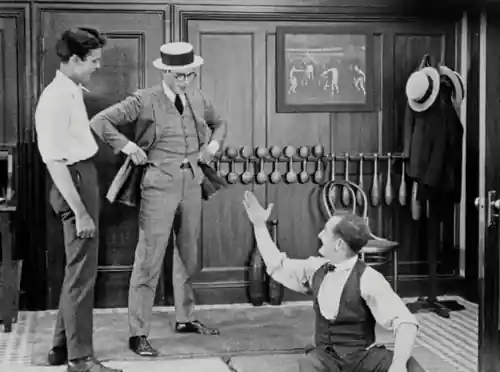
Mildred Davis, Harold’s real-life fiancée, radiates flapper pragmatism—no swooning ingénue, she clocks Harold’s tomfoolery with the arched eyebrow of a woman who has balanced her own checkbook. Their chemistry crackles because it is negotiated: a glance exchanged over a cluttered desk equals a ten-page novella of shared histories. When she pockets the ring at the finale, the gesture feels earned, not bestowed.
The supporting ensemble operates like a jazz brass section: Mark Jones’s hulking riveter supplies tuba-like menace, Helen Gilmore’s receptionist trills piccolo notes of exasperation, and Tiny Ward’s beat cop keeps off-key time with his truncheon. Together they orchestrate a cacophony that propels Harold into ever-tighter straits, a Greek chorus wearing hard-hats and spats.
Visually, the film revels in tonal counterpoint. Interiors glow with buttery lamplight, evoking Dutch genre paintings, while exteriors explode with the chalky glare of cement and steel. Cinematographer Walter Lundin tilts the horizon like a tipsy deck, anticipating the Germanic angularity of Leben heisst kämpfen but filtering it through the optimism of a country that still believed the sky could be annexed by grit.
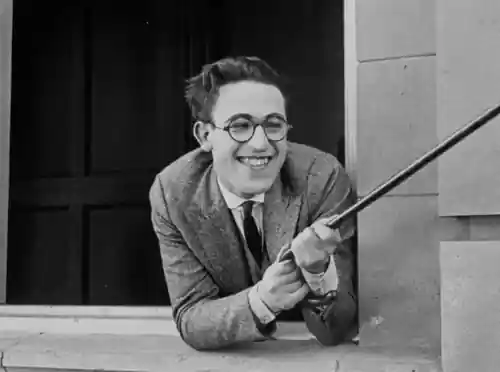
Structurally, the picture is a three-movement symphony: 1) the comic hustle, 2) the vertiginous crucible, 3) the deus-ex-machina coda. Each movement escalates not merely in altitude but in moral stakes—from saving a job to saving a life to salvaging the very possibility of companionship. The pacing anticipates modern action cinema; the average shot length shrinks as danger inflates, a metronome racing toward cardiac tempo.
Sound, though absent on the track, is implied through montage: the clang of a rivet gun suggested by a quick zoom on trembling metal, the whoosh of wind via a coat tail whipping like a semaphore flag. Contemporary viewers conditioned to Dolby thunders may smirk, but the imaginative gap between image and perceived noise invites the audience to co-author the experience—an early form of interactive cinema.
Gender politics, viewed through today’s lens, reveal both constraint and subversion. Mildred’s employment hinges on male patronage, yet her workplace competence is never ridiculed; the joke lands on the system, not the woman. Harold’s frantic efforts acknowledge her economic vulnerability rather than dismiss it—a nuance miles ahead of Her Second Husband, where marital status alone defines heroine worth.
Ethically, the film pirouettes on the precipice of bad taste: suicide gags, racial caricatures (a fleeting shoeshine bit), and workplace endangerment. Yet context matters—1921 audiences had survived war and pandemic; black humor was a pressure valve. Today we cringe, but we also recognize the evolutionary path toward more inclusive comedy.
Compare the skyscraper climax to Keaton’s Skyscraper shorts or the boxing kangaroo mayhem of The Boxing Kangaroo. Lloyd differentiates himself through proximity to audience sympathy: Buster’s granite stoicism invites awe, Harold’s bespectacled vulnerability invites identification. We are not gods observing a mythic titan; we are Harold, late on rent, scribbling IOUs on the back of eviction notices.
The final iris shot closes on the couple’s rooftop kiss, skyscrapers radiating like crystallized ambition. It is 1921, the world is tilting modern, and love—frantic, bruised, but airborne—has clawed out a perch above the abyss.
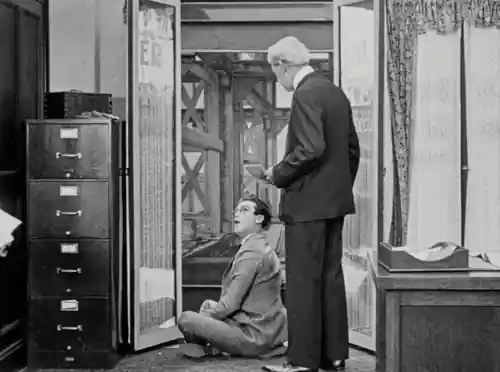
Restoration-wise, the 4K Criterion scan harvests grain like stardust, preserving the nickelodeon flicker while scrubbing decades of soot. Organ scores by Gabriel Thibaudeau sync heartbeat to treble clef, though silent-film purists may prefer the percussive clatter of a live effects-man dropping spoons on tin sheets. Either way, the essential thrill survives: cinema as a trampoline that flings the viewer above the mundane, then catches him with the gentle assurance that physics can be outwitted by gumption.
Legacy? Watch Jackie Chan crib the cradle gag for Project A, or Tom Cruise dangle above Dubai in Mission: Impossible – Ghost Protocol. The DNA of Never Weaken—the fusion of character stakes with architectural vertigo—continues to course through blockbuster veins, proving that audiences will forever pay admission to watch the human body negotiate the indifferent grid of the city.
If you seek antecedents, chase down Circumstantial Evidence for its courtroom tension, or Sylvia of the Secret Service for espionage hijinks. None, however, match the distilled purity of dread and delight that Lloyd engineers in a brisk reel barely spanning a lunch break. It is a shot of adrenaline chased with a grin, a reminder that cinema’s primal magic lies not in galaxies or algorithms but in the spectacle of one terrified mortal dancing on the lip of disaster—and living to tip his hat.
IMDb 6.5
1931
Community
Log in to comment.