DbcultAccessing Vault...
Cult Review
Senior Film Conservator
needle, bishop, blaze
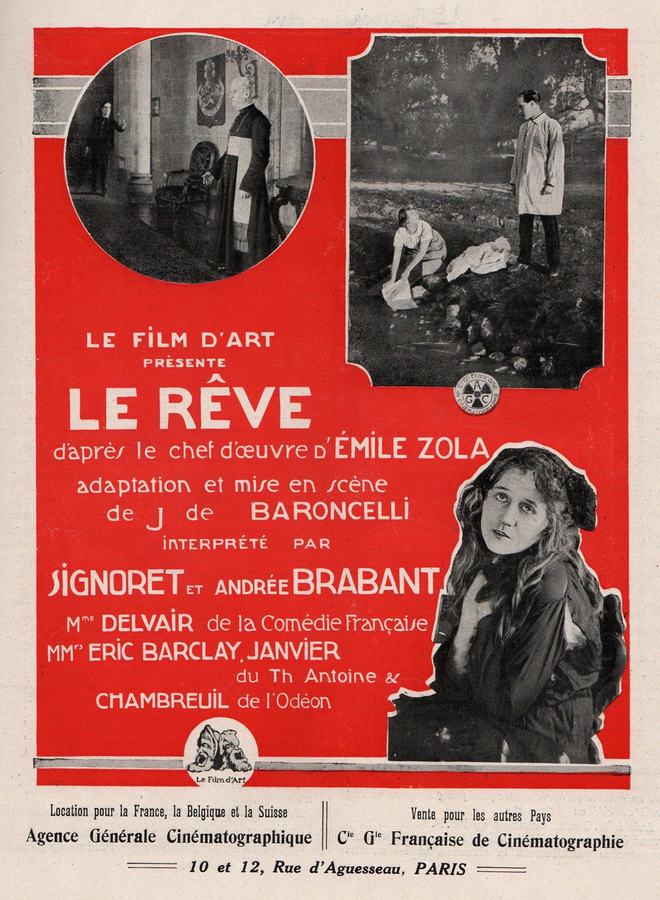
There is a moment—roughly halfway through Jacques de Baroncelli’s hallucinatory Le Rêve—when the camera forgets to blink. A single take lingers on Jeanne Delvair’s face as she listens to a off-screen liturgy; her pupils widen like dark coins dropped into holy water, and the entire film tilts on its axis. What began as a modest adaptation of Zola’s 1888 novella suddenly transmogrifies into something far more volatile: a silent-era sermon on the erotics of abandonment.
Baroncelli, often dismissed as a diligent artisan rather than a visionary, here operates like a man possessed. He floods the frame with tenebrous chiaroscuro cribbed from Danish interiors, then slices it open with buttery shafts of Lumière-light. The result feels less like a story than a wound—one that refuses to scab. You do not watch Le Rêve; you dress it.
Angélique, the orphaned seamstress, grows up under cathedral eaves, her imagination nourished on hagiographies and scrap-thread. She believes in saints the way gamblers trust dice—fervently, fatalistically. The bishop’s son, Félicien, returns from an unnamed capital where he has tasted absinthe and women’s disdain. Their meeting is staged inside the castle’s disused aviary: she mending a dove-winged sleeve, he cradling a fractured reliquary. No meet-cute ever crackled this quietly; the air itself seems to blush.
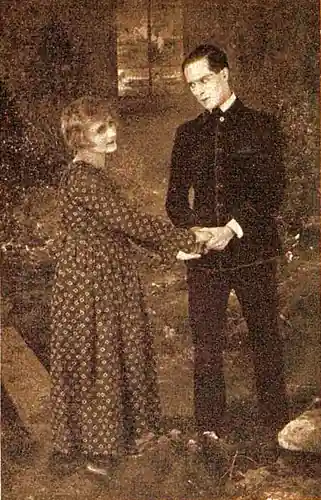
Zola’s naturalism usually squeezes characters until their vices drip, but Baroncelli opts for a more spectral fatalism. Doom arrives not as blunt catastrophe but as a slow discoloration—like linen left too long in attic chests. The bishop, played with papal frostiness by Paul Jorge, embodies institutional wrath in purple gloves. When he condemns the lovers, the intertitle reads merely: “The law of the blood is stronger than the law of the altar.” One cut later, the lovers sprint across marshland while the bishop’s hunting dogs bay in diabolic counterpoint.
Jeanne Delvair’s Angélique contains multitudes within a tremor. Watch how she fingers fabric: each cloth becomes a confessor. When she lifts the chasuble she has sewn for the bishop, her thumbs hesitate a millimeter above the silk, as though scared the material might brand her. It is cinema’s most erotically charged non-touch.
Henri Janvier’s Félicien carries himself like a man forever exiting a funeral. His shoulders never quite square; even in love scenes he seems to be listening for a second shoe dropping. The chemistry between the leads is less combustion than conspiracy—two conspirators mapping an escape route inside every glance.
Among supporting players, Suzanne Bianchetti’s courtesan—excised from many prints—provides a venomous aria of worldliness. In a film obsessed with chastity, her cigarette becomes a torch of experience.
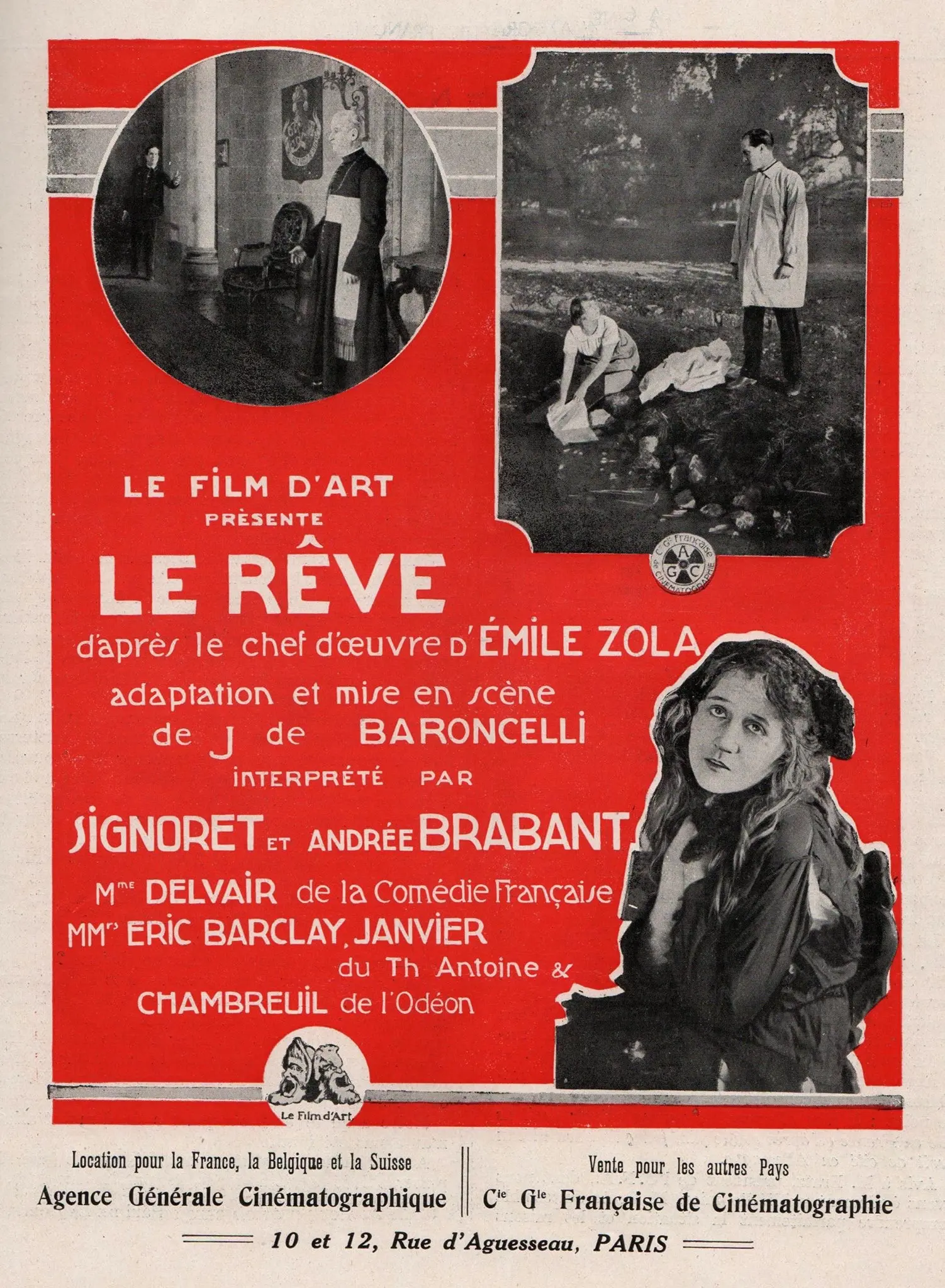
Cinematographer Léonce-Henri Burel shoots thread as if it were plasma. Close-ups reveal warp and weft pulsating like capillaries. During the nocturnal flight, moonlight strikes Angélique’s linen bundle, turning it into a portable galaxy. The image is so tactile you half-expect motes of silver to drift off the screen.
Baroncelli’s blocking deserves study. Characters rarely occupy the frame’s center; instead they cling to edges, hemmed in by archways, doorjambs, pew backs—visual shorthand for a society that moralizes through architecture. In the penultimate scene, the lovers kneel inside a roofless chapel. Above them, sky replaces vaulted stone, implying that transcendence itself has been outsourced.
Though released in 1921 without synchronized score, contemporary screenings often paired the film with Saint-Saëns’ Septet or improv organ steeped in modal chant. Either choice amplifies the picture’s sacramental dread. Yet even unaccompanied, the film vibrates—those grainy iris shots hum like nuns at vespers.
Intertitles, usually functional, here flirt with poetry. One card reads: “In the hem of night, dawn hoards its thimble of fire.” Pretentious? Perhaps. But such floridity feels earned inside a universe where every spool of cotton might unspool into destiny.
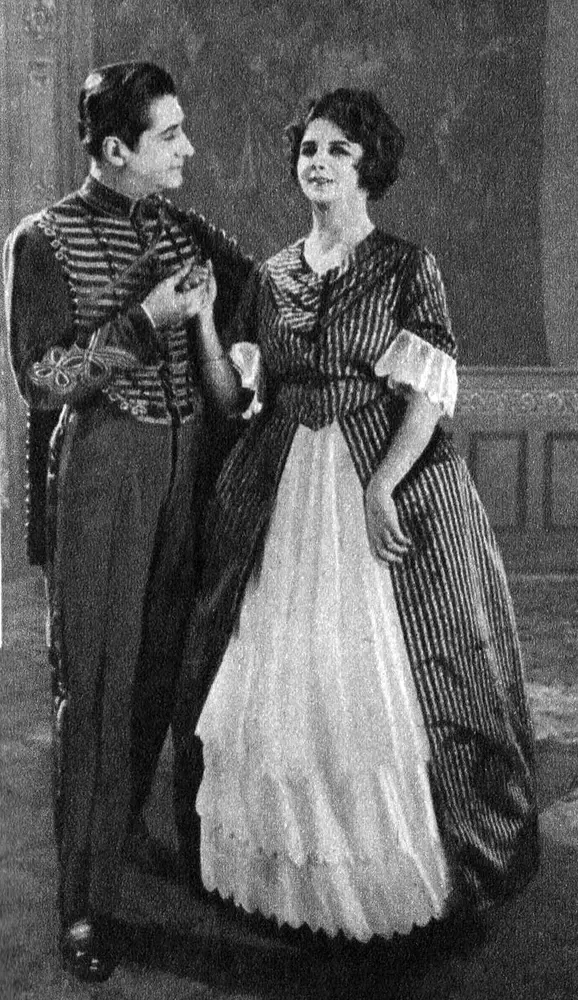
Curiously, Le Rêve shares DNA with other 1921 meditations on chaste transgression. The quasi-Puritan fatalism of The Hidden Children rhymes with Baroncelli’s ecclesiastical clampdown, while the riverine odyssey in Down the Mississippi likewise equates geography with moral drift. Yet none of those cousins dares the sheer textile fetish on display here.
If you crave a silent that marries the punitive gloom of The Weaker Vessel to the transcendental glow of The Call of the Soul, this is your holy grail—albeit one embroidered with scarlet thread.
For decades, Le Rêve survived only in a 9.5 mm hoarder’s reel, battered like a reliquary dragged through siege. Then, in 2019, the Cinémathèque française unearthed a 35 mm nitrate at a convent sale—yes, nuns hoarding cinema. The 4K restoration premiered at Bologna’s Il Cinema Ritrovato, revealing textures previously smothered: you can now count every fray in Angélique’s cuff. Kino Lorber’s Blu-ray pairs the film with an academic commentary that, while occasionally pedantic, deciphers the theological iconography stitched into each costume.
Streaming options remain scant. Occasionally it surfaces on Criterion Channel under “Silent Sanctuaries,” but licensing limbo keeps flitting it back into obscurity. Hunt it down anyway; some dreams deserve pursuit.
Great films leave scars; great silent films teach you to read those scars by candle. Le Rêve does both, while whispering that salvation might be sewn rather than bestowed. When the last frame fades—on Angélique’s tentative smile as she drapes a makeshift veil of sunrise over their makeshift altar—you realize the movie has been stitching you, too. And the thread, impossibly, smells of incense, salt marsh, and the first gulp of dawn.
Seek it, not as nostalgia, but as defiance: a reminder that even in a world of bishops and bloodlines, a girl with a needle can unstitch the cosmos.
IMDb —
1928
Community
Log in to comment.