DbcultAccessing Vault...
Cult Review
Senior Film Conservator

In the incipient stages of Radio Mad, the Spats' reliance on their phonograph is abruptly disrupted when it miraculously goes on strike. This cataclysmic event precipitates a series of misadventures, as they seek to replace their defunct music player with a radio. The film deftly captures the zeitgeist of the era, as the Spats navigate the uncharted territories of radio broadcasting.
The installation of an aerial on their rooftop, intended to enhance reception, inadvertently sets off a chain reaction of catastrophic proportions, culminating in the apartment building being engulfed in flames. This calamitous turn of events serves as a catalyst for the narrative, as the filmmakers skillfully juxtapose comedic elements with the unfolding chaos.
Throughout the film, the performances of Sidney D'Albrook and William Gillespie are noteworthy, as they bring to life the hapless Spats. Their chemistry on screen is undeniable, adding a layer of authenticity to the narrative. The supporting cast, including Frank Butler and Jill Rainsford, provide additional comedic relief, further enhancing the film's entertainment value.
In terms of thematic resonance, Radio Mad ostensibly explores the fragility of modern life, as the Spats' seemingly innocuous decision to install a radio has far-reaching consequences. This motif is reminiscent of Crime and Punishment (1923), wherein the protagonist's actions have unforeseen repercussions. Conversely, Radio Mad's focus on the banality of everyday existence draws comparisons with The City of Silent Men (1921).
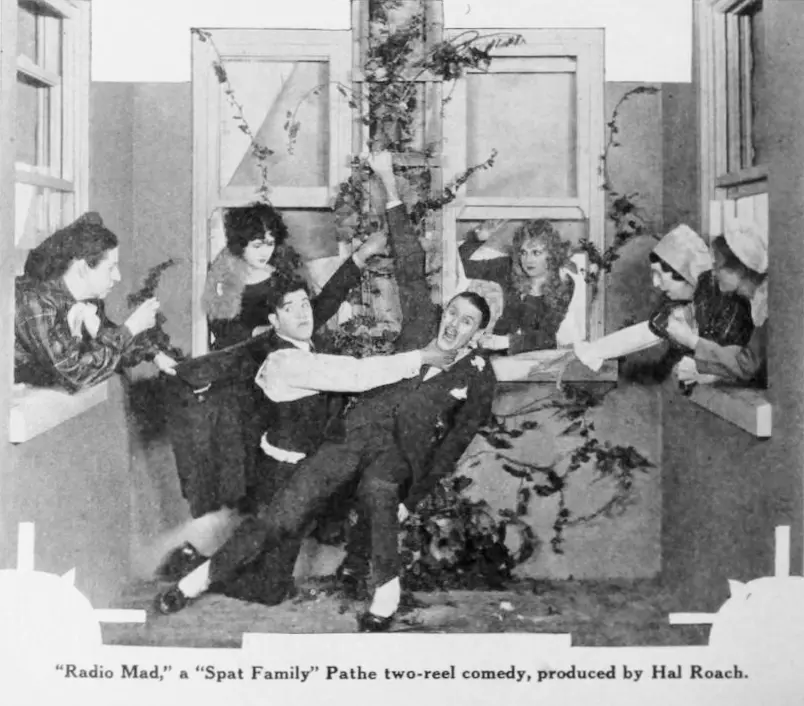
The film's visual style, characterized by a muted color palette and expressionistic cinematography, adds to the overall sense of unease and tension. This aesthetic choice effectively complements the narrative, underscoring the unpredictability of the events unfolding on screen.
Upon closer inspection, Radio Mad reveals itself to be a nuanced exploration of human fallibility, eloquently captured through the lens of a seemingly trivial incident. The film's capacity for satire and social commentary adds depth to the narrative, rendering it a memorable viewing experience.
In conclusion, Radio Mad is a raucous romp that deftly balances comedy and calamity. Through its astute observations on the human condition, the film presents a compelling case for its rediscovery. As a testament to the enduring power of silent cinema, Radio Mad remains an obscure gem well worth uncovering.
For those interested in exploring similar films, Not Guilty (1921) and Locked Lips (1920) offer additional perspectives on the human condition. Furthermore, Halta Lena och Vindögda Per (1925) and Our Alley (1921) provide fascinating glimpses into the cultural and societal contexts of the era.
IMDb —
1925
Community
Log in to comment.