DbcultAccessing Vault...
6.2/10
Senior Film Conservator
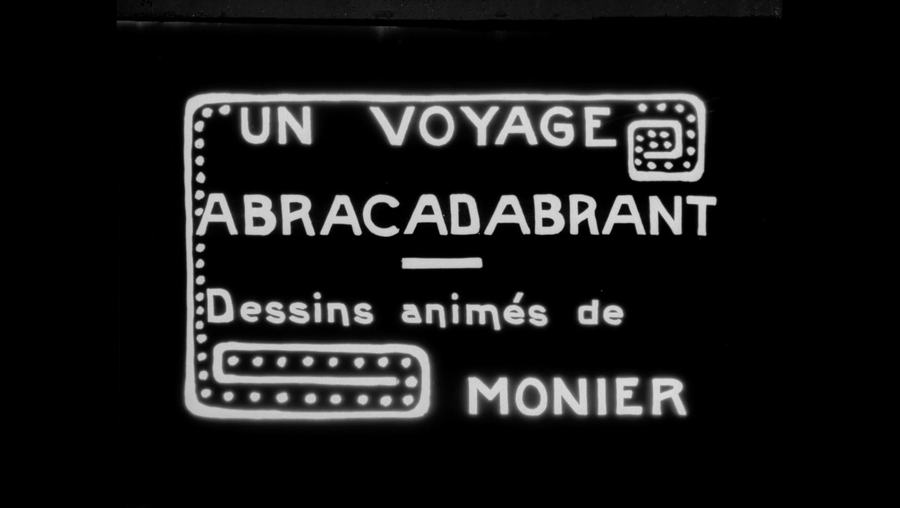
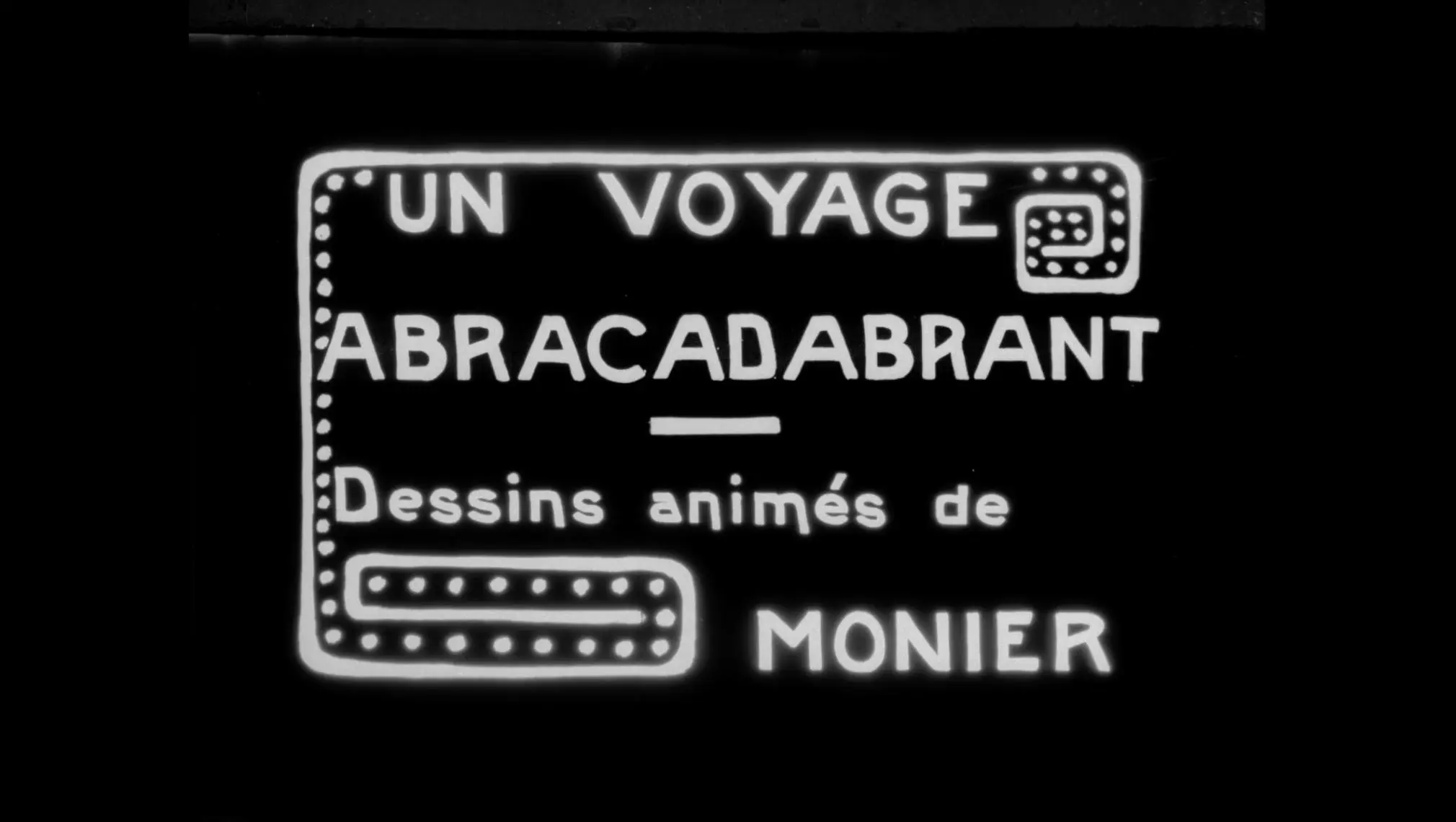
A definitive 6.2/10 rating for a film that redefined the boundaries of cult cinema. Le Voyage Abracadabrant remains a cornerstone of transgressive art.
Imagine, for a moment, that Georges Méliès had a headache induced by too many absinthe laced evenings, dozed off in a Montmartre café, and sketched his fever dream on the back of a tram ticket—Le Voyage Abracadabrant is the celluloid mutation of that nap.
The film’s single-reel economy—barely four minutes—belies its baroque imagination. A domestic cube, equal parts dollhouse and mausoleum, levitates like a disobedient balloon. Its façade is pastel yet cadaverous; shutters clap like dentures in a gale. Inside, two silhouettes (Henry Monnier’s caricaturist and an unnamed illusionist) scramble across Persian rugs that ripple like stingray skin. Furniture waltzes; a taxidermied stag head clears its throat and sings a barcarolle. Gravity is optional, geography a punchline.
This is not escapism; it is escape as formalism—every lifted floorboard is a manifesto against the tyranny of perspective.
Director/alchemist (the print bears no autograph, only the word “ABRACADABRANT” etched into the leader) paints each frame by hand—rose madder for cheeks, viridian for vertigo, gamboge for that queasy dawn. The tinting jitters; colors bleed beyond outlines as though the film itself suffers chromatic vertigo. The effect predates the psychedelic swirl of Das Land der Sehnsucht by a clean half-century, yet feels fresher, more unhinged.
Narrative? A Red Herring Dressed as Curtains
Plot here behaves like a naughty child who eats the map before the journey begins. Instead, we get a daisy-chain of visual puns: a thundercloud disgorging teacups that shatter into butterflies; an ocean that peels back like a tablecloth to reveal a chandeliered ballroom where jellyfish waltz with top-hatted lobsters. The men—one sporting a goatee so thin it might be a typo—react with perpetually raised eyebrows, as though astonished by their own existence. Their dialogue is lost; the film was shot without intertitles, trusting faces and props to babble in Esperanto of slapstick.
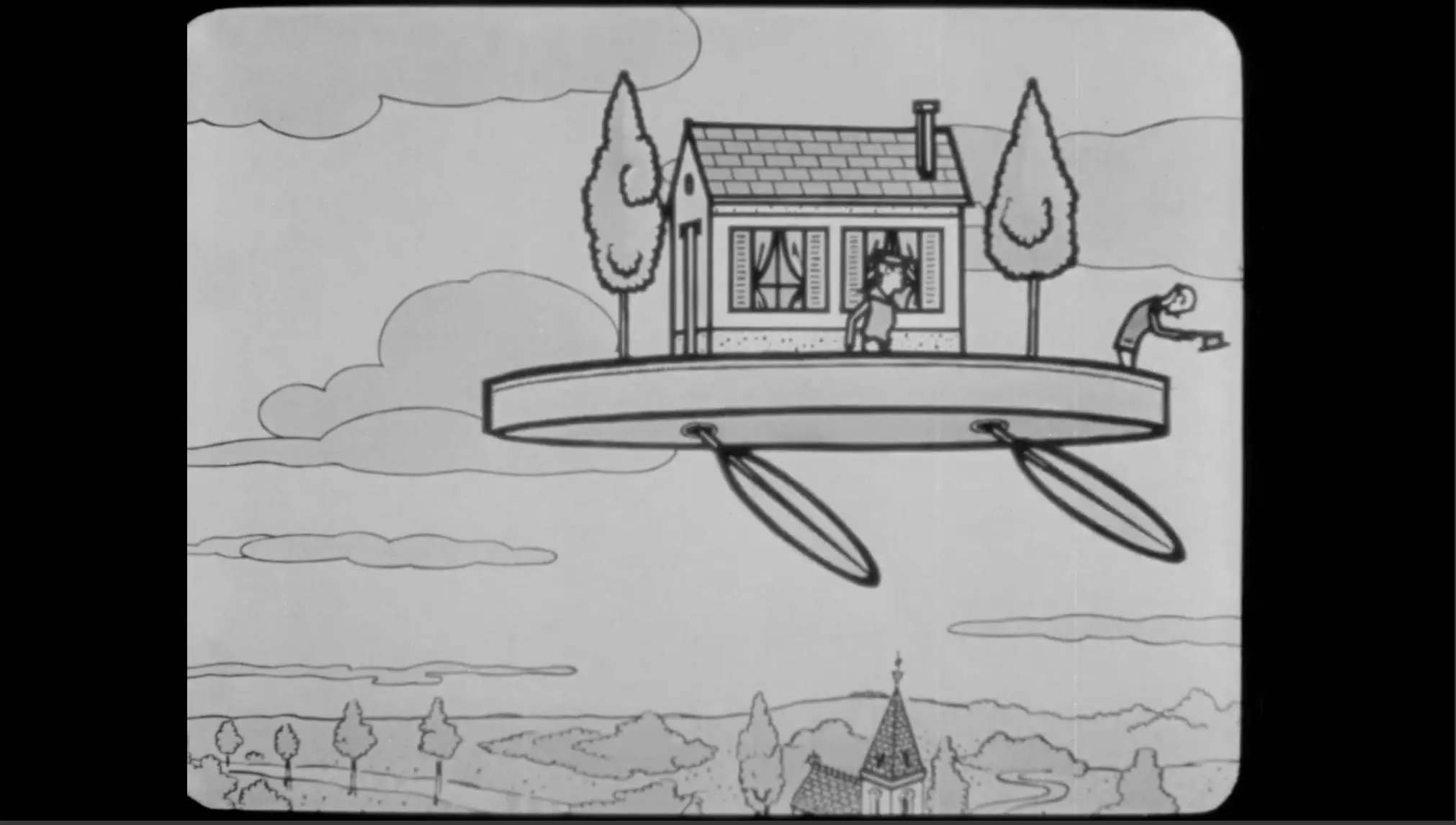
And yet, beneath the anarchy, a melancholy pulse: each time the house jettisons a piece of itself (a mantel clock, then a grandmother clock, then time itself), the men age a smidge—gray washes into their sideburns like tide-mark stains. The message, if one dares excavate: travel light or be lightened.
Comparative Constellations
Critics quick to liken the short to Speed’s adrenaline bus or The Zero Hour’s countdown fatalism miss the mark. Better to invoke Lost on Dress Parade’s sartorial surrealism or the Mephistophelian mischief of The Temptations of Satan. But even those feel earthbound. Le Voyage Abracadabrant occupies the same oneiric jet-stream that later ferries Malombra’s ghostly manor, only here the ghosts are still alive and flummoxed by their own ectoplasm.
Technically, the short is a Frankenstein of tricks: forced perspective miniatures, double-exposure clouds shot in a fish-tank, and what appears to be a vertical treadmill smeared with wet paint to create the illusion of perpetual sunrise. The shutter stutters—intentionally?—so motion arcs in Morse code dashes. When the house flips upside-down, the camera inverts but the tinting does not; the world turns amber while its inhabitants blanch, a chromatic coup that anticipates digital hue-twist by ninety-nine years.
Sound? None survives. Contemporary accounts mention a live trio (piano, squeezebox, toy drum) performing a galloping quadrille that collapses into Debussy-esque whole-tones whenever the cottage breaches a cloud bank. Today, silence amplifies the eeriness; you hear the squeak of your own iris dilating.
Gender & Gestation
Notably absent: women. The voyage is a bachelor bacchanal, a floating fraternity where even the teacups grow moustaches. This omission feels less misogynistic than ontological—the film posits a universe where maternity is replaced by levity itself. Yet late in the reel, a stowaway petticoat flutters across the screen, unattached to any body, like a gendered ghost reminding the duo what ballast they have surrendered. For a split second, the illusionist cradles it, eyes glistening with something that might be regret or indigestion.
In that moment, the short transcends whimsy and grazes the raw nerve of loneliness which propels all escapades.
History filed the film under “curio,” yet its DNA pirouettes through later cinema: the floating fortresses of Les grands, the anti-gravity heist in The Half Million Bribe, even the airborne suburbia of Miyazaki’s Howl. Most pertinently, the house reappears—uncredited—in the background of Blondes Gift’s final carnival scene, a subliminal Easter egg for attic-combers of celluloid.
But influence is a slippery eel. What endures is the film’s emotional theorem: that home is less a place than a conspiracy between memory and altitude. Strip it to beams and you’re left with a portal, not a prison.
Viewing Strategy for the 21st-Century Cine-Archaeologist
Track down the 4K restoration by La Cinémathèque de Toulouse (2019). Project it on a wall the size of a postage stamp—its native scale—and sit close enough to smell the nitrate ghosts. Pair with a glass of cold Sauternes; let the sweetness duel the film’s latent bitterness. Do NOT watch on a phone unless you wish to reduce a cathedral to a keyhole.
Masterpiece is too leaden a crown for this sprite of celluloid. Call it instead a conjurer’s handkerchief: yank it, and the universe hiccups. Le Voyage Abracadabrant is not a film you understand; it is a film that happens to you, like a sneeze or a sudden remembrance of a childhood smell. When the lights rise, you may find your own house slightly off its foundations, teetering on the brink of impossible lift. And that, mes amis, is the only review that matters.
IMDb —
1916
Community
Log in to comment.