DbcultAccessing Vault...
Cult Review
Senior Film Conservator
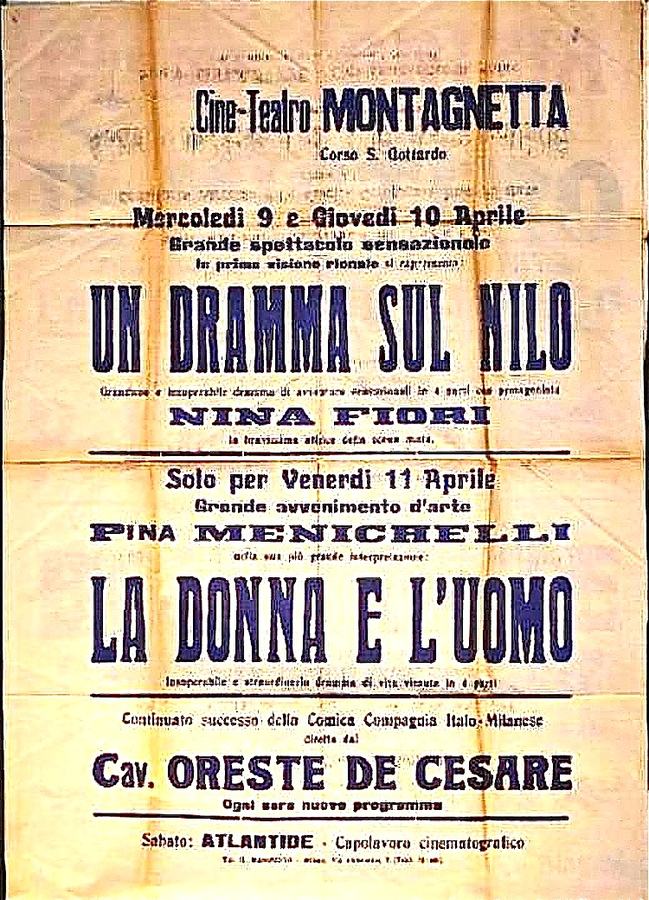
The cinematic lexicon of the early 1920s was not merely a primitive predecessor to modern talkies; it was a flourishing, sophisticated language of its own, reaching its zenith in the Italian 'diva' films. La donna e l'uomo, directed by the visionary Amleto Palermi, stands as a monumental testament to this lost era of grandiosity and profound psychological depth. In this film, we are invited to witness a spectacle that transcends the silent medium, utilizing the expressive power of the human face and the strategic use of shadow to convey complexities that words often fail to capture.
At the center of this orbit is the incomparable Pina Menichelli. To understand Menichelli is to understand the very soul of Italian silent cinema. Unlike the ethereal fragility of some of her contemporaries, Menichelli possessed a predatory, feline grace—a style often termed 'menichellismo.' In La donna e l'uomo, she navigates the screen with a calculated intensity that makes the viewer feel like an intruder in a private sanctuary of grief and desire. Her performance is a masterclass in the 'verismo' style, where every twitch of the lip and every mournful gaze is calibrated to evoke a visceral response.
Palermi, as the architect of this emotional landscape, demonstrates a remarkable grasp of pacing. While many films of this period, such as the later Roger la Honte, leaned heavily on the melodrama of plot twists, Palermi focuses on the internal architecture of his characters. He allows the camera to linger, creating a sense of intimacy that was revolutionary for its time. The collaboration with writer Robert Buchanan adds a layer of literary sophistication, ensuring that the dialogue intertitles are not merely functional but poetic, bridging the gap between the visual and the cerebral.
When we examine the thematic resonance of La donna e l'uomo, it is impossible not to draw parallels with other contemporary explorations of social standing and gendered agency. For instance, while The Black Chancellor deals with the crushing weight of institutional and political power, Palermi’s work focuses on the domestic and romantic spheres as the primary battlegrounds of existence. The 'Woman' and the 'Man' are locked in a dance that is as much about class as it is about sex.
The film shares a certain atmospheric DNA with Cordelia the Magnificent, particularly in its portrayal of a woman navigating a world designed by and for men. However, where Cordelia might find a sense of triumph, Menichelli’s character often finds a tragic, albeit noble, resignation. This is not to say the film is pessimistic; rather, it is honest about the limitations placed upon individuals by the societal mores of the 1920s.
The cinematography in La donna e l'uomo is nothing short of breathtaking. The use of light is particularly noteworthy, often employing a proto-noir aesthetic that predates the German Expressionist influence that would later dominate global cinema. The interiors are lush, filled with the heavy drapes and ornate furniture of the period, creating a sense of claustrophobia that mirrors the characters' emotional states. This visual density is a stark contrast to the more minimalist approach seen in works like Ain't Nature Wonderful?, which sought beauty in the pastoral rather than the psychological.
The supporting cast, including Alfredo Bertone and Milton Rosmer, provides a sturdy framework for Menichelli's pyrotechnics. Bertone, in particular, offers a nuanced portrayal of masculinity—one that is at once commanding and deeply flawed. His interaction with Menichelli creates a friction that drives the narrative forward, ensuring that the film never devolves into a mere character study but remains a compelling drama. The inclusion of Livio Pavanelli and Marcella Sabbatini adds further texture, representing the various social strata that the protagonists must navigate.
The plot itself, while ostensibly a tale of romantic entanglement, is actually a sophisticated critique of the double standards of the era. The 'Man' is allowed a degree of mobility and forgiveness that is strictly denied to the 'Woman.' This disparity is highlighted through a series of vignettes that showcase the mundane cruelties of high society. In this regard, the film feels surprisingly modern, echoing themes found in Other Men's Daughters, which also tackled the precarious nature of female reputation.
One cannot help but compare the gravitas of this production to the more lighthearted fare of the time, such as Skinner's Baby or the comedic stylings of The Midnight Cabaret. While those films served as escapist entertainment, La donna e l'uomo demands engagement. It asks the audience to look beneath the surface of the 'diva' archetype and see the human suffering that fuels the art. It is a film that rewards multiple viewings, as the subtle interplay of glances and the intricate set design reveal new layers of meaning upon every encounter.
As we look back from a century's distance, La donna e l'uomo remains a vital piece of cinematic history. It represents the pinnacle of the Italian silent tradition, a moment when the medium was fully aware of its power to move and provoke. While films like Fog Bound utilized mystery and atmosphere to captivate, Palermi’s work utilizes the raw human condition. It is a reminder that before there were special effects and surround sound, there was the human face, and in the hands of a performer like Pina Menichelli, that was more than enough.
The film's exploration of the 'battle of the sexes' is far more nuanced than the title might suggest. It does not offer easy answers or a comfortable resolution. Instead, it leaves the viewer with a sense of the profound isolation that can exist even within the closest of bonds. This thematic daring is what separates a mere movie from a work of art. It shares a certain kinship with The Challenge of the Law in its interest in the clash between personal desire and external codes of conduct.
In conclusion, La donna e l'uomo is a triumph of silent storytelling. It is a film that should be celebrated not just by historians, but by anyone who appreciates the power of visual narrative. The restoration of such works is crucial, for they contain the blueprints of modern drama. To watch Menichelli and Bertone under Palermi's direction is to witness the birth of the psychological thriller, the social drama, and the romantic epic all at once. It is a haunting, beautiful, and deeply resonant experience that continues to echo through the halls of cinema history, much like the legendary figures in Cuauhtémoc or the tragic arcs in Der Weg, der zur Verdammnis führt. It is, quite simply, essential viewing for the cinephile soul.
The film’s endurance is also a testament to the writers, Buchanan and Palermi, who managed to craft a story that feels universal. Whether compared to the historical weight of Jesse James Under the Black Flag or the romantic whimsy of In the Good Old Days, La donna e l'uomo carves out its own unique space—a space where the man and the woman are forever trapped in a beautiful, agonizing, and cinematically perfect embrace.
IMDb —
1934
Community
Log in to comment.