DbcultAccessing Vault...
6.6/10
Senior Film Conservator
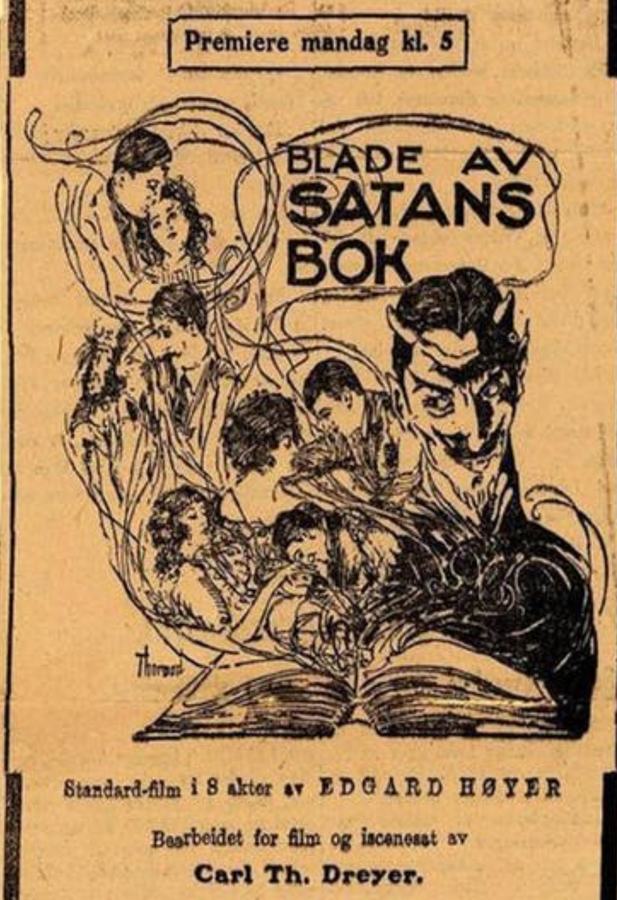
A definitive 6.6/10 rating for a film that redefined the boundaries of cult cinema. Leaves From Satan's Book remains a cornerstone of transgressive art.
Carl Theodor Dreyer's 1921 silent masterpiece, Leaves From Satan's Book, stands as an audacious and sprawling cinematic endeavor, a testament to the nascent art form's capacity for profound philosophical inquiry. Long before he would etch his name into the annals of film history with the searing intensity of The Passion of Joan of Arc or the chilling dread of Vampyr, Dreyer orchestrated this ambitious episodic narrative, a grand morality play spanning millennia, driven by the omnipresent, insidious hand of the devil himself. It’s a work that, even in its relative infancy within his filmography, clearly signposts the thematic preoccupations and aesthetic rigor that would define his legendary career.
The film's premise is deceptively simple yet laden with theological weight: Satan, having failed in his rebellion against God, is condemned to roam the Earth for a thousand years, his task to tempt humanity into sin, thereby proving mankind's inherent depravity. Each time he succeeds, a leaf is added to his infernal book; each time he is thwarted, a leaf is removed. This celestial wager frames four distinct historical vignettes, each a meticulous dissection of human frailty, fanaticism, and the enduring struggle between good and evil. Dreyer, even at this early stage, displays an uncanny ability to distill complex historical moments into intensely personal dramas, often focusing on the suffering and resilience of individuals caught in the maelstrom of larger forces.
The sheer scope of Leaves From Satan's Book is breathtaking, particularly for its era. It’s a film that demands sustained attention, inviting viewers not merely to observe but to reflect on the cyclical nature of human cruelty and redemption. Dreyer's decision to cast the same actor, Helge Nissen, as Satan across all four segments, albeit in different guises, provides a chilling continuity, a tangible thread of malevolence weaving through history. Nissen’s performance, particularly his piercing gaze and subtly sinister gestures, is a masterclass in silent film villainy, embodying the seductive power of evil rather than its overt monstrosity.
What truly elevates this film beyond a mere historical pageant is Dreyer's unwavering focus on the psychological toll of these conflicts. He is less interested in the grand sweep of battles and political maneuvering than in the intimate betrayals, the quiet acts of courage, and the devastating consequences of ideological rigidity. This humanistic core, even amidst tales of profound despair, is a hallmark of Dreyer's oeuvre, a commitment to exploring the inner lives of his characters with an almost surgical precision.
The film commences with the most iconic tale of spiritual endurance: the temptation of Jesus in the wilderness. Satan, disguised as a cunning Pharisee, offers the Messiah temporal power, vast kingdoms, and earthly glory, attempting to divert him from his divine path. The stark, sun-baked landscapes of Judea provide a minimalist backdrop, emphasizing the spiritual austerity of the encounter. Jesus, portrayed with quiet dignity, steadfastly rejects these worldly enticements, his resolve unshakeable. This segment, while brief, establishes the film’s central conflict: the eternal battle between spiritual purity and material corruption. Dreyer's direction here is restrained, relying on close-ups and the actors' profound expressions to convey the immense weight of the moment. It’s a powerful opening, setting a high bar for the moral dilemmas to follow.
The narrative then plunges into the terrifying crucible of the Spanish Inquisition, a period synonymous with religious fanaticism and brutal persecution. Here, Satan assumes the guise of the Grand Inquisitor, his malevolent influence subtly guiding the hands of torturers and judges. The story centers on a young woman, accused of witchcraft, and her family, caught in the relentless machinery of zealotry. The visual language shifts dramatically, from the open desert to claustrophobic, shadow-drenched chambers where accusations are hurled, confessions coerced, and innocent lives extinguished on the pyre. Dreyer doesn't shy away from depicting the horrors, though often through implication and the visceral reactions of his characters, particularly Clara Pontoppidan, whose portrayal of the accused woman is heartbreaking in its vulnerability and quiet defiance. This segment is a searing indictment of institutionalized cruelty and the perversion of faith, a theme Dreyer would revisit with even greater intensity in Day of Wrath decades later. The sheer injustice, the arbitrary nature of the accusations, and the unyielding dogma make this perhaps the most emotionally harrowing chapter.
From the religious fervor of Spain, we are thrust into the political maelstrom of the French Revolution. Satan, now a charismatic yet treacherous revolutionary leader, manipulates the passions of the sans-culottes, turning ideals of liberty and equality into a bloody reign of terror. The focus here is on a noblewoman and her family, whose loyalties are tested and ultimately betrayed by a former servant swayed by Satan's poisonous whispers. The guillotine becomes a chilling symbol of revolutionary excess, a device of swift, merciless justice that consumes both the guilty and the innocent. Dreyer masterfully captures the volatile atmosphere of revolutionary Paris, the frenzied crowds, and the tragic irony of a movement that promised liberation but delivered widespread carnage. The segment explores the dark side of populism and how easily noble intentions can be corrupted by power and mob mentality, leading to fratricidal violence and profound personal loss. The shift from individual suffering to societal upheaval, yet still anchored by personal tragedy, demonstrates Dreyer's narrative dexterity.
The final episode brings us to the contemporary setting of the 1918 Russo-Finnish War, a conflict steeped in nationalistic fervor and ideological clashes. Satan, disguised as a callous Red Guard commander, exploits the brutal realities of war, inciting betrayal and suffering amidst the snow-swept landscapes of Finland. The story follows a young Finnish woman, a telegraph operator, who demonstrates remarkable courage and patriotism in aiding her countrymen against the Russian invaders. Her heroism is contrasted with the treachery instigated by Satan, leading to a poignant tale of sacrifice and resilience. This segment, perhaps the most overtly nationalistic, still retains Dreyer's signature emphasis on individual moral choices and the profound impact of conflict on ordinary lives. The bleak, frozen landscapes underscore the harshness of war, and the quiet determination of the Finnish people offers a glimmer of hope amidst the pervasive darkness. It's a powerful conclusion, suggesting that even in the face of overwhelming evil, the human spirit can exhibit extraordinary strength and selflessness.
Beyond the compelling individual narratives, Leaves From Satan's Book functions as a profound meditation on the nature of evil itself. Is Satan merely an external force, a tempter from without, or is he a manifestation of humanity's inherent flaws, an amplifier of our greed, fear, and desire for power? Dreyer, in his characteristic ambiguity, allows the audience to ponder this question. The film suggests that while Satan may whisper in our ears, the ultimate choice to succumb to malevolence or uphold virtue rests with humanity. Each episode vividly illustrates how easily societal structures, be they religious, political, or military, can be co-opted and corrupted when individuals surrender to their baser instincts.
The performances, while characteristic of the silent era's often theatrical stylings, possess a raw intensity that Dreyer would hone in his later works. Elith Pio as Jesus conveys a serene strength, while Clara Pontoppidan’s turn in the Inquisition segment is a masterclass in silent screen anguish, her expressive face conveying volumes of fear and defiance. Helge Nissen's Satan is truly memorable, a figure of sophisticated malevolence rather than pantomime villainy, lending a chilling credibility to the devil's pervasive influence throughout history. His subtle smiles and knowing glances are far more unsettling than any grand pronouncements.
Visually, the film is a fascinating precursor to Dreyer's mature style. While perhaps lacking the extreme close-ups and minimalist sets of The Passion of Joan of Arc, there are clear indications of his developing aesthetic. The use of stark lighting in the Inquisition scenes, creating dramatic chiaroscuro effects, foreshadows his later mastery of visual tension. The composition of crowd scenes in the French Revolution is dynamic and chaotic, effectively conveying the fervent energy and danger of the period. Even the bleak, expansive landscapes of the Finnish segment contribute to the film's overall sense of grandeur and human insignificance in the face of larger forces.
The episodic structure, while ambitious, occasionally leads to a slight unevenness in pacing, a common challenge for such sprawling narratives. However, the thematic through-line of Satan's relentless pursuit of human souls provides a powerful unifying force. The film's conclusion, with Satan's thousand-year sentence finally expiring and a symbolic leaf being removed from his book, offers a nuanced, almost melancholic resolution. It's not a triumphant victory of good over evil but rather a quiet acknowledgment of humanity's enduring capacity for both profound cruelty and unwavering resilience.
Leaves From Satan's Book is more than just an early work by a master filmmaker; it is a significant achievement in silent cinema in its own right. Its thematic ambition, its historical scope, and its unflinching examination of human nature set it apart. It challenges viewers to confront uncomfortable truths about faith, power, and the ease with which societies can descend into barbarism. For those interested in the evolution of cinematic storytelling, particularly the philosophical and ethical dimensions that film can explore, this is an indispensable viewing experience.
Dreyer's film, despite its age, remains remarkably potent. Its exploration of universal themes ensures its continued relevance. The struggle against temptation, the dangers of unchecked zealotry, the fragility of revolutionary ideals, and the sacrifices demanded by war are not confined to specific historical periods; they are perennial human concerns. In this sense, Leaves From Satan's Book serves as a timeless cautionary tale, a stark reminder of the eternal vigilance required to safeguard human dignity against the insidious whispers of malevolence, whether they emanate from a supernatural entity or from the darker recesses of the human heart. It is a work that demands contemplation, rewarding those who delve into its layered narratives with a deeper understanding of the human condition and the enduring power of cinematic art to illuminate it.
IMDb —
1919
Community
Log in to comment.