DbcultAccessing Vault...
6.1/10
Senior Film Conservator
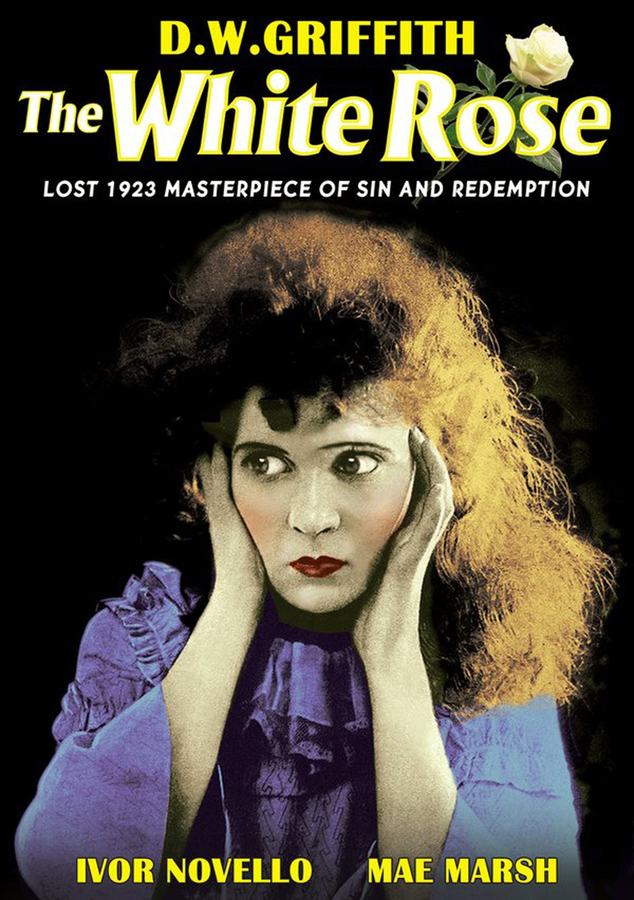
A definitive 6.1/10 rating for a film that redefined the boundaries of cult cinema. The White Rose remains a cornerstone of transgressive art.
D.W. Griffith. The name alone conjures images of epic scale, pioneering cinematic techniques, and, often, a complex legacy. In 1923, as the silent era was reaching its zenith, Griffith brought forth ‘The White Rose’, a film that, while perhaps not as widely discussed as some of his grander historical epics, nonetheless offers a profoundly intimate and often devastating look at class, innocence, and the unforgiving machinery of societal judgment. This isn't a film that bombards the senses with battle scenes or sweeping historical panoramas; instead, it delves into the quiet, internal struggles of its characters, exposing the hypocrisies simmering beneath the polite veneer of early 20th-century American society. It’s a testament to Griffith’s enduring ability to craft narratives that resonate with universal human truths, even when cloaked in the melodrama of the era.
At its core, 'The White Rose' presents a narrative arc that feels both timeless and deeply rooted in its period. We are introduced to Joseph, a scion of Southern wealth and privilege, portrayed with a captivating blend of earnestness and naiveté by Charles Emmett Mack. Joseph is on the cusp of entering the ministry, a path chosen for him as much by expectation as by genuine calling. Yet, before he fully commits to this cloistered life, a restless curiosity compels him to seek out the 'real world' – a concept often romanticized by those who have never truly had to contend with its harsher realities. This decision, seemingly innocuous, sets in motion a chain of events that will irrevocably alter his destiny and that of a young woman far removed from his gilded existence.
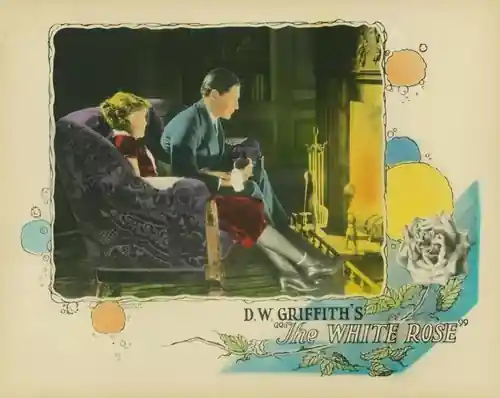
Joseph's odyssey leads him to the vibrant, often chaotic, streets of New Orleans, a city teeming with life and stark contrasts. It is here that he encounters Bessie, an orphaned girl whose life has been anything but privileged. Mae Marsh, in a role that perfectly showcases her remarkable ability to convey vulnerability and unvarnished emotion, embodies Bessie. Marsh, a frequent collaborator with Griffith in films like ‘Scarlet Days’, brings a delicate fragility to Bessie, making her an immediate object of both sympathy and concern. Her unsophisticated charm and guileless nature are a stark counterpoint to Joseph's academic understanding of humanity. Their attraction is born not of shared experience, but of a magnetic pull between opposites – his intellectual curiosity about the 'other half' and her longing for kindness and connection.
The burgeoning relationship between Joseph and Bessie is depicted with a tender melancholy that is characteristic of Griffith's more sensitive works. It's not a tale of cynical seduction, but rather one of youthful indiscretion and a profound misunderstanding of consequences, particularly on Joseph's part. He, shielded by his upbringing, fails to grasp the profound implications of his actions on someone as vulnerable as Bessie. The inevitable discovery of Bessie's pregnancy casts a long, dark shadow over their nascent romance, shattering the illusion of a carefree escape and forcing both characters to confront the harsh realities of a society that is quick to judge, particularly its women. This pivotal moment is handled with a stark realism that avoids sensationalism, focusing instead on the emotional devastation and societal ostracism that Bessie faces.
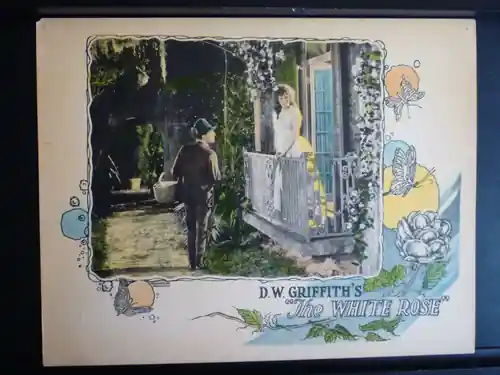
Griffith, ever the social commentator, uses Bessie's plight to shine a harsh light on the hypocrisy and double standards prevalent in society. While Joseph, a man of means and presumed moral rectitude, can potentially escape the full brunt of public condemnation, Bessie, a poor, unattached woman, is left to bear the shame and consequences alone. This theme of social injustice, particularly against women, echoes through much of Griffith's oeuvre, from his early melodramas to more ambitious projects. It's a recurring motif that finds particular poignancy in 'The White Rose', where the 'white rose' itself, a symbol of purity, becomes stained by circumstance, not inherent vice.
The supporting cast further enriches this tapestry of human experience. Lucille La Verne, a formidable presence, likely imbues her character with a stern, perhaps judgmental, sensibility that reflects the prevailing social attitudes. Neil Hamilton and Ivor Novello, both actors of considerable charisma, contribute to the ensemble, potentially embodying figures of contrasting moral compasses or representing the societal pressures that bear down on Joseph. The interplay between these characters creates a microcosm of a society grappling with its own moral contradictions, where compassion often takes a backseat to convention. One might draw parallels to the moral dilemmas explored in films like ‘Redemption’, where characters also face profound personal and societal reckonings.
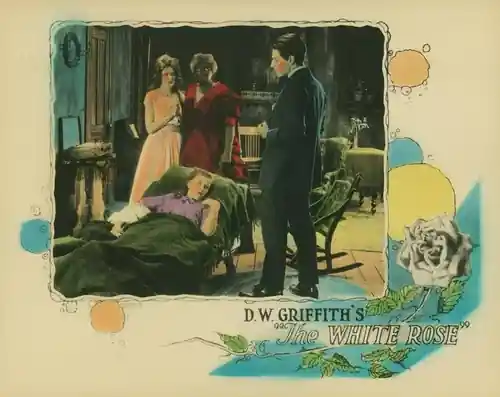
D.W. Griffith's directorial genius is evident throughout 'The White Rose'. His command of cinematic language, honed over years of pioneering work, allows him to convey complex emotions and intricate plot points without a single spoken word. He utilizes close-ups to draw the audience into the characters' inner worlds, making Mae Marsh's expressive face a canvas for Bessie's despair and resilience. The pacing, a hallmark of Griffith's style, ebbs and flows, building tension through slow, deliberate shots before accelerating into moments of dramatic intensity. His use of cross-cutting, a technique he virtually invented, creates a sense of urgency and connection between disparate narrative threads, even if less overtly used for grand parallel actions than in epics like ‘J'accuse!’ (though that was Gance, Griffith's contemporary). Here, it serves to underscore the emotional distance and eventual collision of Joseph and Bessie's worlds.
The film's visual style, while perhaps not as opulent as some of Griffith's more lavish productions, is nonetheless meticulously crafted. The contrasts between the opulent settings of Joseph's upbringing and the grittier, more lived-in environments of New Orleans are sharply drawn, visually reinforcing the class divide that underpins the narrative. The cinematography effectively uses light and shadow to create mood, enhancing the emotional weight of key scenes. One can observe a subtle evolution in Griffith's aesthetic here, moving towards a more nuanced visual storytelling that relies less on grand gestures and more on psychological depth. The film's aesthetic is far removed from the more experimental German Expressionism seen in films like ‘The Burning Soil’, opting instead for a classical American realism.

The performances in 'The White Rose' are, as expected from a Griffith production, exceptional, particularly from his favored players. Mae Marsh's portrayal of Bessie is nothing short of heartbreaking. Her ability to convey vulnerability, innocence, and ultimately, a quiet strength, without the aid of dialogue, is a masterclass in silent film acting. Every gesture, every flicker of expression across her face, communicates volumes, drawing the audience into Bessie's desperate struggle for dignity and survival. She embodies the 'white rose' tarnished by circumstance, yet still retaining an inherent purity.
Charles Emmett Mack, as Joseph, navigates the treacherous waters of youthful arrogance and dawning realization with considerable skill. His journey from sheltered idealist to a man confronted by the severe repercussions of his actions is compelling. He manages to evoke sympathy even as his character makes questionable choices, highlighting the complexities of moral awakening. The film deftly avoids painting him as a one-dimensional villain, instead portraying him as a product of his environment, albeit one who must ultimately face accountability.
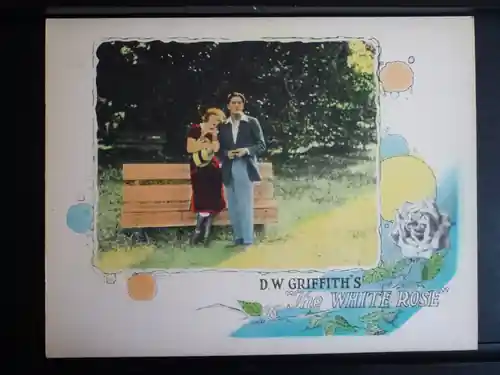
The presence of seasoned actors like Lucille La Verne adds significant gravitas. Her powerful, often stern, screen presence would have lent authenticity to the societal forces at play. Similarly, the contributions of Ivor Novello and Neil Hamilton, both prominent figures of the era, would have added layers to the intricate web of relationships and societal pressures. While we don't have the specific role assignments for all, their inclusion in a Griffith film signifies their importance to the narrative's emotional weight and thematic exploration. Even smaller roles, often filled by familiar Griffith players like Kate Bruce or Porter Strong, contribute to the authentic texture of the film, much like the ensemble work in a contemporary film like ‘Aus den Memoiren einer Filmschauspielerin’, though with a different dramatic sensibility.
Beyond the immediate plot, 'The White Rose' engages with profound themes of morality, redemption, and the true meaning of Christian charity. Joseph's journey is, in many ways, a spiritual one, forcing him to confront the chasm between theoretical piety and practical compassion. The film subtly critiques the institutional church's potential detachment from the very real suffering of its parishioners, particularly those on the fringes of society. It asks whether true faith lies in adherence to dogma or in acts of genuine empathy and responsibility. This questioning of institutional morality versus personal ethics resonates with the spirit of other profound dramas of the period, albeit with Griffith's unique touch.
The film's exploration of redemption is not facile. It suggests that true atonement requires more than mere regret; it demands action, sacrifice, and a willingness to dismantle one's own privilege in the service of justice. Bessie's quiet suffering and resilience, in turn, become a catalyst for Joseph's transformation, forcing him to shed his aristocratic sensibilities and embrace a more humble, human understanding of his place in the world. This narrative arc, while melodramatic by modern standards, was deeply impactful for audiences of its time, offering both a cautionary tale and a glimmer of hope for moral awakening.
While not as overtly political as some of Griffith's earlier, more controversial works, 'The White Rose' still carries a potent social message. It is a plea for understanding across class lines, a lament for lost innocence, and a critique of the harsh judgments meted out by a society often more concerned with appearances than with genuine human welfare. The film stands as a testament to Griffith's versatility, proving that his mastery extended beyond grand spectacles to the delicate nuances of human drama. It reminds us that sometimes the most profound stories are found not in the clash of nations, but in the quiet, desperate struggles of individual hearts.
In conclusion, 'The White Rose', despite its relative obscurity compared to Griffith's magnum opuses, remains a vital piece of cinematic history. It showcases the director at his most empathetic, crafting a narrative that is both emotionally gripping and intellectually stimulating. The performances, particularly from Mae Marsh and Charles Emmett Mack, are indelible, breathing life into characters who embody universal struggles. For enthusiasts of silent cinema, or anyone interested in the social commentary embedded within early film, 'The White Rose' offers a rich and rewarding viewing experience. It's a poignant reminder of the enduring power of film to explore the human condition, to challenge societal norms, and to elicit profound empathy, even a century after its initial release. It’s certainly more than just a fleeting diversion like ‘What a Whopper!’ or a simple comedy like ‘Give Her Gas’; it’s a film that lingers, prompting reflection long after the final intertitle fades.

IMDb 5.5
1936
Community
Log in to comment.