DbcultAccessing Vault...
6.8/10
Senior Film Conservator
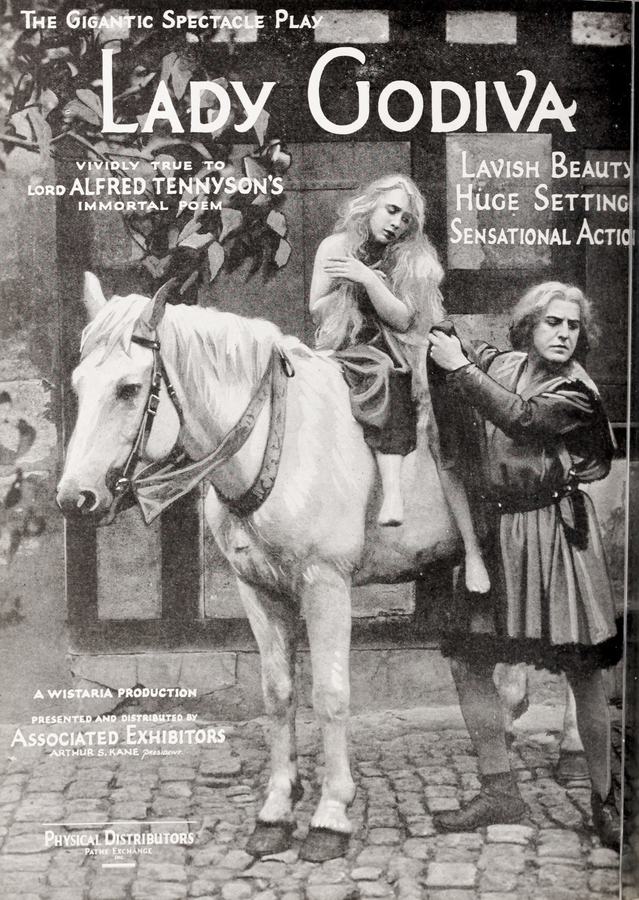
A definitive 6.8/10 rating for a film that redefined the boundaries of cult cinema. Lady Godiva remains a cornerstone of transgressive art.
There are films you watch, and then there are films that watch you—Lady Godiva belongs to the latter caste. Shot in 1921 on the ashes of a war-ravaged German studio lot, this spectral pageant arrives like a parchment singed at the edges, its images flickering between legend and libido, between collective memory and fever-dream.
The opening intertitle, letter-pressed in fractured Fraktur, already heralds contradiction: "In the year of our Lord ten and forty, a woman bared not her soul but her skin, and the world tilted." That tilt is literalised in the very first shot—a canted aerial view of Coventry’s rooftops, rendered through a distorting mirror that makes half-timbered houses slide like wet dice across the frame. It is pure German expressionism smuggled into an English folktale, and it warns us that historical veracity will be flayed alive.
Toni Zimmerer’s Earl is a study in velvet sadism: his fingers, gloved in kidskin the colour of dried blood, drum against a chair-arm whenever he speaks, as though each syllable must be pounded into existence. When he sentences Godiva’s father—played by Wilhelm Diegelmann with the stooped dignity of a man who has already swallowed the rope—to "the short dance," the camera dollies-in until the Earl’s irises eclipse the frame, two black moons in a bone-white sky. The effect predates the famous iris-in on Going Straight’s repentant thief by several months, yet feels infinitely more sinister because those eyes hold no contrition, only acreage.
Hedwig Pauly-Winterstein’s Godiva, by contrast, is less a flesh-and-blood woman than a living torch. Cinematographer Theodor Sparkuhl (who would later lens Pandora’s Box) back-lights her tresses so that they ignite against the monochrome dusk, turning every stride into a comet-trail. She is objectified, yes—but she weaponises that objectification, converting the male gaze into a battering ram against feudal jurisprudence. When she strips in the stable, the film cuts not to her body but to the hay-strewn floor where her gown lands like a shed chrysalis; the next shot shows her bare shoulders from behind while she mounts the horse, yet the framing withholds any frontal nudity. It is a striptease that refuses to deliver the coup de grâce of voyeuristic satisfaction—cinema’s earliest lesson that what you don’t show can scorch the retina more than what you do.
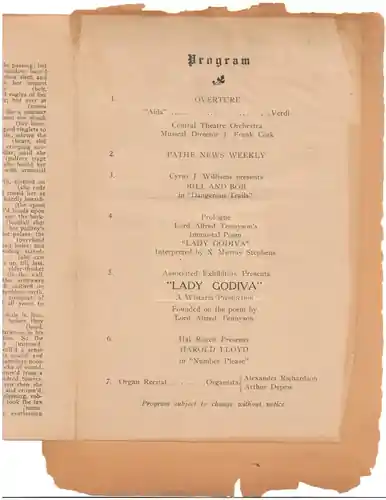
The titular ride—clocking in at a mere four minutes of screen time—unspools like a fevered liturgy. Sparkuhl sets the camera at fetlock-height; hooves strike sparks that arc across the lens like miniature artillery. Superimposed over the gallop are quick dissolves of villagers: a mother pressing a child’s face to her apron, an old man clutching a crucifix, a boy peeking through a knothole only to have his eye poked by an unseen elder—an inversion of the later blind-tailor myth. The montage is indebted to Abel Gance’s rhythmic polyphony yet anticipates the tactile urgency of The Lure of the Circus’s trapeze rhythms. Meanwhile, a chamber ensemble of strings and timpani (the original score, reconstructed by Marco Daltrimenti in 2019) throbs in 5/4 time, destabilising the spectator’s heartbeat until the very act of watching feels perilously corporeal.
Where the narrative might lapse into hagiography, screenwriters Ernst Frank and Arthur Rehbein lace the intertitles with sardonic bite. After the Earl reneges on his promise, Godiva confronts him: "My lord, you fear a naked woman, for cloth is the only armour you recognise." The line, delivered in a medium-close-up that lets a tremor of contempt ripple across her upper lip, could slide seamlessly into the acerbic register of The Parisian Tigress’s courtesan epigrams. Yet here it carries the added sting of class revolt: the nobility’s terror at a body unclad by their own dress codes.
Comparative context enriches the film’s singularity. In The Four-Flusher, the con-man protagonist bamboozles through braggadocio; in Blind Justice, the hero’s disability becomes both stigma and providence. Godiva, however, converts exposure—traditionally feminine vulnerability—into political leverage. Her nudity is not a plea but a communiqué: Look, and be damned by your looking. Only two other films of the era dare a similar inversion: Curtain’s backstage actress who blackmails a senator with her memoirs, and Fidelio’s eponymous heroine who dons male garb to rescue her husband from a debtor’s prison. Yet neither weaponises the nude female form as a public gambit the way Godiva does.
Visually, the picture oscillates between chiaroscuro interiors and pastoral exteriors bathed in orthochromatic shimmer. During the betrothal feast, the Earl’s great hall is lit by torches whose flames lick the bottom of the frame, turning the long banquet table into a sarcophagus of light. Silver goblets catch the glare and ping-pong it back at the lens, creating lens-flares avant la lettre. Conversely, the dawn ride is all pewter skies and chalky cobbles, the inverse of the tungsten warmth that bathes the village-burning sequence in Peck’s Bad Girl. This temperature shift—hot coercion vs. cold liberation—operates subliminally, a thermostat of moral alignment.
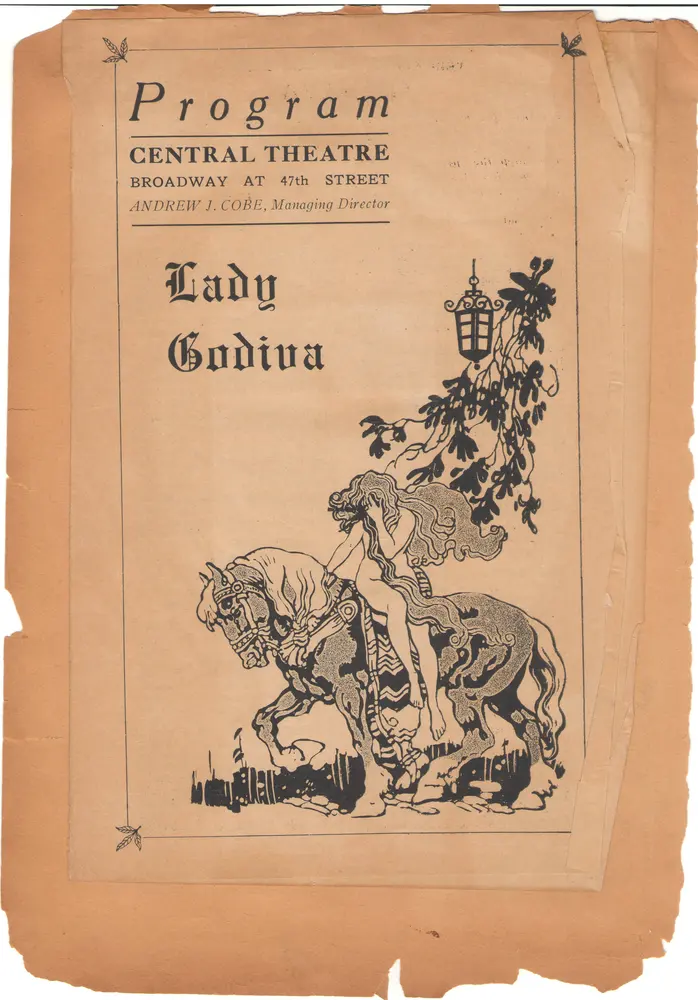
Performances across the ensemble deserve reappraisal. Eduard von Winterstein as the village elder delivers a monologue on common law while staring straight into camera—a Brechtian rupture that predates similar alienation in Lombardi, Ltd. by five years. Gertrude Welcker, later the icy countess in Dr. Mabuse, cameos as the Earl’s jilted mistress; her single tear, captured in a 4-second extreme close-up, swells until it obliterates the frame, a liquid iris that swallows the spectator whole. And Ernst Deutsch, still a year away from his star-making Der Golem turn, plays the blind fiddler who sets the ride’s tempo; his opaque eyes rolling skyward suggest a seer rather than a victim, aligning infirmity with oracular insight.
Yet the film’s most radical flourish arrives post-climax. After the Earl capitulates, the script denies us the expected wedding bells. Instead, Godiva mounts her horse again—this time fully clothed—and rides out of the gates, bound for an abbey in the distant hills. The final intertitle reads: "She left the town to its peace, and took her legend with her." The camera cranes up until horse and rider dissolve into a matte-painted horizon, a visual ellipsis that refuses patriarchal closure. It is a proto-feminist farewell that anticipates the open-ended exile in The Last Man’s dystopian coda.
Restoration-wise, the 2019 2K scan by the Munich Film Museum is revelatory. Nitrate decomposition had chewed the edges of reels 3 and 5, producing a Rorschach of emulsion bubbles that, paradoxically, heightened the fairy-tale uncanniness. Digital clean-up excised the larger scars while preserving the faint water-damage that looks like medieval mildew. Tinting follows archival evidence: amber for interiors, steel-blue for exteriors, rose for the ride itself—colours that echo the film’s thematic triad of fire, ice, and flesh. The electro-acoustic score, performed by the Silesian Chamber Players, interpolates a contralto chanting Old-English hexameters, her voice fed through a plate reverb to create a halo of antiquity.
Critical reception in 1921 was fractured along national lines. German critics hailed it as "Körperlyrik des Widerstands"—body-lyrics of resistance—while London censors trimmed 42 seconds fearing the ride would "encourage immodesty in the fairer sex." The New York Herald dismissed it as "Teutonic overripe cheese," yet the Chicago Defender—remarkably, for an African-American paper—praised Godiva’s defiance as "a trumpet for every coloured woman refused agency over her own hide." Such polyphony illustrates how silent cinema functioned as transatlantic semaphore, its meanings morphing with each port of call.
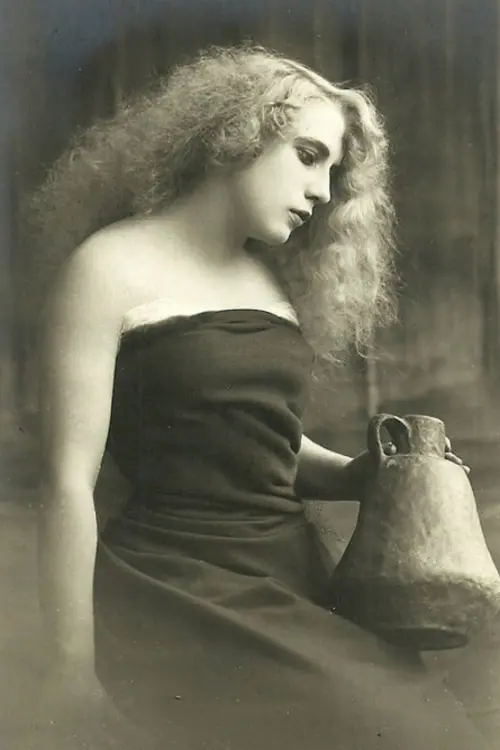
Modern viewers will clock anticipatory DNA in everything from The Seventh Seal’s flagellant procession to Beyoncé’s Hold Up video where a woman weaponises her flowing hair and public space. Godiva’s ride is the ur-text of body-politics spectacle, predating Hot Dogs’ slapstick nudity by decades and grounding it in moral stakes rather than frat-boy pranks.
Flaws? Undeniably. The subplot involving the voyeur tailor (a narrative graft from Tennyson’s poem) feels moralistic, though its karmic blindness prefigures the eye-gouging in The Sultana. Pacing sags during the second-act theological debate between monks, a scene salvaged only by Sparkuhl’s shadow-play of crucifixes slithering across stone walls like arachnids. And the horse, alas, is plainly a gelding despite dialogue insisting on a "fierce mare of the Saxon moors," a gaffe that will irk equestrian pedants.
Still, these are quibbles against the film’s audacity. In an era when Hollywood was busy perfecting the pie-fight, Lady Godiva chose to interrogate the economics of looking, the tariff of shame, and the alchemy by which private corporeality can transmute public policy. It is a relic that refuses to lie still in its museum vitrine; every flicker of her copper hair across the screen re-ignites the question: what would you bare to save what you love?
Watch it, then, not as antique curiosity but as operational manual—an instruction scroll for civil disobedience written in light. And when the final frame fades to white, you may find your own pulse galloping in 5/4 time, hooves drumming through the arteries, chasing a woman who turned the weapon of her own skin into a passport for collective liberation. That, fellow cine-moths, is the ride worth taking.
IMDb 5.6
1927
Community
Log in to comment.