DbcultAccessing Vault...
5/10
Senior Film Conservator
A definitive 5/10 rating for a film that redefined the boundaries of cult cinema. The Pit remains a cornerstone of transgressive art.
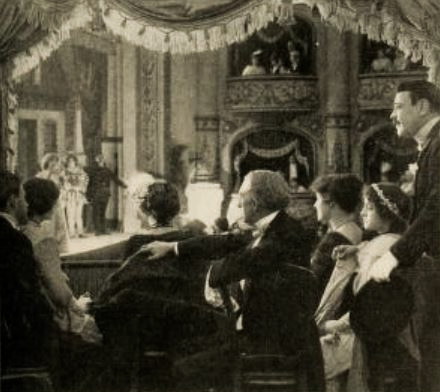
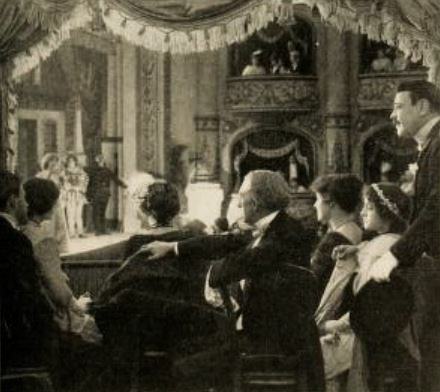
The camera glides across the Chicago Board of Trade like a moth drawn to a lethal lantern: brass rails gleam, clerks scurry in choreographed frenzy, chalk screeches against slate, and somewhere inside that cathedral of probability Curtis Jadwin’s pulse syncs with the flickering of price boards. Wilton Lackaye plays him as a man who has mistaken the market’s adrenaline for libido, his eyes widening with every uptick until they become twin zeroes—vacant yet magnetic. The film, released in the anxious twilight of 1920 when America still tasted wartime rationing on its tongue, translates Frank Norris’s muckraking novel into pure visual cantata: no intertitles waste time moralizing; instead we read lips, brows, the tremor of gloved fingers. When Jadwin first corners Laura at the opera house during the soldiers’ chorus, the camera frames them between velvet drapes, trapping them in a proscenium within a proscenium—life as perpetual performance.
Gail Kane’s Laura is no wilting ingénue; she is a woman who has learned that beauty can be a negotiable security. Notice how she removes her gloves—one finger at a time—while Corthell sketches her in his atelier. The act feels more profane than any bodice-ripping tableau modern viewers expect from silent melodrama. Milton Sills, all angular cheekbones and paint-stained cuffs, embodies art as sedition: his studio is littered with canvases slashed by palette knives, a mute prophecy of the emotional shrapnel to come. Their near-elopement is staged aboard a night ferry, Lake Michigan heaving like black marble; the ship’s horn bellows, a carnal surrogate for words they dare not speak.
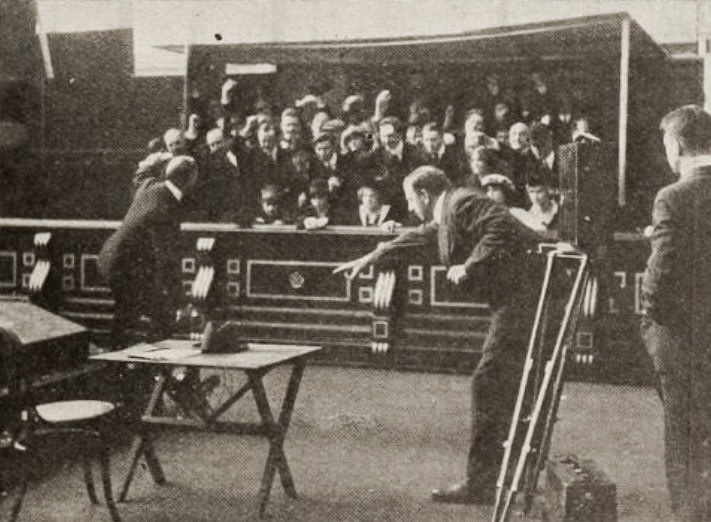
Channing Pollock’s screenplay jettisons Norris’s labor-rights subplot, yet class fissures seep through every seam. Jadwin’s mansion—three stories of Beaux-Arts arrogance—looms over a street where newsboys sleep atop grain sacks. During the famous “wheat corner” sequence, the film cross-cuts between Laura descending a grand staircase in a gown the color of polished wheat, and haggard farmers watching their livelihoods evaporate. The montage anticipates Eisenstein by at least five years, though history books rarely grant this small-scale production such lineage.
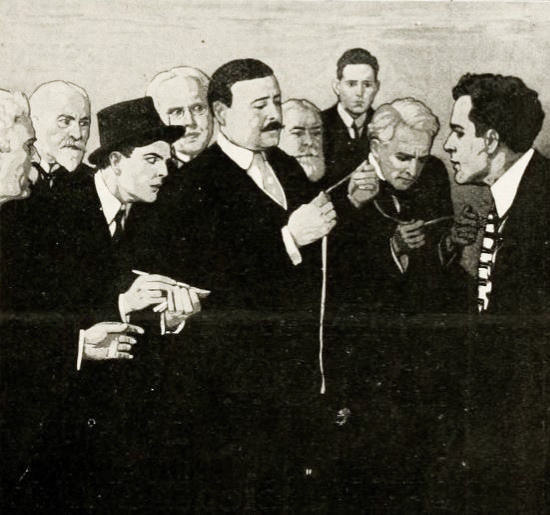
Visually, the picture is a study in chromatic anxiety: interiors drenched in umber shadows, exteriors bleached by Midwestern winter that turns breath into crystal. Cinematographer George K. Hollister exploits orthochromatic film’s sensitivity to blue: Laura’s teal negligee glows like a wound amid the graphite grays, while burlap wheat bags shimmer almost spectrally. When ruin arrives, the palette desaturates until human skin and marble columns share the same cadaverous pallor—a masterclass in letting production design leak into character psyche.
Alec B. Francis, as the weathered broker Cressler, deserves a lion’s share of laurels. Watch how he enunciates market jargon with the weary cadence of a preacher who no longer believes in salvation yet can’t stop sermonizing. In one devastating close-up he removes his pince-nez; the lenses catch the reflection of plummeting prices like twin suns collapsing. It is a moment worthy of the iconographic anguish found in Pathé’s 1903 tableaux, yet freighted with modernist cynicism.
The picture’s detractors—mostly 1921 trade papers—complained of “over-plotting.” True, the narrative hurtles from ballroom to wheat pit to boudoir with barely a gasp, but that velocity is the point. Capital itself never pauses for reflection; neither should a story about its intoxications. The abrupt denouement—Laura cradling bankrupt Jadwin as ticker tape drifts like snow—feels neither redemptive nor nihilistic, only inevitable. Compare it to King Vidor’s The Crowd (1928) and you’ll spot the same existential shrug, albeit eight years earlier and without studio-imposed uplift.
Performances oscillate between declarative mime and startling intimacy. Lackaye’s collapse in the exchange washroom—he sobs into a monogrammed towel while a janitor impassively mops around him—achieves a rawness that silents rarely attempted. Kane matches him: her farewell letter to Corthell is recited via intertitle, yet her eyes, filmed in lingering iris shot, confess a polyphony of regret, contempt, and self-disgust. The cumulative effect is the polar opposite of the bawdy exuberance of Nell Gwynne; here desire is a balance sheet where every asset is offset by liability.
Compositionally, the film borrows from Edgar Degas’ ballet pictures: characters frequently appear off-center, hemmed by diagonals of stair rails or elevator grilles. One memorable overhead shot peers down the trading pit, transforming jostling speculators into a swirling vortex—a human maelstrom presaging stock-market crashes both fictive and historical. The influence of Attack on the Gold Escort’s kinetic editing is evident, though The Pit swaps outdoor dynamism for claustrophobic interiority.
Musical accompaniment in surviving prints varies by archive; MoMA’s 35 mm restoration features a commissioned score that fuses ragtime piano with atonal strings, evoking the dissonance between Gilded Age opulence and proto-Modernist unease. For home viewing, I recommend syncing Max Richter’s “Infra”—its elegiac minimalism dovetails uncannily with the film’s pulse.
Feminist readings flourish: Laura’s body is commodified—first by Corthell’s brush, then by Jadwin’s ring, finally by her own reluctant agency. Yet the film refuses to sanctify her suffering. When she spurns Corthell at the eleventh hour, the moment lands less as moral victory than capitulation to the same market logic that toppled her husband—she trades passion for liquidity, a transaction as pitiless as any on the trading floor.
Censorship boards in both Boston and Chicago demanded trims, ostensibly for “suggestive situations.” Lost footage likely included a lingering kiss aboard the ferry and a shot of Laura’s bare shoulder as Corthell removes her cloak. Such prudish cuts, lamentable though they are, inadvertently heighten the film’s erotic charge: what remains is a choreography of glances and silences more incendiary than any explicit tableau.
Comparative context: if The Pawn of Fortune treats money as capricious matchmaker, The Pit treats it as metastasized libido. Its DNA can be traced through to Days of Heaven’s wheat-field inferno and the algorithmic skulduggery of Margin Call. Yet few descendants match the original’s tactile gloom—film stock itself seems to perspire.
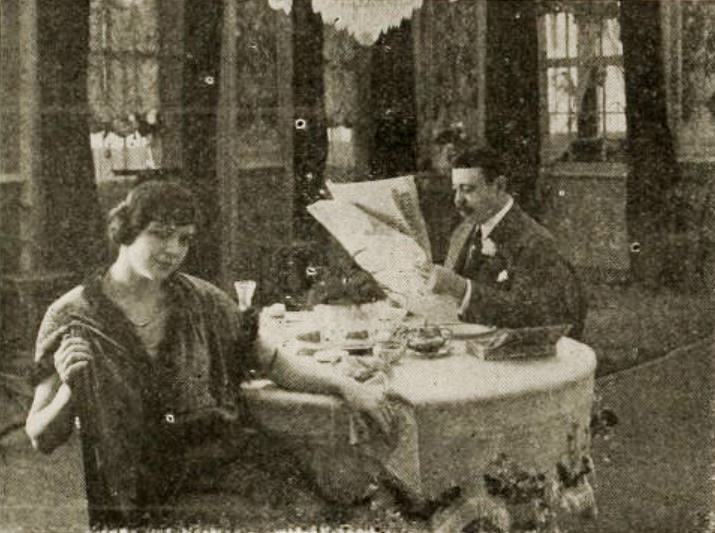
Technical note: the existing print displays nitrate bloom around reel-change marks—those amoeba-like scars that resemble wheat blight. Far from a flaw, this decay rhymes thematically with the narrative: speculative bubbles, marital trust, celluloid itself—all subject to entropy.
Why, then, does The Pit slumber in semi-obscurity while Greed towers in film histories? Partly because Von Stroheim’s legend was burnished by mythic butchered-footage lore; partly because The Pit lacks a charismatic auteur brand. But cinephiles hunting pre-Code cynicism, economic parable, or simply a silent that feels eerily contemporary could scarcely do better. At a brisk 80 minutes, it’s a shot of bootleg whiskey—burning, illicit, unforgettable.
Final thought: in an era when cryptocurrency casinos mint overnight millionaires and evaporate just as fast, Jadwin’s arc resonates like a cautionary hymn. The only thing that dates the picture is its courtesy—characters still write letters, attend opera, speak of “honor.” Yet the core transaction—love swapped for leverage, humanity bartered for phantom profit—remains chillingly au courant. Enter The Pit at your own peril; its darkness is deep enough to swallow both hope and hindsight.
IMDb 6.3
1931
Community
Log in to comment.