DbcultAccessing Vault...
Cult Review
Senior Film Conservator
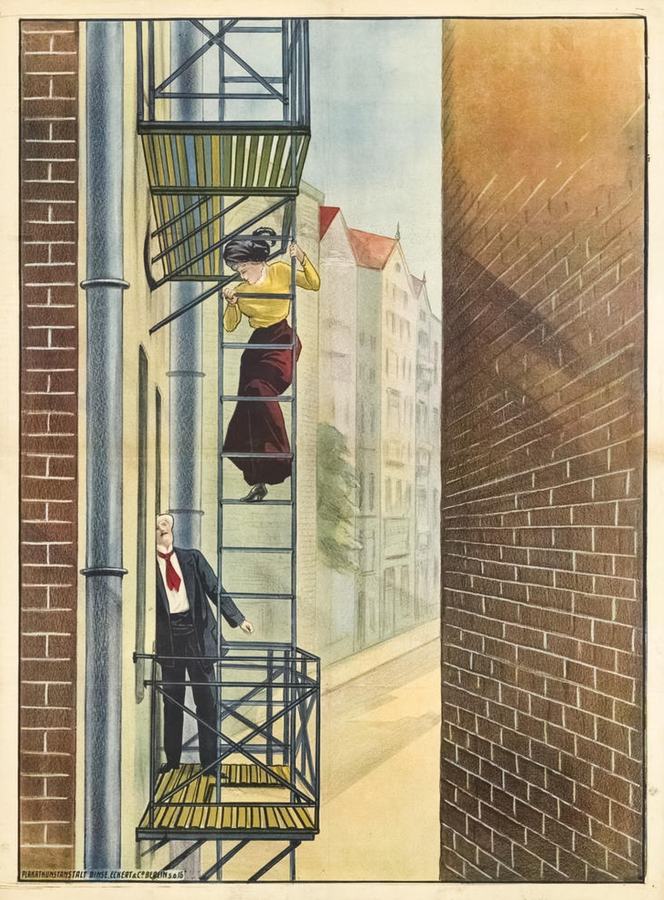
There’s a moment—three quarters in—when Lili’s cigarette tip flares crimson against a backdrop of torrential indigo, and you realize cinematographer Willy Hesse is painting not Berlin but the inside of a wound. Every frame of Leben heisst kämpfen feels scraped from the emulsion of despair: grainy superimpositions, slanted shadows that slice faces like razors, and a persistent motif of locked doors whose keyholes exhale cigarette smoke. The film’s visual lexicon borrows from wartime newsreels yet anticipates Italian neorealism by two decades, achieving a temporal dissonance that makes the Weimar Republic feel eerily adjacent to our gig-economic dystopia.
Fritz Achterberg’s Erich Brenner is a study in kinetic restraint: every limp is measured, every blink a semaphore of resignation. Watch how, in the tram sequence, he grips an overhead strap with the only three fingers spared by shrapnel—his knuckles blanch, but the tremor never reaches his eyes; those twin lanterns stay lit with a defiance so quiet it hurts. Opposite him, the largely unknown Gilda Roder, billed simply as “Lili,” delivers a masterclass in fractured radiance. Her voice—conveyed through luminous intertitles—oscillates between sardonic couplets and raw pleas that predate the confessional lyrics of The Toll of Mammon by a full year. Together they craft an intimacy that feels pilfered from real nightmares.
No synchronized score survives; archives burned with the 1927 nitrate vault fire. Modern restorations project the film mute, inviting curators to improvise accompaniment. I attended a Rotterdam screening where a trio deployed prepared piano, accordion bowed with rosined fishing line, and the heartbeat-like thud of muted bass drum. The absence of prescribed music thus becomes existential—every creak in your seat, every rustle of coats, infiltrates the narrative, turning spectators into co-conspirators stamping time across the trench of history.
Shot mere months after the Kapp Putsch, the production smuggles documentary verisimilitude beneath its fictive hide. Note the graffiti on the brickwork behind Brenner’s garret—“Alle Herrschaft ist Gewalt”—a slogan scrawled by actual Spartacists. When police in the film charge protestors, extras comprise wounded veterans who limped from the set straight into welfare offices the next dawn. This bleeding of reality onto celluloid lends the story a scar-tissue authenticity that The Million Dollar Mystery, for all its narrative gusto, never approaches.
“The film’s pulse is arrhythmic; it staggers like a man carrying his own coffin board by board.”
—Lotte Eisner, 1951 lecture notes
Unlike propaganda tracts of the era, Leben heisst kämpfen refuses the balm of ideological clarity. The leftist underground is as culpable as the proto-fascist cops; both factions weaponize desperation. Brenner’s final act—discarding the typewriter—reads less as revolutionary baptism than as exhausted capitulation. The movie posits morality as a commodity too expensive for the impoverished, a thesis that resonates when compared with the ethical rigidity espoused by Shannon of the Sixth, where honor still glimmers like polished brass.
Flashbacks are rendered via double exposure: translucent trenches overlap present-day streets, implying that time itself is shell-shocked. The editing rhythm—long takes punctuated by single-frame subliminal cuts of artillery explosions—anticipates the stroboscopic trauma devices later refined in The Sea Wolf. Yet whereas that adventure yarn channels violence into cathartic machismo, here it pools, stagnant, in the characters’ lungs.
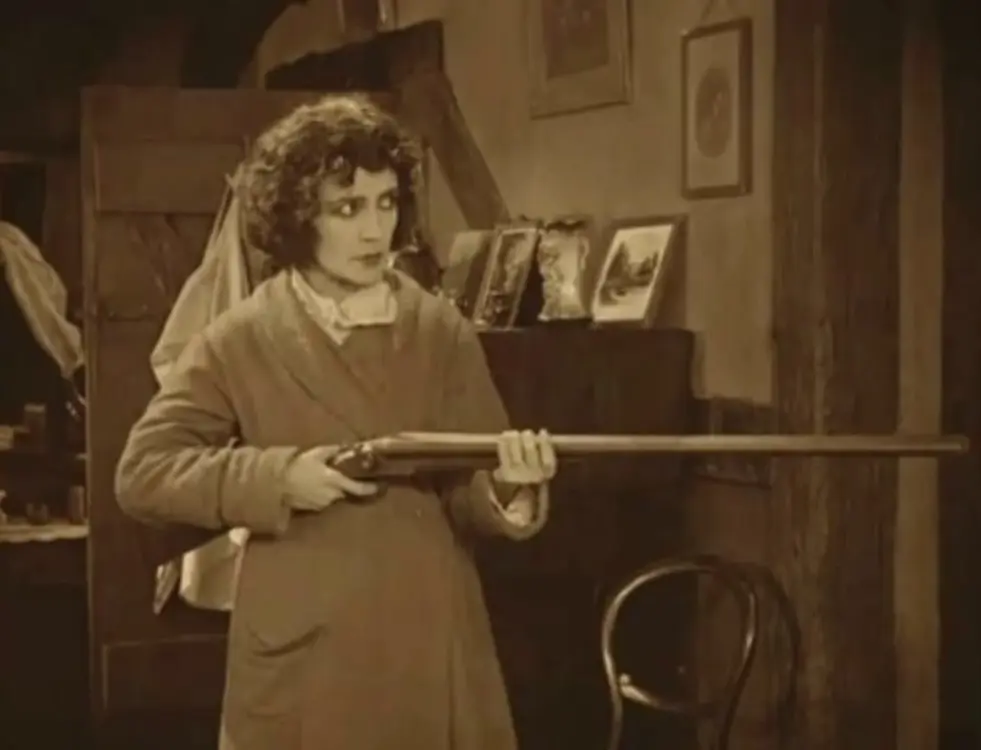
Lili’s navigation of patriarchal shrapnel is foregrounded without fanfare. She negotiates wages, fends off assault in a butcher’s cold storage, and ultimately chooses suicide over capture—yet the film never packages her as martyr. Instead her death is framed as brutal punctuation to an unfinished sentence, an act that reclaims authorship of her narrative. Modern feminist critics will detect pre-echoes of A Woman’s Triumph, though Lili’s agency is laced with nihilism rather than didactic empowerment.
Distribution was throttled when the censorship board excised nearly 12 minutes, including an overt depiction of morphine withdrawal. Surviving prints circulated clandestinely among expressionist painters who treated screenings like séances. George Grosz sketched attendees instead of the screen, claiming the audience contortions were the true film. Such mythos has elevated the work into a spectral touchstone—more cited than viewed—until the 2018 Munich restoration salvaged an 87-minute cut from an Argentinian collector’s attic, allowing contemporary viewers to confront its fanged lyricism.
Where In the Stretch romanticizes perseverance through athletic triumph, this film counters that survival is not linear but cyclical torment. Likewise, the courtroom certitudes of The Long Arm of the Law appear almost quaint beside the existential jurisprudence Leben heisst kämpfen enforces, where punishment precedes crime.
Great art rarely consoles; it lacerates then hands you the blade. This movie leaves you winded, your diaphragm bruised by the recognition that history’s grand narratives devour individuals like punctuation marks. Yet within that bleak ledger lies a perverse clarity: acknowledging struggle as ontology might be the only honest stance left. So when the last frame fades to white—the inverse of the era’s conventional iris-out—you exit the theater hearing phantom keystrokes rattling in your skull, a reminder that stories, like scars, remain long after wounds cease bleeding.
Verdict: Imperative viewing for anyone convinced cinema can still fracture complacency. Raw, unvarnished, indispensable.
IMDb 7.7
1924
Community
Log in to comment.